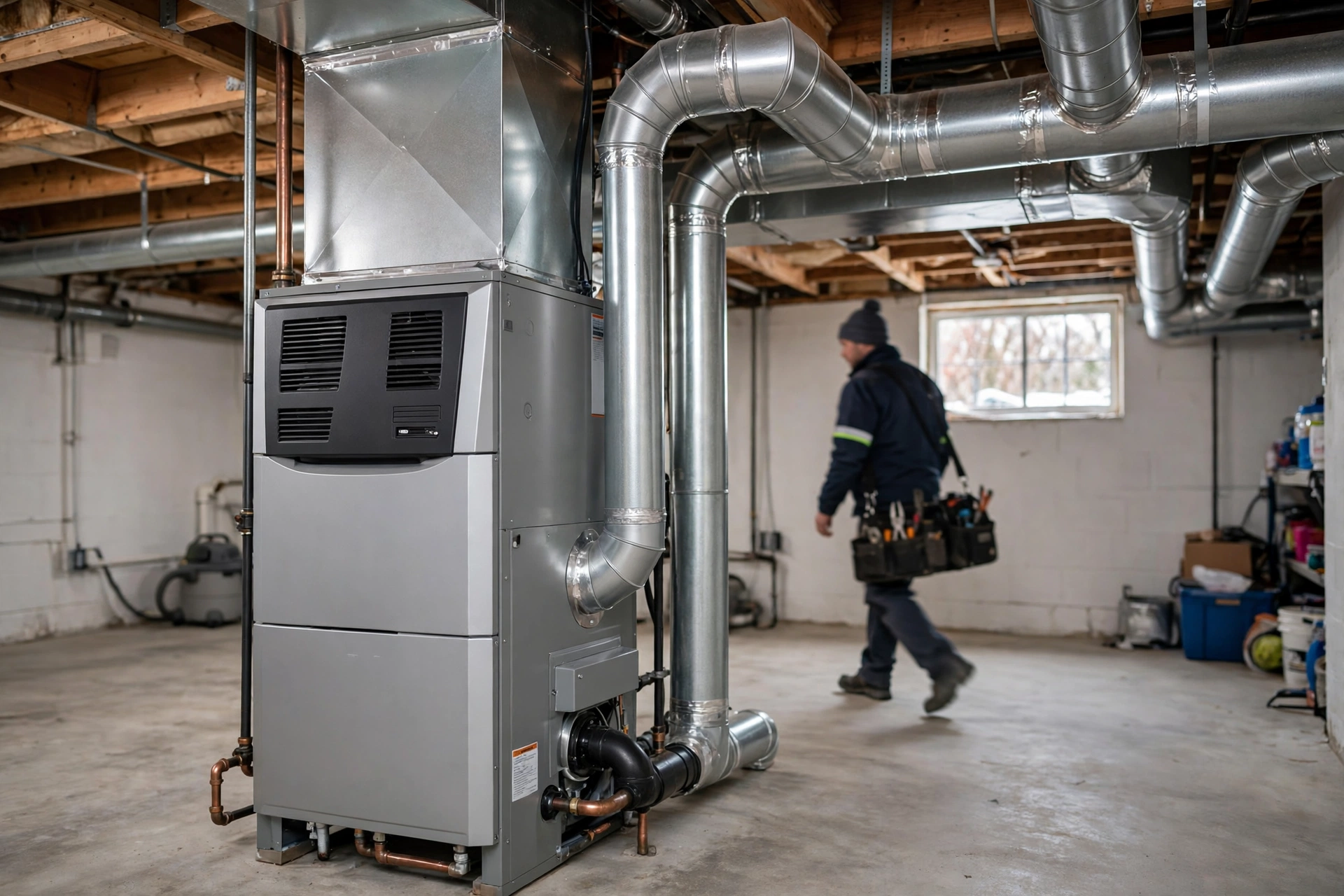
Services · St. Cloud, Minnesota
Furnace Services in St. Cloud
Installation, repair, airflow, controls, and tune-ups for gas, electric, and propane furnaces — all from one local team.
Installation, repair, airflow, controls, and tune-ups for gas, electric, and propane furnaces — all from one local team.
Most furnace trouble falls into a few familiar groups, and this page gathers them all in one place. A furnace may stop heating altogether, heat some rooms and leave others cold, make a new noise, or simply cost more attention than it used to. Each of those problems points at a different part of the system, and each has its own page below with the detail that fits it. Start with the service that sounds closest to your problem, and the page will walk through what a technician checks, what the common causes are, and what to expect from the visit.
We work on gas, electric, and propane furnaces, and we do the work ourselves as a local furnace service business. That matters because the three fuel types fail differently. A gas furnace leans on its burners, ignitor, flame sensor, and gas valve, and on venting that must carry exhaust out of the house. An electric furnace leans on heating elements, sequencers, and electrical connections, with no venting and no flame to watch. A propane furnace shares much of the gas design but runs from a tank, so fuel supply and rural cold-weather behaviour enter the picture. Knowing which fuel you have is the single most useful thing to tell us when you call.
Beyond fuel type, the pages below cover the parts that wear out most often and the systems that tie a furnace to the rest of the house. The blower motor moves warm air through every room, so when it weakens, the whole house feels it. The heat exchanger is the part that separates combustion from the air you breathe, which is why cracks and soot there are treated seriously. Ductwork and airflow decide whether the heat the furnace makes actually reaches the far bedroom. And thermostat, controls, and zone heating decide when the furnace runs and which rooms get priority. A problem that looks like a dying furnace is often one of these four instead.

Repair is the right first step for most furnace problems, and it begins with diagnosis rather than with parts. A technician listens to what the furnace is doing, checks the thermostat and the filter, looks at the ignition and the blower, and tests the parts that the symptoms point to. That order matters: a furnace that short-cycles, for example, can be reacting to a dirty filter, a blocked vent, or a flame sensor that needs cleaning, and each of those has a different fix. Guessing at the most expensive part first wastes your money and leaves the real cause in place.
The repair pages below follow that same diagnostic order, so you can see what will be checked before anyone visits. Blower motor repair covers humming, weak airflow, and motors that stop mid-cycle. Heat exchanger work covers inspection, soot, and the safety reasons a cracked exchanger ends a furnace's working life. If the trouble is a room that never warms up, the ductwork and airflow page is the better starting point. And if the furnace runs at the wrong times or ignores the thermostat, the controls page explains what a technician tests first.
There comes a point where another repair stops being good value, and recognising it early saves a winter of callouts. The signs are usually a combination: breakdowns that keep returning, parts that are hard to find, heat that never quite reaches the thermostat setting, and a unit whose efficiency, measured as AFUE, belongs to an older generation of equipment. No single sign decides it on its own. A technician weighs the age and condition of the furnace, what has already been spent on repairs, and how the home itself heats, then talks through both options plainly.
That conversation is what our installation and replacement page is built around. It covers sizing a new furnace to the house rather than to the old unit's label, matching the fuel and venting the home already has, and getting the ductwork and thermostat to suit the new equipment. Replacement is also the moment to think about controls: a new thermostat or zoning setup fitted at the same time can even out rooms that have always run hot or cold. The goal is a system that fits the house as it is now, not a copy of what was there before.
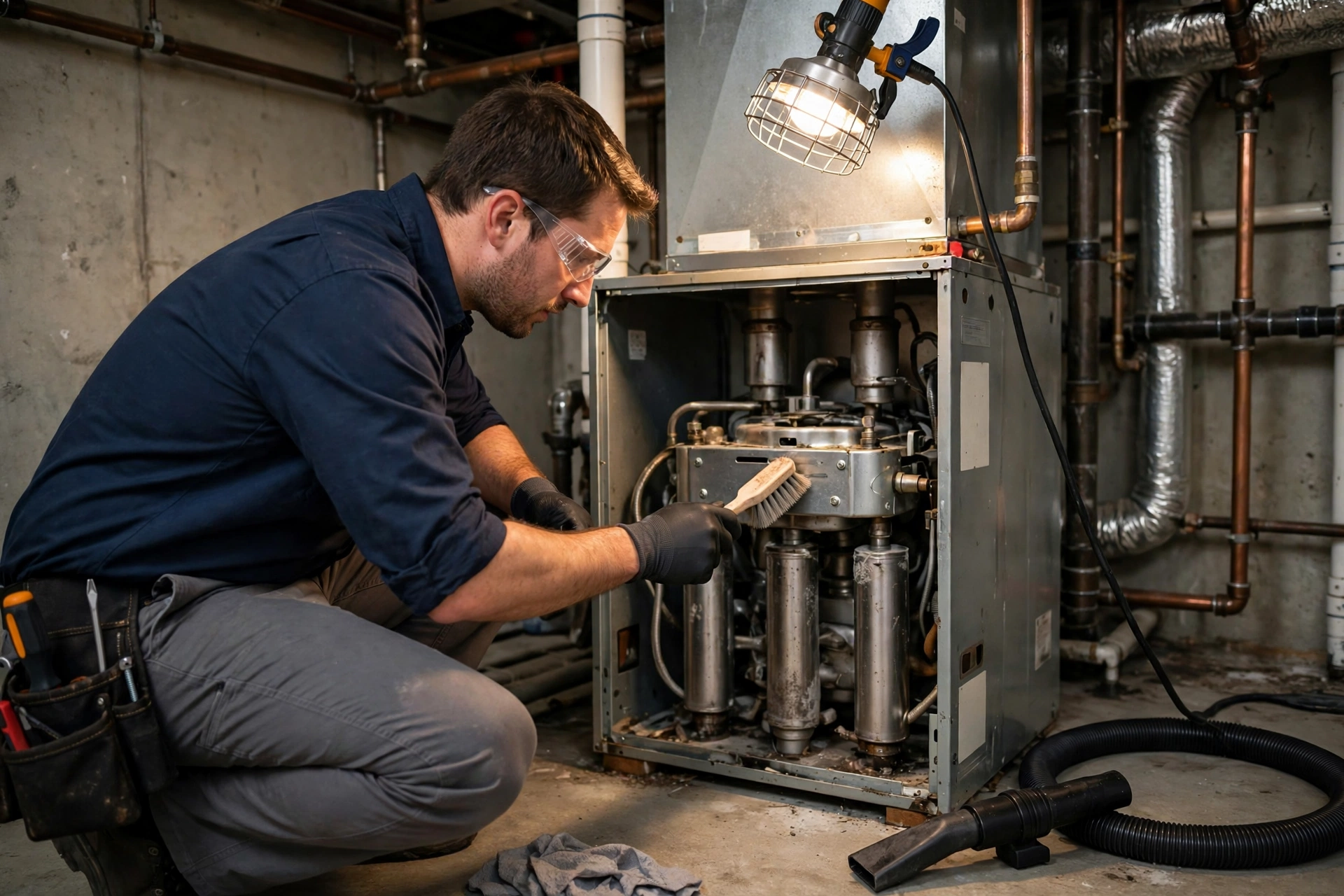
Many furnace jobs are not repairs at all. A tune-up and safety inspection before the heating season catches worn parts, dirty burners, and weak ignition while the weather is still mild, and it gives a technician a chance to check the venting and the carbon monoxide alarm's place in the home's safety setup. Filters sit at the centre of this work: a clogged filter strains the blower, starves rooms of air, and can trip safety limits that shut the furnace down. The maintenance page explains what is cleaned, what is tested, and how often each part of the job is worth doing.
Two kinds of home need a slightly different approach, and both have their own pages. Manufactured homes use compact furnaces and tighter duct layouts, with different clearance and venting needs from a standard house. Small businesses need heat across a shop, an office, or several rooms at once, often with rooftop or larger units and with heating that has to keep working while customers are in the building. In both cases the work is sized to the building, not forced into a standard-home pattern.
Pick the card below that matches your furnace or your problem, and read that page first — it carries the full detail for its topic. If you are not sure which one fits, read the repair and maintenance pages in any order and note the symptoms that sound familiar; that list is exactly what helps on the phone. You can also look at where we work to find your town, or read the furnace blog for seasonal explanations of cold-weather problems, from vent freeze-ups to the strain a Minnesota winter puts on an older unit. And if the furnace has stopped entirely, skip the reading and get in touch — a conversation about the symptoms is the fastest way to the right page and the right visit.
Eleven services, each with its own page and its own detail.
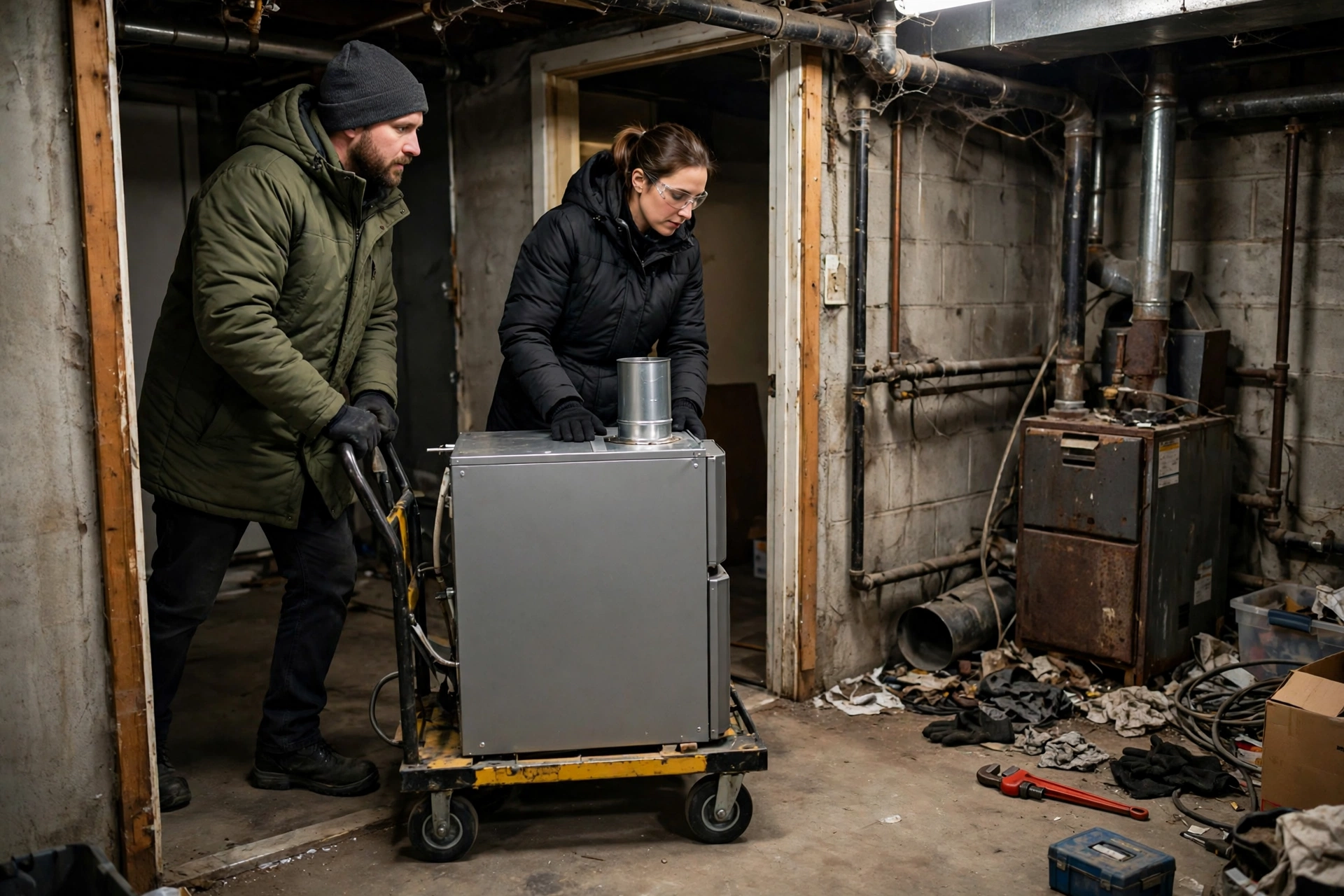
Sizing, fuel, and venting matched to the house for a new furnace.
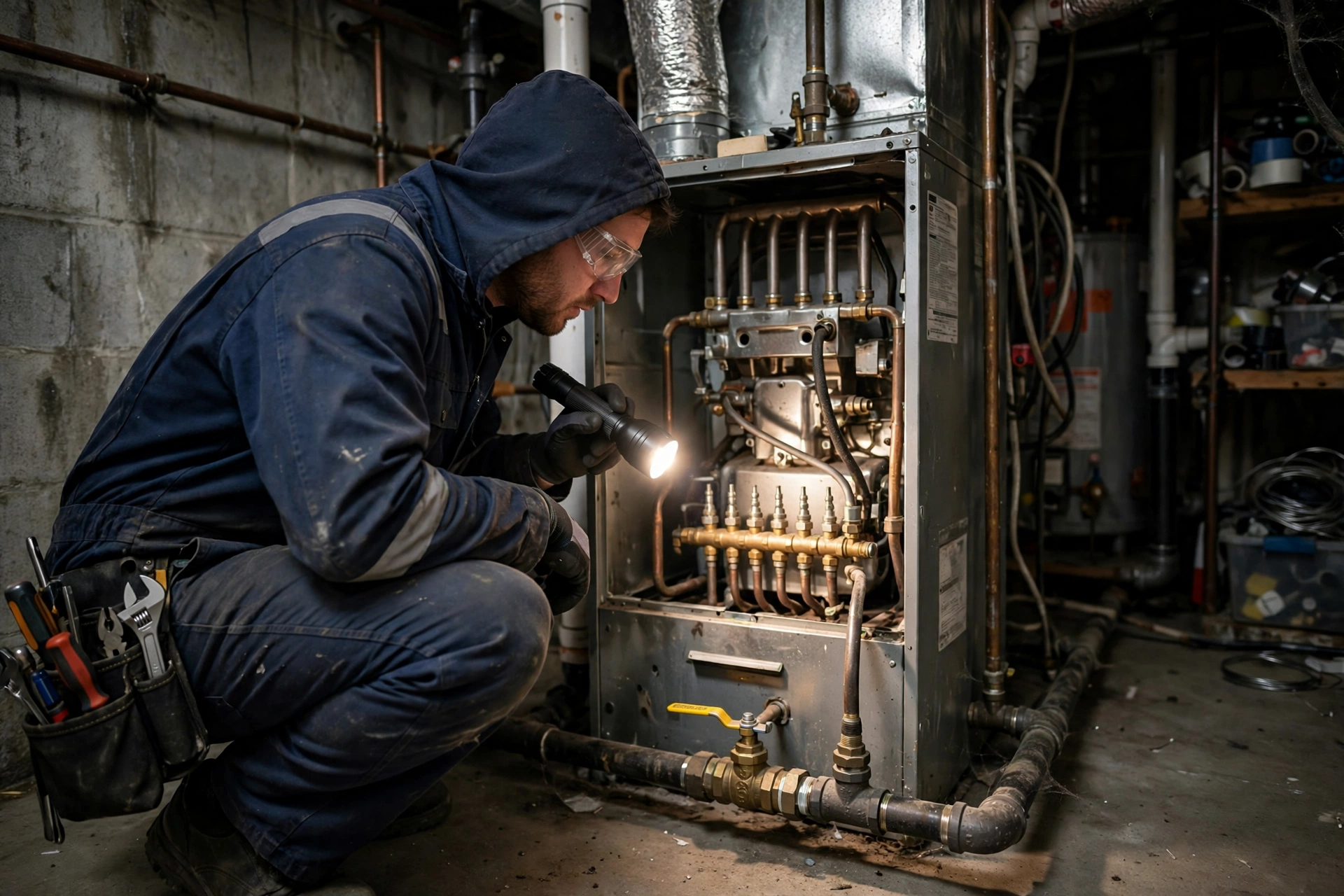
Burners, ignition, flame sensing, and venting for gas furnaces.
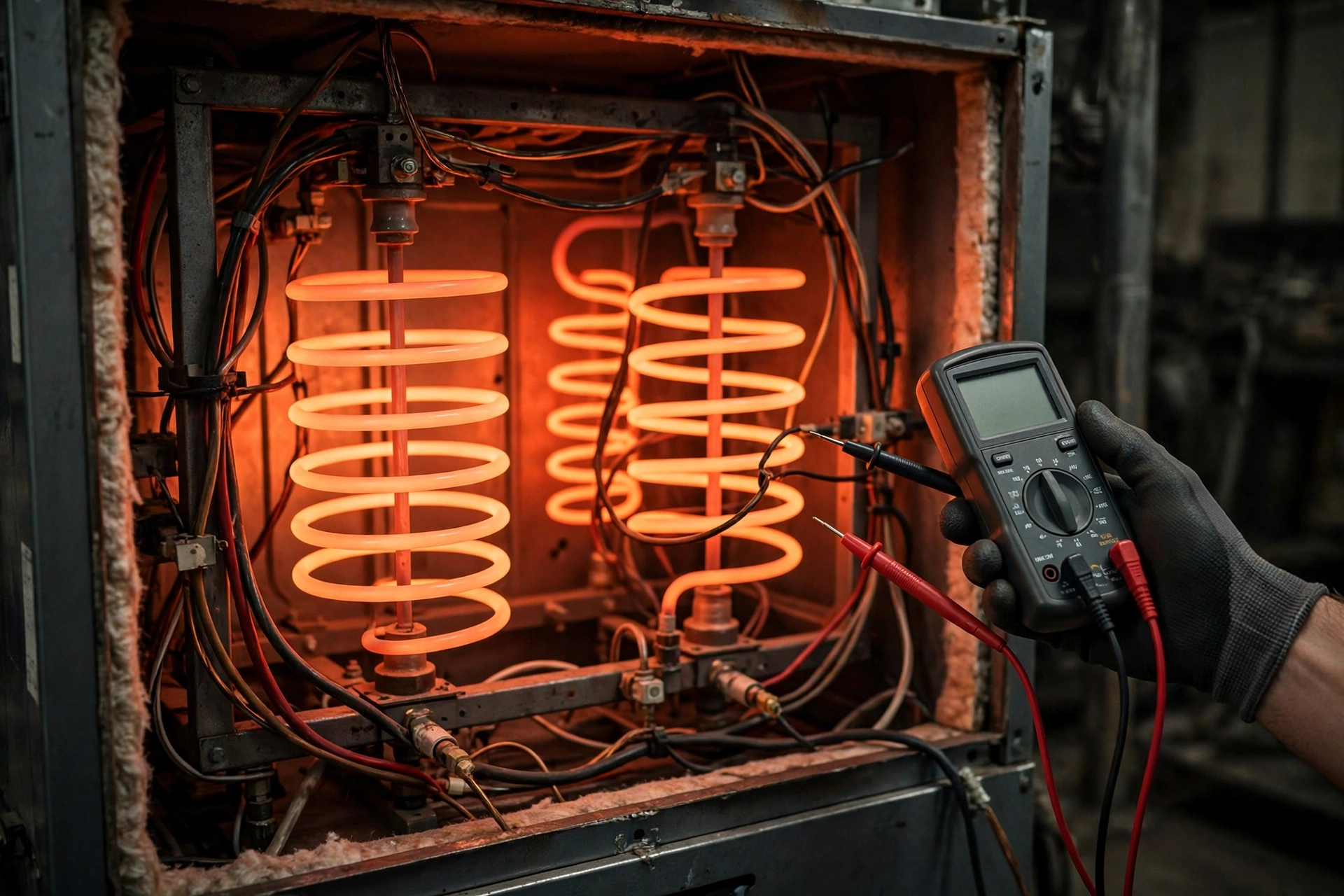
Heating elements, sequencers, and electrical checks for electric heat.
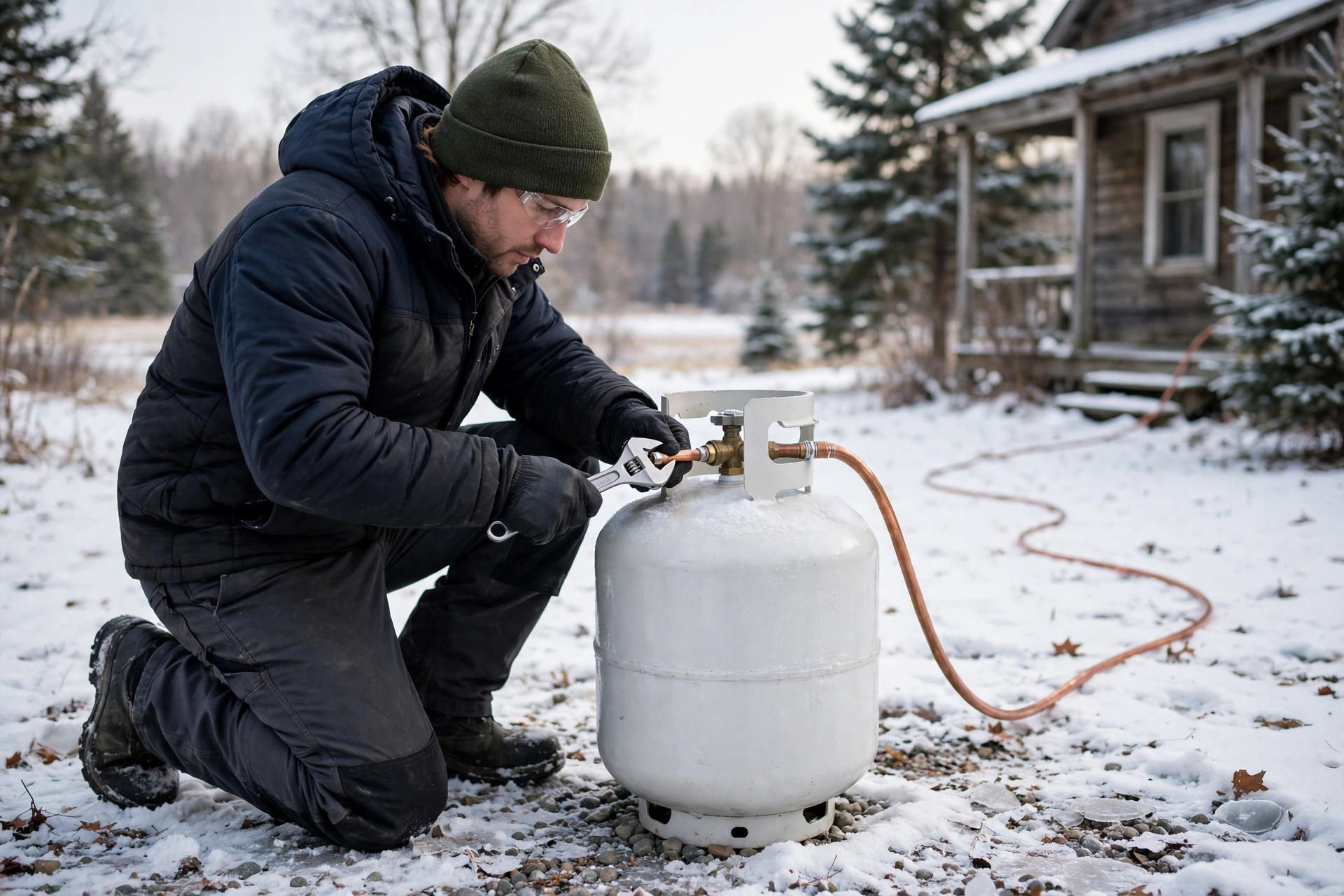
Tank-fed propane furnaces, including cold-weather fuel behaviour.
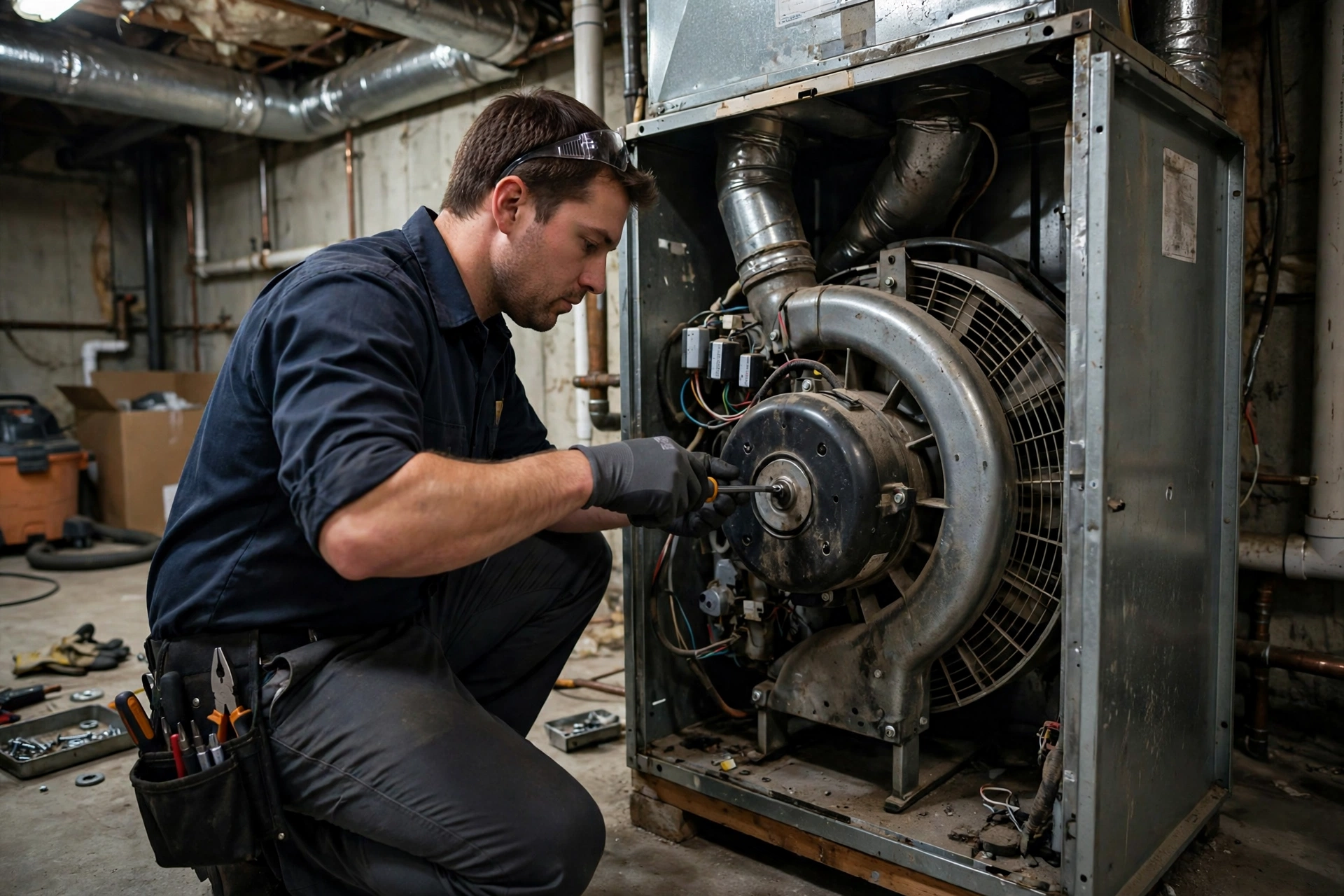
Weak airflow, humming, and motors that stop mid-cycle.
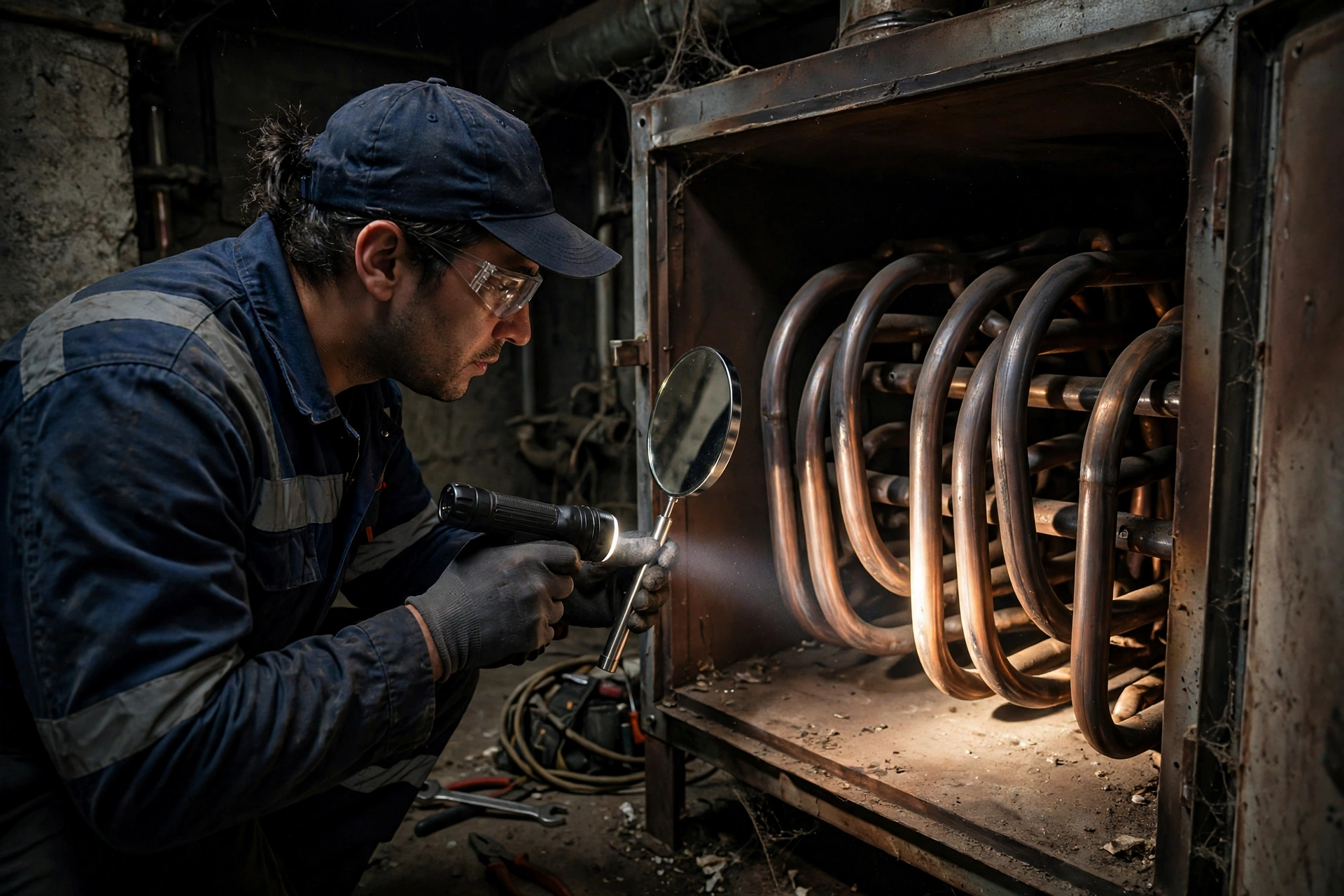
Inspection, soot, and safety checks on the exchanger.
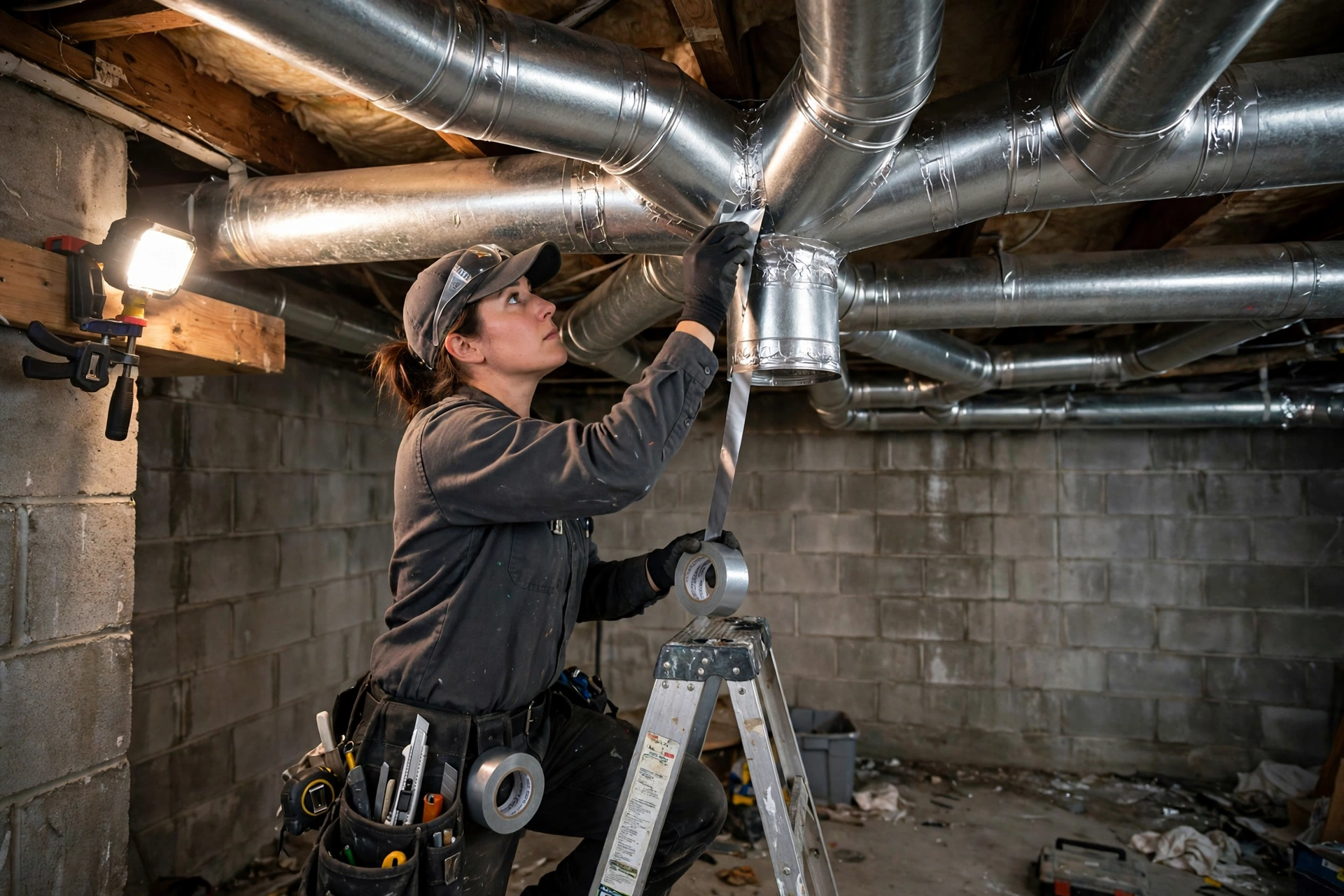
Registers, ducts, and balancing so heat reaches every room.
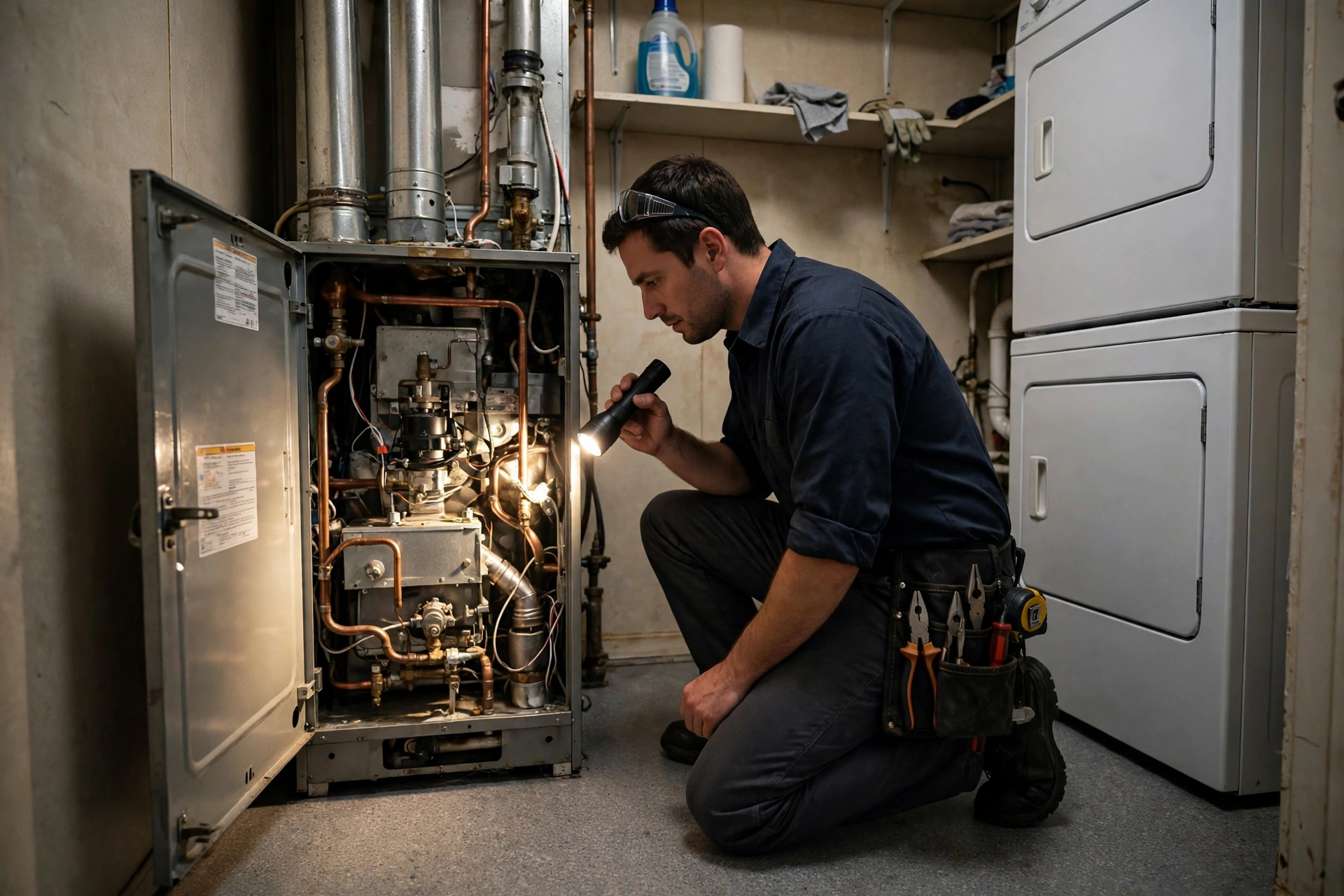
Compact furnaces and tight duct layouts in manufactured homes.
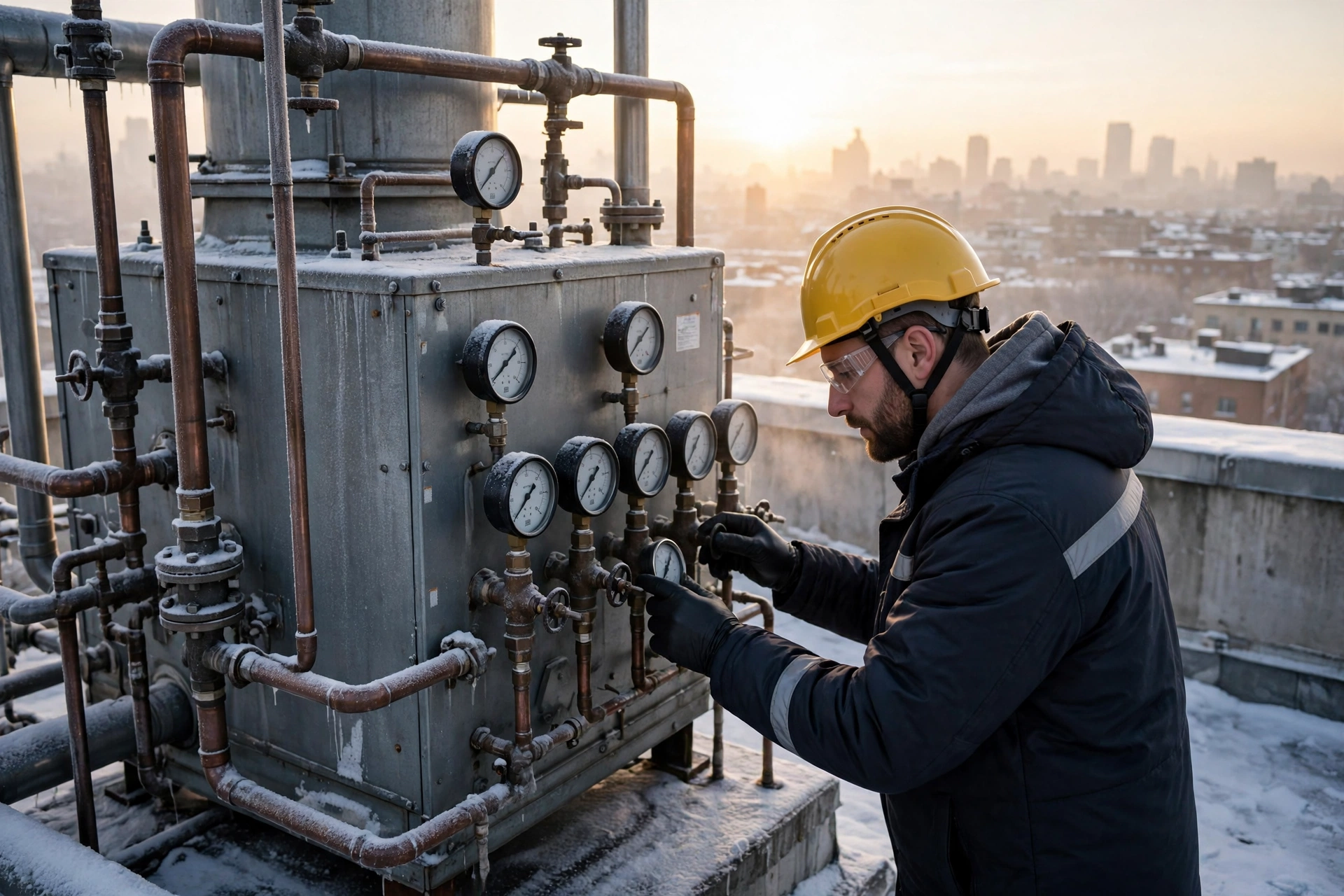
Heating for shops, offices, and multi-room business buildings.
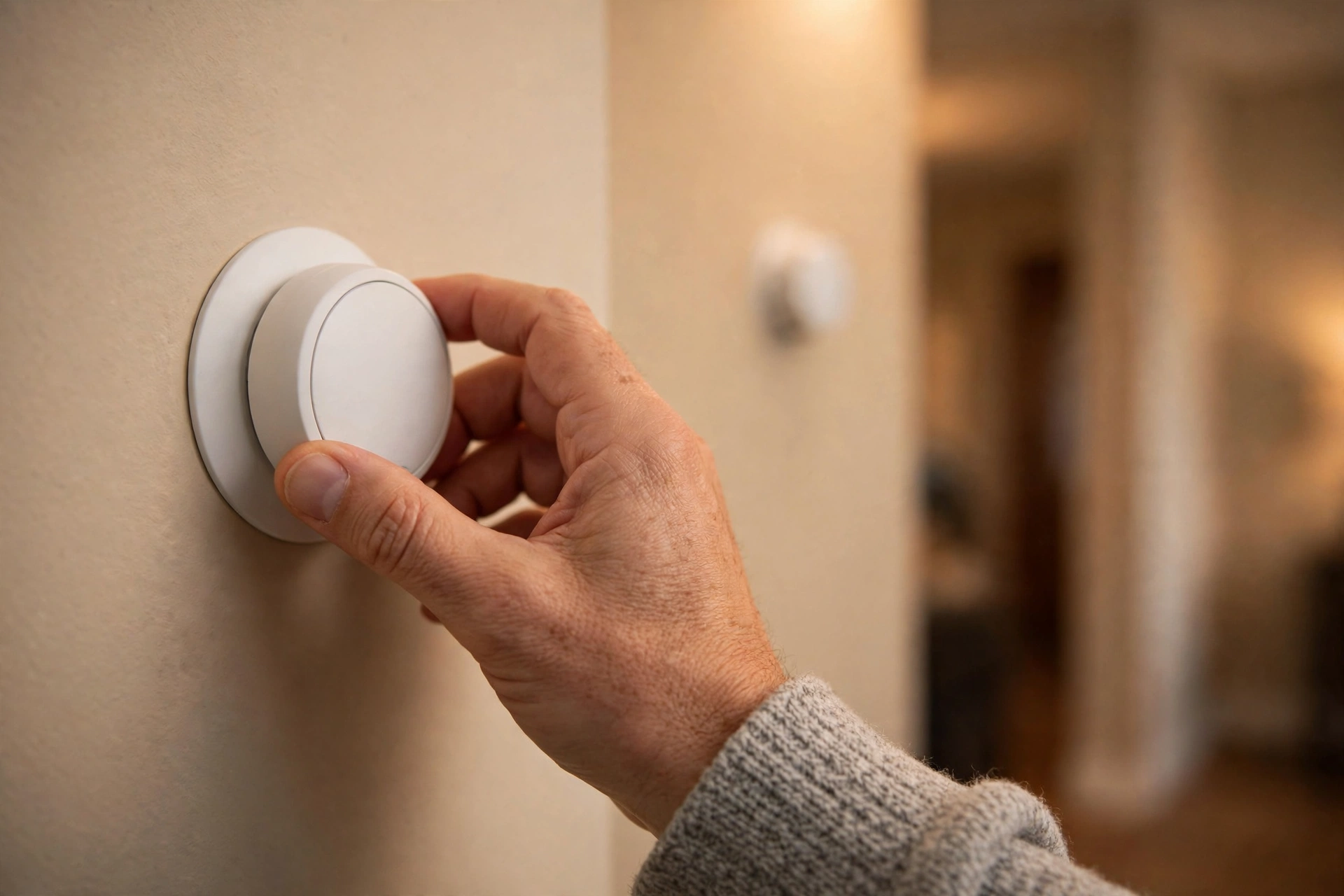
Thermostats, controls, and zoning that even out room temperatures.
Seasonal cleaning, testing, and safety checks before winter.
Start from what you notice. Each row points to the page that covers it.
| What you notice | Likely area | Page |
|---|---|---|
| Furnace will not start at all | Whole system | Furnace Repair (Homepage) |
| Burner lights, then stops | Ignition and flame sensing | Gas Furnace Services |
| Smell of gas near the furnace | Gas supply and venting | Gas Furnace Services |
| Cold rooms while others warm | Airflow and ducts | Ductwork & Airflow Services |
| Weak airflow from registers | Blower | Blower Motor Repair |
| Soot or scorch marks | Heat exchanger | Heat Exchanger Services |
| Thermostat disagrees with room temperature | Controls | Thermostat, Controls & Zone Heating |
| One room cold, others fine | Zones | Thermostat, Controls & Zone Heating |
| Tank gauge falling fast in cold weather | Propane supply | Propane Furnace Services |
| Breaker trips when heat runs | Electric parts | Electric Furnace Services |
| Furnace in a manufactured home | Manufactured-home fit | Manufactured Home Furnace Services |
| Heat for a shop or offices | Commercial scale | Commercial Furnace Services |
| Annual check due | Tune-up | Furnace Maintenance, Tune-Up & Safety Inspection |
| Furnace past sensible repair | Replacement | Furnace Installation & Replacement |
Call Quarry Furnace Co. about your furnace — repair, replacement, and tune-ups in St. Cloud and the towns around it.
(320) 389-8174Straight answers about repair, replacement, and upkeep.
Repeated breakdowns, uneven heat from room to room, and a furnace that struggles to reach the thermostat setting are all signs worth a conversation. A technician looks at the age and condition of the unit, what has already been repaired, and how it is performing, then talks through repair and replacement side by side so you can choose with the full picture.
Yes. Gas, electric, and propane furnaces each have their own parts and their own failure patterns, and we work on all three. When you call, saying which fuel your furnace uses helps the technician bring the right questions and the right approach to the visit.
A tune-up and safety inspection covers cleaning and checking the parts that affect heat and safety, including the burners or heating elements, the ignition system, the blower, the filter, and the venting. The technician also looks for signs of wear, soot, or cracked parts and explains anything that needs attention before winter.
Cold rooms usually trace back to airflow rather than to the furnace itself: a closed or blocked register, a duct run that loses heat, a blower that is not moving enough air, or a thermostat that reads a warmer room than the one you are sitting in. Checking the registers, the filter, and the ductwork usually narrows it down quickly.
Yes. Manufactured homes use compact furnaces and duct layouts that differ from a standard house, and small businesses often need heat across several rooms or a shop floor. Both have their own pages on this site, and the work is sized to the building rather than treated like a standard home job.
Check the thermostat setting, the filter, and whether the furnace switch is on, and note any blinking light or error code on the unit if you can see one safely. Then call (320) 389-8174 and describe what you found. Do not open the burner compartment or work on gas or electrical parts yourself.