St. Cloud, Minnesota(320) 389-8174info@furnacerepairsaintcloudmn.com823 1st St S, St Cloud, MN 56301, USA
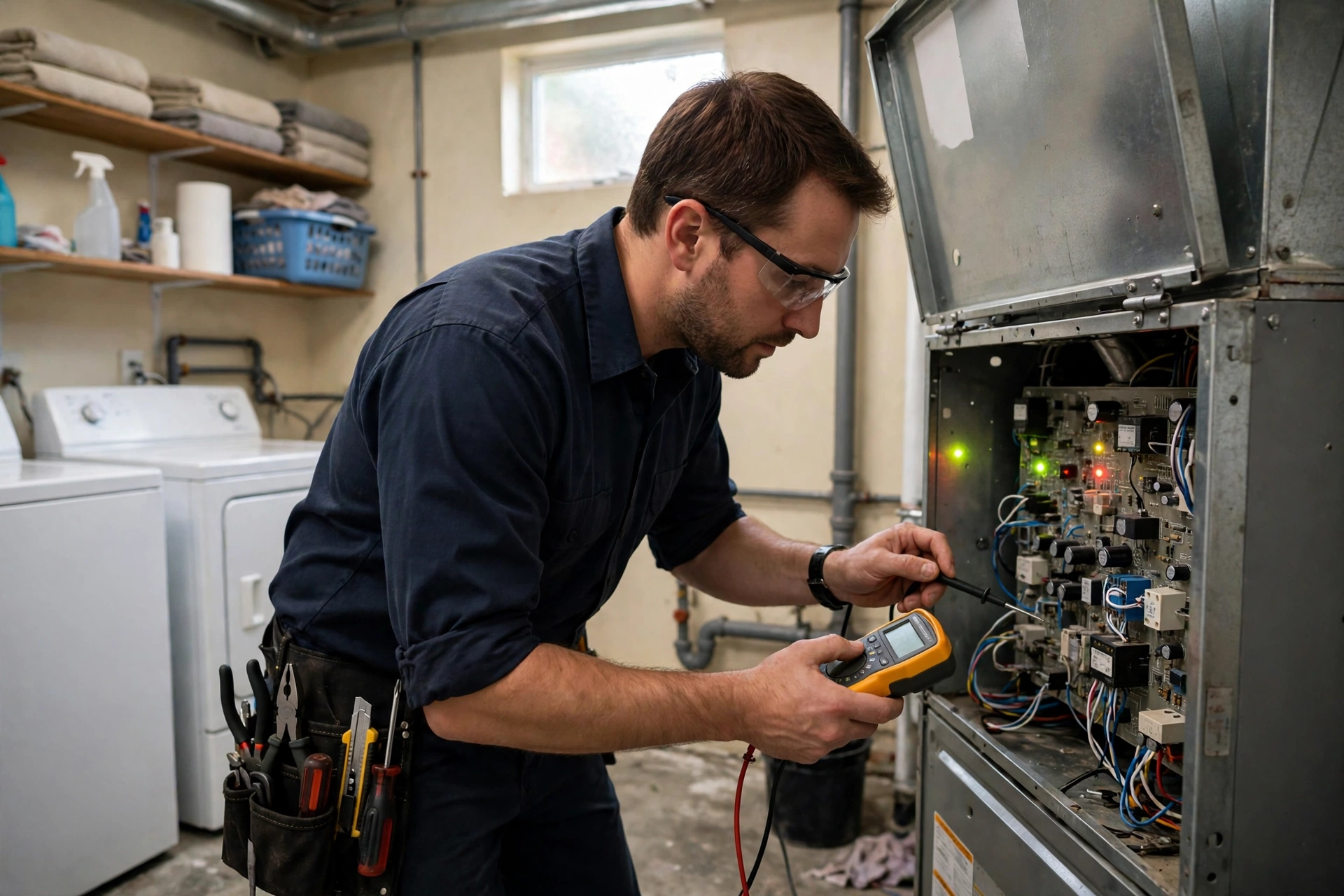
A technician inspecting the heating elements of an electric furnace
Electric Furnace Services · St. Cloud, Minnesota

Electric Furnace Services in St. Cloud

An electric furnace heats with resistance elements rather than flame, so there is no venting, no combustion, and no carbon monoxide from the furnace itself. What it does need is sound electrical connections, healthy elements, and sequencers that stage the heat properly — and that is where our electric furnace work concentrates.

Call (320) 389-8174See All Furnace Services

How an Electric Furnace Heats

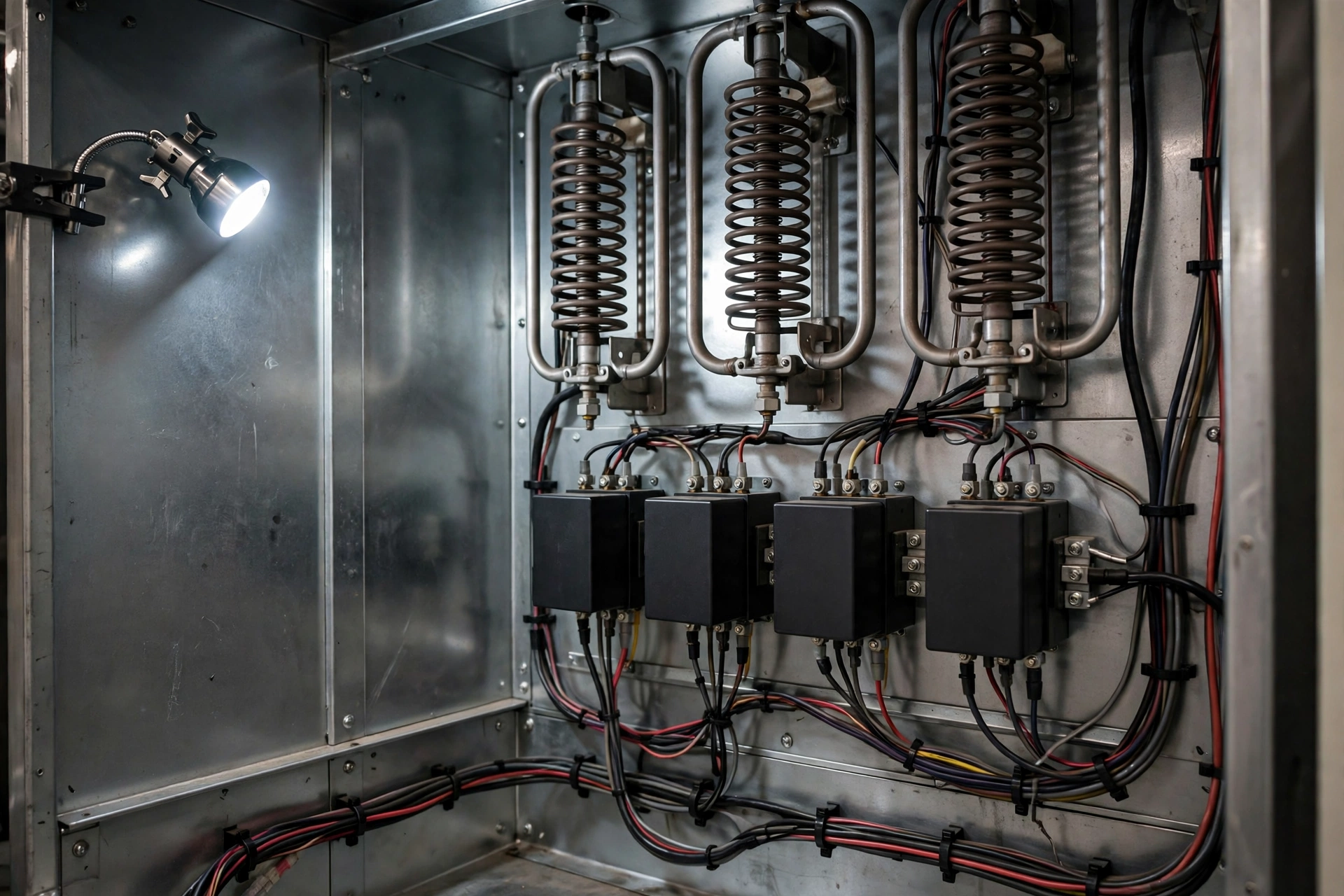
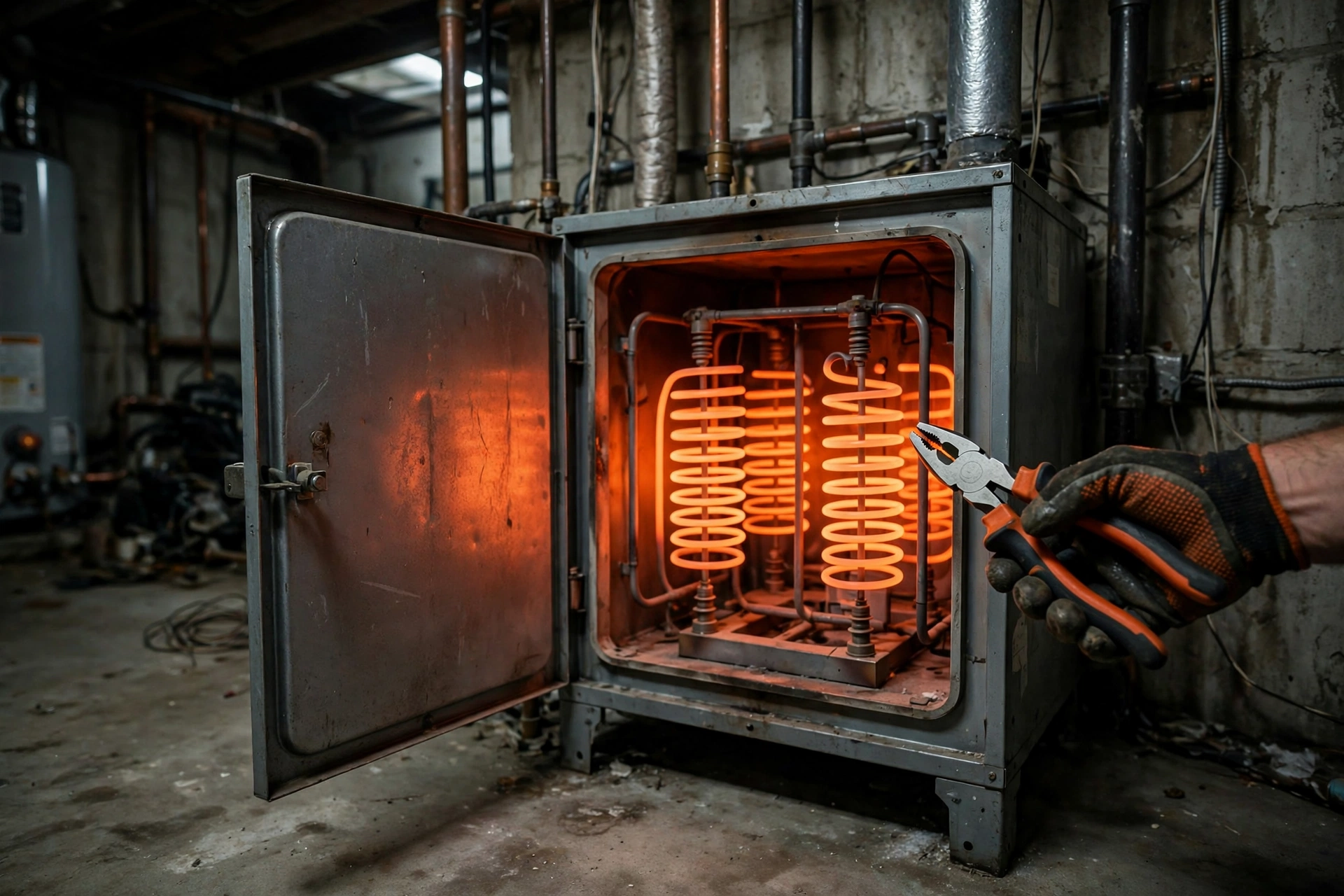
Inside an electric furnace, banks of coiled resistance elements glow hot as current passes through them, and the blower moves home air across those elements and out through the ducts. A sequencer switches the element banks on in stages, seconds apart, so the electrical load rises gradually instead of slamming the panel all at once. The thermostat calls for heat, the sequencer stages the elements, and the blower carries the warmth — a simple chain, but one where a single weak link shows up as lukewarm air or a cold house.

Because there is no flame, electric furnaces suit homes without a gas line and homes where venting a combustion furnace would be difficult. They also pair naturally with homes that already have ample electrical capacity. What they cannot do is forgive loose connections: a heating element draws substantial current, and a loose lug or a tired breaker heats up, discolours, and eventually fails. That is why electrical inspection is the core of electric furnace service, and why our tune-up and safety inspection includes a close look at wiring, lugs, and breakers.

Electric heat also makes the blower's job more visible. If airflow drops — a clogged filter, closed registers, a slowing fan — the elements overheat and the limit switches trip, shutting the heat off until things cool. When that pattern appears, the answer may sit on the air side of the system, which is why blower motor repair and ductwork and airflow work often go hand in hand with electric furnace calls.

A technician testing electric furnace heating elements with a multimeter

Elements, Sequencers, and Limits

A failed element usually announces itself plainly: one bank of the furnace stops heating, so the air from the registers feels only mildly warm even though the blower runs. We test each element for continuity and resistance with a multimeter, and we inspect the ceramic insulators and support brackets that hold the coils, since a sagging coil that touches the cabinet can short and trip a breaker.

Sequencers fail more subtly. A sequencer whose contacts stick can leave an element bank running after the thermostat is satisfied, overheating the cabinet and tripping limits; one that never closes leaves a bank cold. We test staging order and timing, and we replace sequencers whose contacts are pitted or sluggish. The limit switches themselves — the safety devices that cut power if the cabinet overheats — are tested too, because a limit that trips repeatedly is usually reporting an airflow problem rather than causing one.

Electric Furnace Checks on Every Visit

The electrical side gets the closest look.

Wiring and lugs

Connections are checked for heat discolouration, tightness, and insulation damage.

Breakers and fuses

The panel side is inspected for breakers that run hot or trip under load.

Elements and sequencers

Each bank is tested for continuity, resistance, and correct staging order.

Blower and airflow

Filter, fan, and duct balance are checked so elements never overheat from starved air.

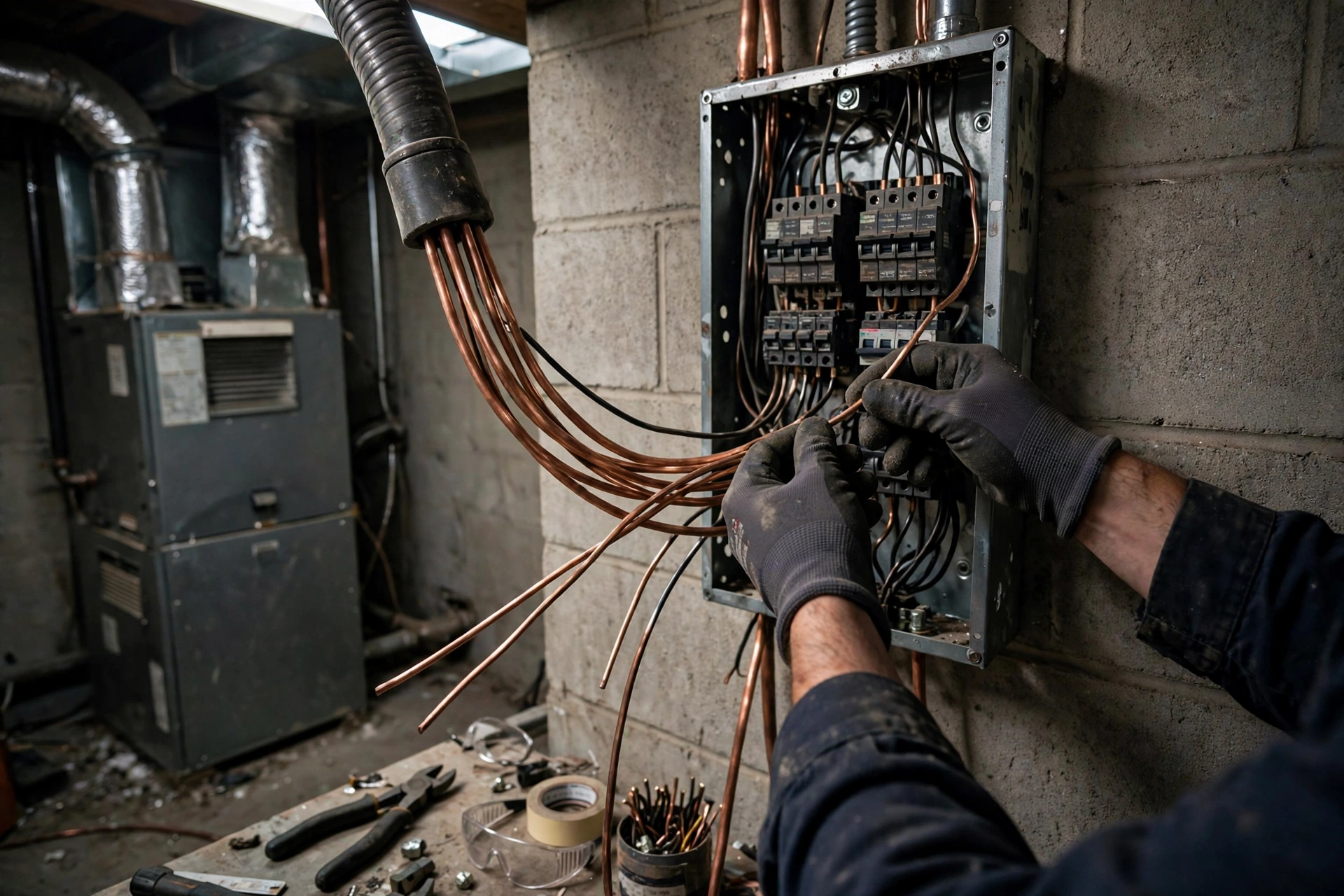
A technician inspecting wiring and breakers inside an electric furnace cabinet

When the Breaker Keeps Tripping

A breaker that trips on an electric furnace is doing its job, and resetting it repeatedly without finding the cause is how small faults become damaged wiring. Common causes include a shorted element coil touching the cabinet, a sequencer welded closed, a blower motor drawing excess current, or a breaker itself that has weakened with age and heat. Each cause has a different fix, and testing separates them: resistance readings on the elements, current draw on the blower, and a look at the breaker for heat marks.

If the panel itself is the limit — an older service that cannot comfortably carry the furnace load alongside the rest of the home — that is a conversation about the home's electrical capacity, and we say so plainly rather than fitting a larger breaker where the wiring does not support it. For homes weighing a change of fuel, our installation and replacement page explains how a new furnace is chosen, and our gas furnace services page covers the combustion alternative where a gas supply exists.

A technician replacing a sequencer control inside an electric furnace

Thermostats and Staging

Electric furnaces respond to the thermostat differently from gas models: the thermostat's heat call starts a staged sequence, and a thermostat that short-cycles or misreads temperature makes the whole chain stutter. A thermostat sitting above a heat register, in direct sun, or on a cold exterior wall can call for heat at the wrong times, and a low battery in a battery-powered model can drop the call altogether. We check thermostat placement, wiring, and settings as part of electric furnace work, and deeper control problems are covered on our thermostat and zone heating page.

Staging matters for comfort as well as safety. A furnace that brings all its elements on at once overshoots the set temperature and then idles, while properly staged heat holds a steadier temperature and puts less strain on the panel. If your home swings between too warm and too cool, staging — not just element health — is worth checking, and our contact page is the way to arrange that conversation.
Breaker Trips: What to Note

From Switch to Warm Air

An electric furnace makes heat without a flame. The sequence below is all electrical, staged, and watched.

Thermostat callsA room asks for heat.
Sequencer stages elementsElements switch on one by one, not all at once.
Elements glowElectricity becomes heat in the element coils.
Blower moves airAir crosses the hot elements and into the ducts.
Limit switch watchesIt cuts power if the cabinet overheats.

Electric Furnace Parts and Their Tells

An electric furnace has no flame and no flue. Its parts fail in their own ways, and each leaves a different sign.

PartJobFailure sign
Heating elementsTurn electricity into heatNo heat, or heat that fades on cold nights
SequencersStage elements on one by oneElements that all jump on at once, or one that never joins
Limit switchesShut elements down if the cabinet overheatsRepeated cut-outs, often from restricted airflow
Relays and contactorsSwitch power to elements and blowerClicking without heat, or a blower that will not start

People Also Ask

Are electric furnaces safe without a flue or vent?

Yes, in the sense that an electric furnace produces no combustion exhaust and therefore no carbon monoxide from the furnace itself, so it needs no flue. Safety attention shifts instead to the electrical side: tight connections, sound wiring, healthy breakers, and limit switches that cut power if airflow fails and the cabinet overheats.

Why is my electric furnace blowing lukewarm air?

Lukewarm air usually means one or more element banks are not heating, often because of a failed element, a faulty sequencer, or a tripped limit. A technician tests each bank for continuity and staging order to find which link in the chain has failed, rather than replacing parts by guesswork.

Do electric furnaces need annual servicing?

Annual service is worthwhile even without combustion to check: electrical connections loosen with heat cycles, elements age, sequencers wear, and filters and airflow still affect safety and comfort. A yearly visit catches those changes before they become a midwinter breakdown.

Need a Furnace Technician?

Call Quarry Furnace Co. about your furnace — repair, replacement, and tune-ups in St. Cloud and the towns around it.

(320) 389-8174

Electric Furnace Questions

Answers about elements, sequencers, and electrical safety.

What is a sequencer in an electric furnace?

A sequencer is a timed relay that switches heating element banks on in stages, seconds apart, so the electrical load rises gradually. It also controls the blower's start and stop timing, and a sticking or failed sequencer can leave elements running too long or never starting.

Why does my electric furnace run but not heat?

If the blower runs with no heat, the usual suspects are failed elements, a faulty sequencer, a tripped limit switch, or a thermostat that is not calling properly. Testing each element bank and the control sequence identifies the fault.

Can an electric furnace heat a whole Minnesota home?

Yes, where the home's electrical service can carry the load and the furnace is sized to the home's heat loss. Electric furnaces are common in homes without gas service, and the sizing calculation matters just as much as it does for a gas furnace.

What makes an electric furnace trip its breaker?

A shorted element, a welded sequencer, a blower motor drawing excess current, or a weakened breaker can all trip protection. The cause should be found by testing before the breaker is reset repeatedly, since repeated resets can damage wiring.

How long do electric furnace elements last?

Element life varies with use, cycling, and airflow; elements in a home with clean filters and steady airflow last longer than those repeatedly overheated by restricted air. Individual elements can be replaced without replacing the whole furnace.

Do you repair electric furnaces in manufactured homes?

Yes. Many manufactured homes use electric furnaces, and the smaller cabinets and duct layouts in those homes need the same element, sequencer, and airflow checks. Our manufactured home furnace page covers the particulars of those systems.

Electric Furnace Not Heating Right?

Element, sequencer, and wiring checks for electric heat.

(320) 389-8174

Related Pages