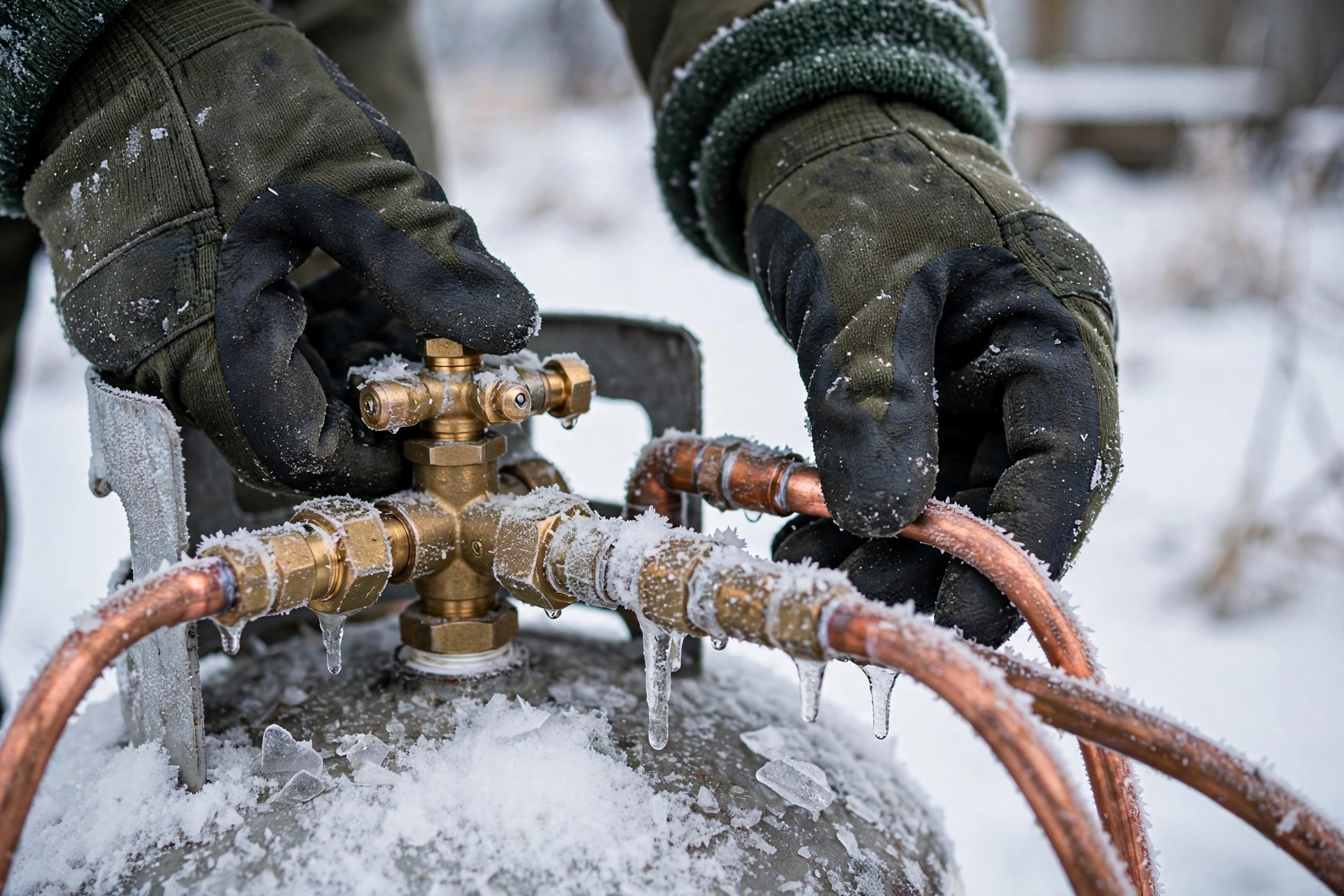
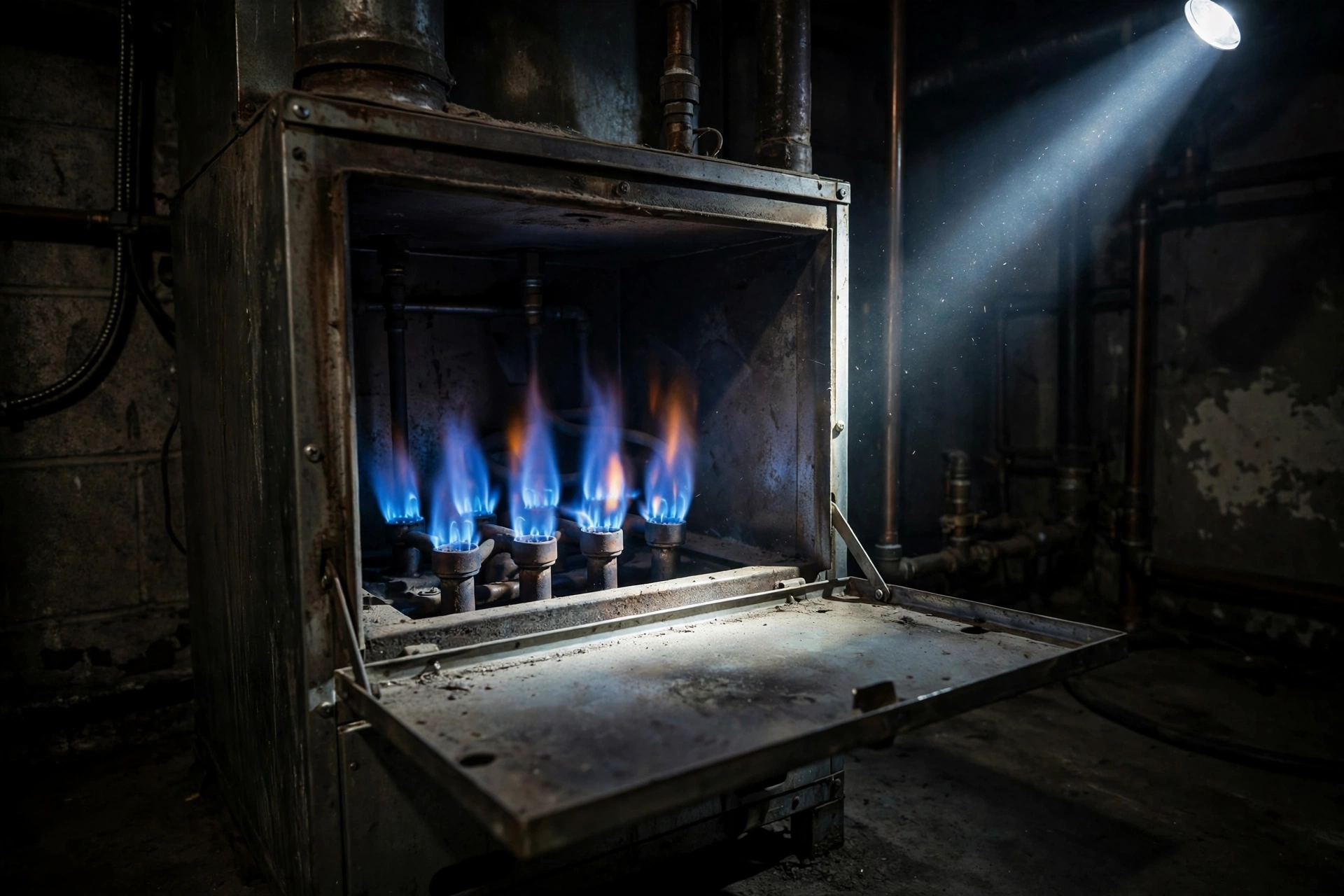
Beyond the natural gas lines, many homes around St. Cloud heat with propane from an outdoor tank — and propane furnaces have their own habits. Tank pressure falls in deep cold, regulators age, and the fuel supply itself becomes part of every diagnosis. We service propane furnaces with that whole supply chain in mind.

A propane furnace is only as reliable as its fuel supply. The tank outside holds liquid propane that vaporises as it is drawn off, and in sustained cold that vaporisation slows — a tank running low in January delivers less pressure than the same tank in October. The regulator steps tank pressure down to the steady pressure the furnace's gas valve expects, and a regulator that drifts high or low makes burners run rich or starve.
We check supply pressure with a manometer at the furnace, look at the regulator and its vent for ice, damage, or insect blockage, and inspect the supply line for corrosion and proper support. If pressure falls under load, the question is whether the tank level, the regulator, or the line sizing is responsible — and that distinction decides the fix. Homes that want a fuller picture of winter fuel planning can read our rural propane and storm planning article, and gas-line questions for town homes are covered on our gas furnace services page.
Propane burns hotter and heavier than natural gas, so a propane furnace uses different burner orifices and a different gas valve setting — the two fuels are not interchangeable without the manufacturer's conversion parts and a careful re-adjustment. A furnace converted carelessly, or a natural gas furnace run on propane, soots heavily, overheats, and produces excess carbon monoxide. We verify the furnace is set for propane, check orifice and manifold pressure against the data plate, and clean burners so the flame burns steadily.
Ignition faults on propane deserve extra respect. Propane is heavier than air, so unburned gas from a failed ignition attempt can pool low in the furnace room rather than dispersing. That is why a propane furnace that locks out should not be reset again and again in the hope it catches: the lockout is protecting the home, and the ignition fault — a weak ignitor, a coated flame sensor, a sticking valve — should be found first. Our heat exchanger checks and annual safety inspection both include combustion testing that catches poor propane combustion early.

The coldest weeks are when propane systems are tested hardest. A tank below roughly a quarter full vaporises more slowly in deep cold, and a furnace drawing hard during a cold snap can outpace the tank's ability to supply vapour — the furnace starves, locks out, and the house cools while the tank still holds liquid. Keeping the tank topped up before sustained cold, rather than waiting for the gauge to drop, is the single most useful habit for propane households.
Regulator vents deserve a winter look too: ice or snow sealing a vent changes the regulator's behaviour, and a regulator that has spent many winters outdoors can drift out of adjustment. We check regulator performance under load, not just at rest, because a regulator that looks fine with no demand can still sag when the furnace fires. If the furnace itself is ageing, our installation and replacement page covers choosing a propane-rated replacement and sizing it to the home.
Small routines that prevent the commonest propane failures.
Arrange a delivery well before the tank runs low, especially ahead of a forecast cold spell.
Brush snow and ice from the vent cap so the regulator can breathe and hold steady pressure.
A furnace that locks out repeatedly is reporting a fault — ignition, pressure, or venting — that needs finding.
Carbon monoxide alarms near bedrooms and the furnace room are the backstop for any combustion fault.

Like any combustion furnace, a propane furnace needs a clear vent route and adequate combustion air, and its exhaust must leave the home completely. We inspect flue joints, terminations, and combustion-air openings, and we run a combustion analyser test that shows whether the burner is running cleanly or producing excess carbon monoxide. A sooty burner, a yellow flame, or analyser readings outside the normal range are reasons to adjust and retest, not to carry on.
Propane leak checks use the same care as any gas work: joints are tested, the supply line is inspected, and any smell of gas is treated as a reason to leave the area and seek help rather than to investigate with a flame. For control problems — a thermostat that misreads, a furnace that short-cycles from the wall rather than the cabinet — our thermostat and zone heating page covers the controls side, and blower motor repair covers the fan that carries propane heat through the ducts.
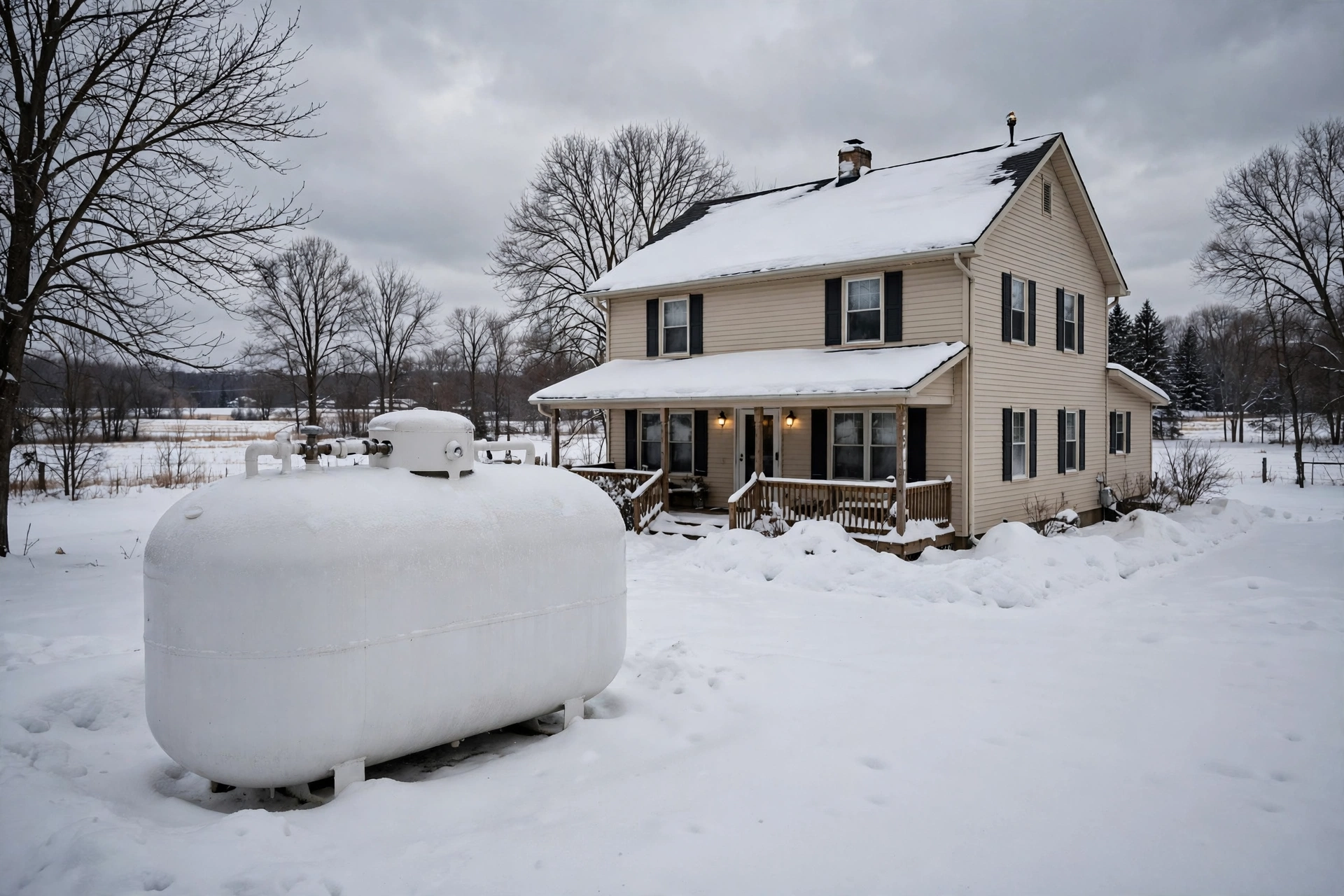
From tank to flame, propane passes through five stages. A fault at any stage shows up at the burners.
A propane furnace depends on its supply chain. Each part has one job, and each shows its own cold-weather weakness.
| Part | Job | Cold-weather note |
|---|---|---|
| Tank | Stores propane on site | Levels fall faster in long cold spells — watch the gauge through winter |
| Regulator | Steps tank pressure down for the furnace | Keep snow and ice clear of it so it can vent |
| Supply line | Carries gas from tank to furnace | Joints and routing are checked for damage and leaks |
| Gas valve | Opens and closes gas to the burners | A sticking valve shows as delayed or failed lighting |
| Burners | Mix gas and air for a steady flame | A yellow or lifting flame points to air or pressure trouble |
In deep cold, a low tank vaporises propane too slowly to meet the furnace's demand, so pressure falls and the furnace starves even though liquid remains. A failing regulator, an iced regulator vent, or an undersized supply line can produce the same symptom, and pressure testing under load separates those causes.
Not without the manufacturer's conversion kit and a proper re-adjustment of orifices, gas valve pressure, and burner settings. Running a natural gas furnace on propane without conversion causes heavy sooting, overheating, and dangerous carbon monoxide levels, so the conversion must be done deliberately and tested.
Keeping the tank well above the low mark before sustained cold is the safest habit, because vaporisation slows as the level and the temperature both fall. Your propane supplier can advise on delivery scheduling for your tank size and your home's usage, and a gauge check before a cold spell is always worthwhile.
Call Quarry Furnace Co. about your furnace — repair, replacement, and tune-ups in St. Cloud and the towns around it.
(320) 389-8174Answers about tanks, regulators, and cold-weather supply.
The furnace design is similar, but propane uses different burner orifices, gas valve settings, and supply arrangements, and it is stored as a liquid in a tank rather than delivered by a pipeline. The two fuels need different setup and testing, and conversion between them requires the manufacturer's kit.
Cold-weather lockouts often trace to falling tank pressure, an iced regulator vent, a weak ignitor, or a vent fault. Because propane is heavier than air, repeated resetting without finding the cause is unwise — the ignition or supply fault should be diagnosed first.
Yes, as part of the fuel supply: tank level, regulator performance under load, regulator vent condition, and supply-line condition are all checked, and we explain when a matter belongs to the propane supplier rather than the furnace technician.
Yes. Any combustion furnace can produce carbon monoxide if the burner, vent, or heat exchanger fails, so alarms near bedrooms and the furnace room are an important backstop alongside annual combustion testing.
Yes. Propane heat is common in the smaller towns and rural homes around St. Cloud, including Rice, Foley, Avon, Albany, and Clearwater, and our service area covers those towns as well as St. Cloud itself.
Leave the area without switching electrical devices on or off, and seek help from outside the home. Do not relight the furnace or search for the leak with a flame. Once the area is safe, the supply and the furnace can be checked properly.
Supply pressure, burner, and combustion checks for propane heat.
(320) 389-8174