St. Cloud, Minnesota(320) 389-8174info@furnacerepairsaintcloudmn.com823 1st St S, St Cloud, MN 56301, USA
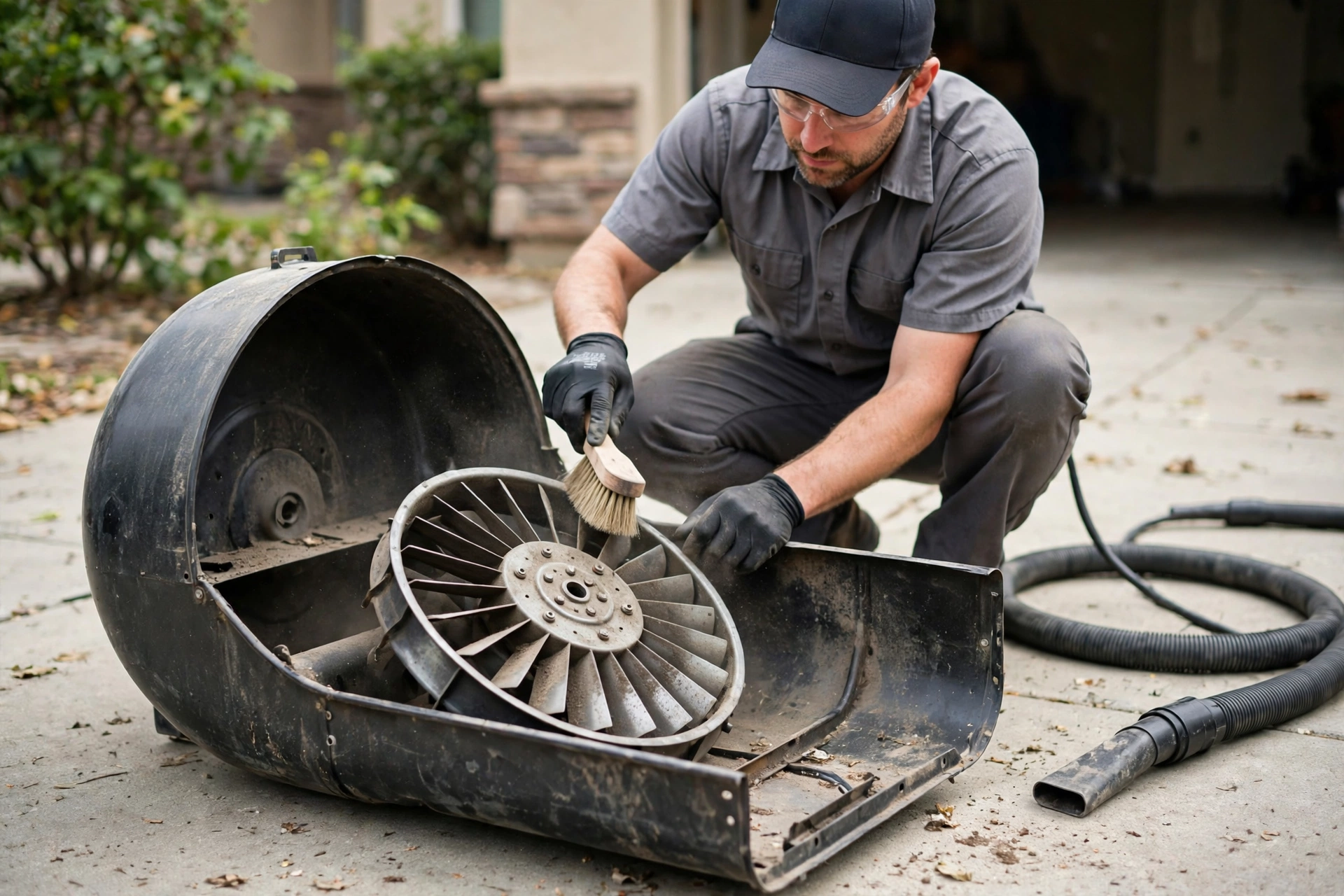
A technician inspecting a furnace blower motor and fan assembly
Blower Motor Services · St. Cloud, Minnesota

Blower Motor Repair in St. Cloud

The blower is the furnace's lungs: it pulls cool air from the house, pushes it across the heat exchanger, and sends warmed air through the ducts. When the blower falters, the whole house feels it — weak airflow, uneven rooms, a furnace that overheats and shuts down. We diagnose blower motors, capacitors, and fan assemblies, and repair what can be repaired.

Call (320) 389-8174Ductwork & Airflow Services

What the Blower Does — and What Fails

A furnace blower has three jobs that must all work together: the motor must spin at the right speed, the fan wheel must move air without wobble or drag, and the control must start and stop the fan at the right moments in the heating cycle. Most blower failures sit in one of those three places. A motor's bearings wear and grow noisy; a capacitor weakens until the motor hums but will not start; a fan wheel collects dust and imbalance; a control board relay sticks and leaves the fan running long after the heat stops.

The symptoms overlap, which is why testing matters more than guessing. A humming motor that will not turn may need a capacitor, not a motor; a motor that runs hot may be fighting a clogged filter or a closed-off duct system rather than failing on its own. We test capacitance, current draw, and bearing play, and we check the air side — filter, ducts, registers — before condemning a motor. That discipline keeps a simple capacitor job from becoming an unnecessary motor replacement, and it connects naturally with our ductwork and airflow work, where restricted ducts are the commonest cause of blower strain.

Blower trouble also masquerades as other faults. A furnace that short-cycles may be overheating because the blower cannot move enough air across the heat exchanger, tripping the limit switch again and again. On gas furnaces that looks like a burner problem; on electric furnaces it looks like an element problem. Checking the blower first, where the symptoms fit, saves chasing the wrong part.

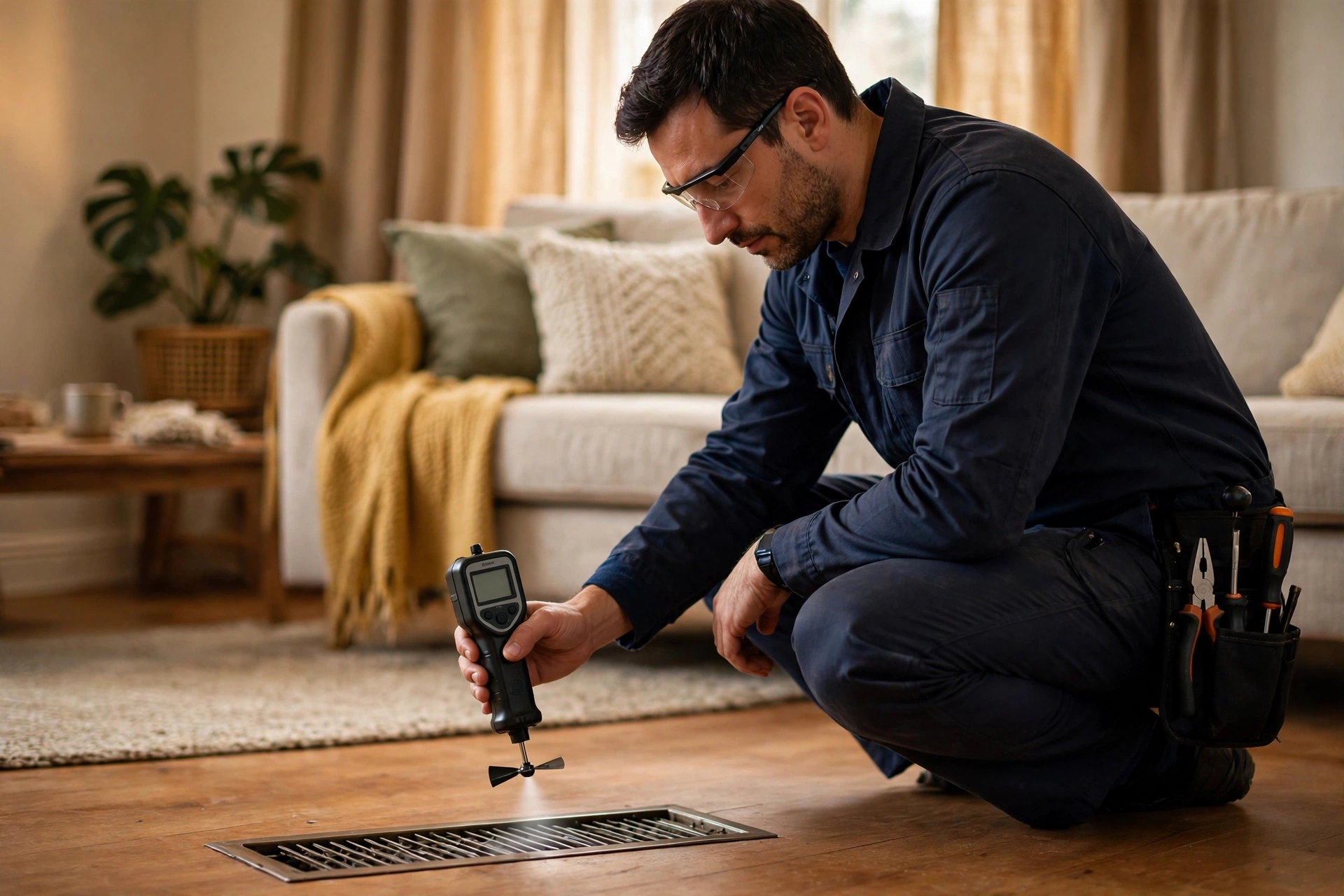
A technician testing a blower motor capacitor with a multimeter

Capacitors, Bearings, and Belts

The capacitor is the blower's starting helper: it gives the motor the phase shift it needs to begin turning, and a capacitor that has lost capacitance leaves the motor humming, slow to start, or stalled. Capacitors are tested with a meter, not by sight — a swollen case is a late sign, and many weak capacitors look perfectly normal. Replacement is a small job with a large effect, and it is the first test on any blower that hums without turning.

Bearings tell their story through sound and feel. A motor that rumbles, squeals, or runs hot at the shaft ends usually has bearings reaching the end of their life, and a shaft that wobbles by hand confirms it. Some older belt-drive blowers still use belts, and a glazed or slack belt slips, squeals, and starves the ducts of air — a cheap part with an outsized effect on comfort. We check all three — capacitor, bearings, belt — before recommending a motor change, and we explain which one failed and why.
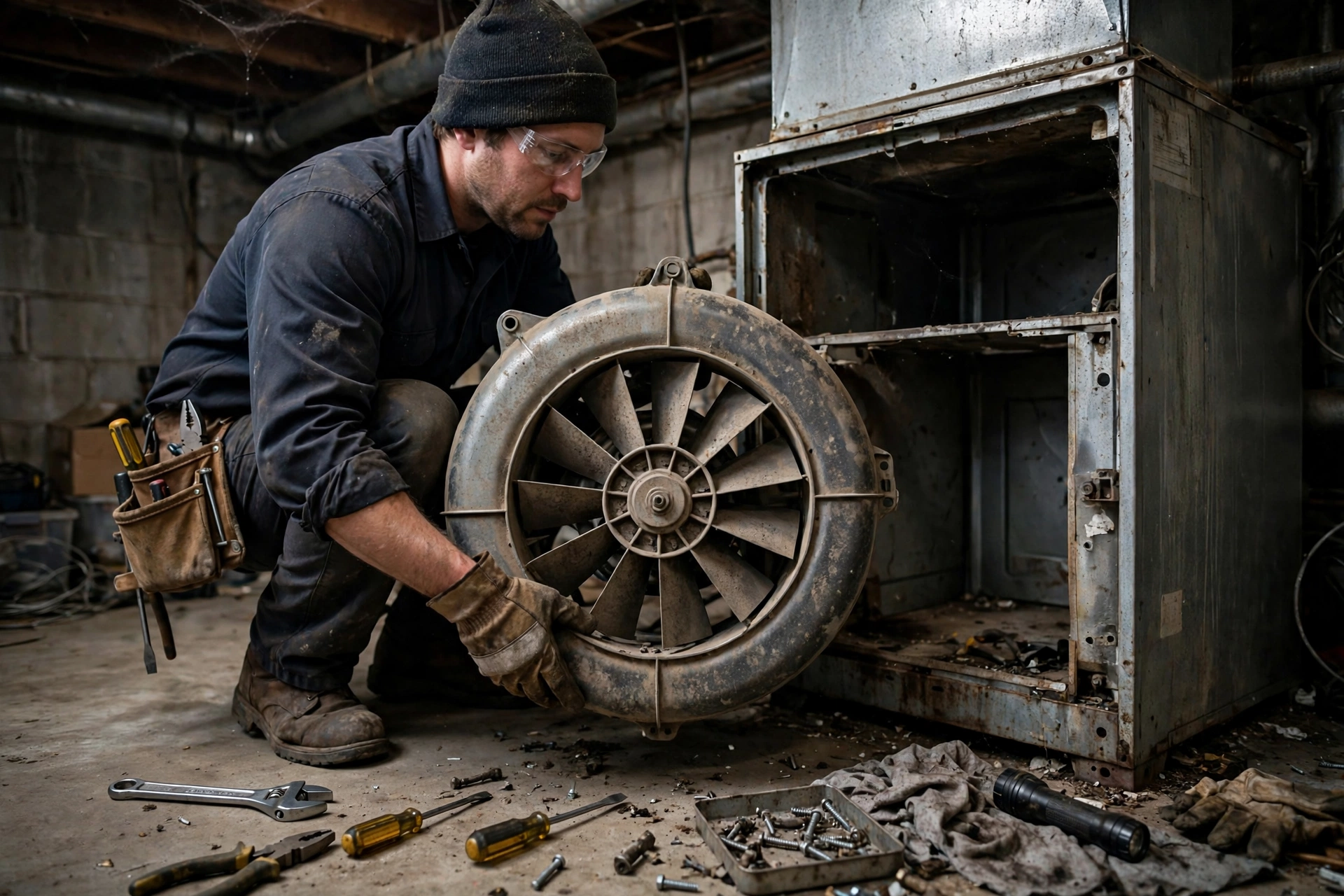
A technician removing a dusty blower fan wheel for cleaning and inspection

Fan Wheels, Housings, and Balance

The fan wheel — the squirrel-cage drum inside the blower housing — moves the air, and it moves it best when its blades are clean and its balance is true. Dust buildup on the blades reduces airflow measurably and adds imbalance, which wears bearings faster and adds vibration through the ductwork. A wheel that has lost a balance weight, or one bent by an object drawn into the return, wobbles at speed and can rub the housing.

We clean fan wheels where buildup is the problem, check balance and clearance, and inspect the housing for cracks and loose mounts that transmit vibration into the home. A blower that has been vibrating for a season often shows the secondary damage too: loosened duct joints, rattling registers, and a filter slot that no longer seals. Those are fixed as part of the same visit where they are found, because a quiet, balanced blower is the foundation the rest of the heating system stands on.

Blower Warning Signs

Sounds and airflow changes worth acting on early.

Humming without starting

Often a weak capacitor — the motor gets power but no starting push.

Squealing or rumbling

Bearings wearing, or a belt slipping on older belt-drive blowers.

Weak air from registers

A slow fan, a dirty wheel, or ducts that are choking the blower's output.

Fan running nonstop

A stuck relay or a control fault keeping the fan on after the heat ends.

A technician fitting a replacement blower motor into a furnace cabinet

When the Motor Itself Must Go

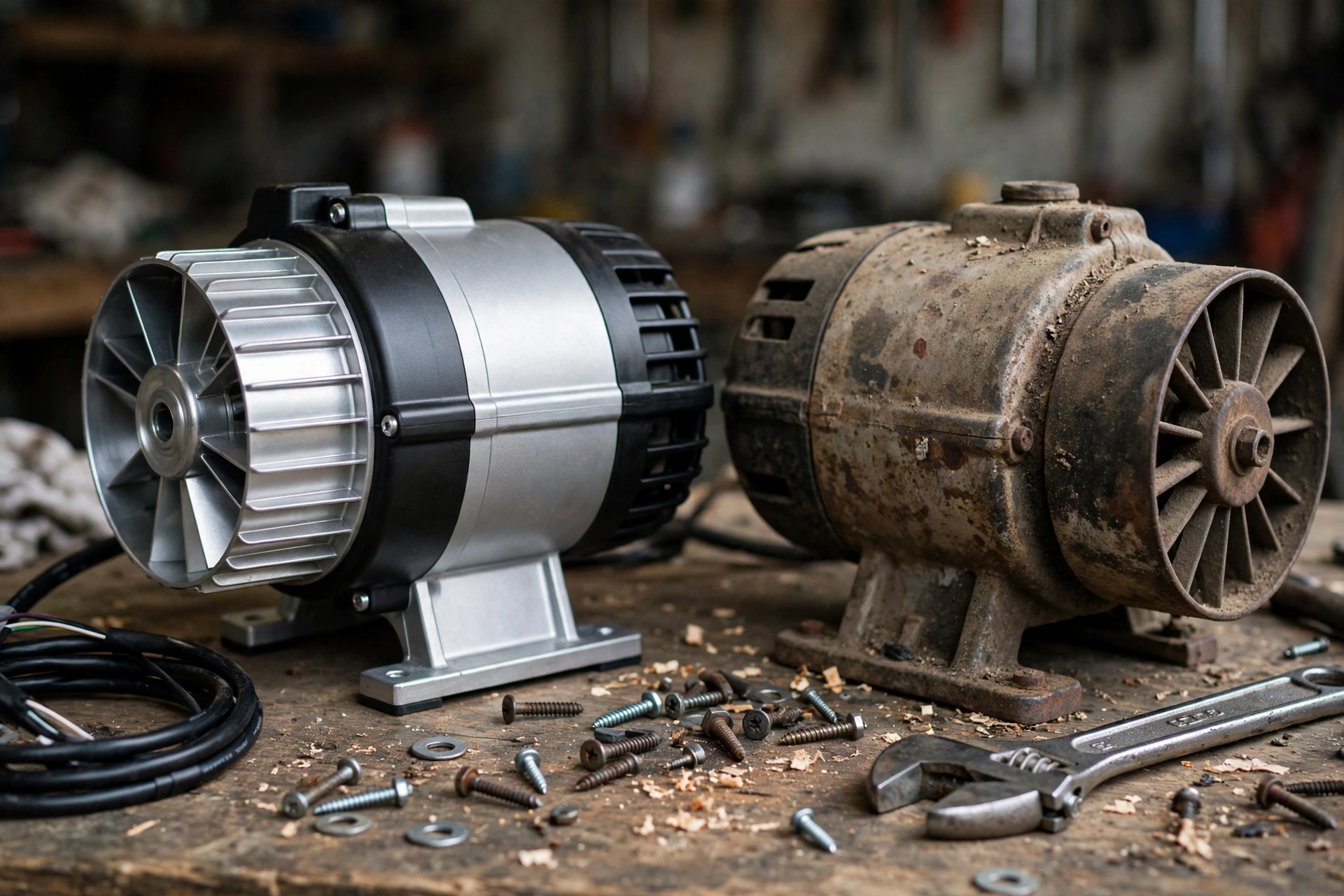
Some motors are beyond economical repair: windings that have shorted, a shaft seized solid, or bearings so worn the rotor rubs the stator. In those cases we fit a replacement motor matched to the furnace — same horsepower, speed range, rotation, and mounting — rather than the nearest motor on the shelf. Variable-speed and multi-speed motors need particular care here, because the control board expects a specific motor type, and a mismatched replacement can run at the wrong speeds or fault the board.

After fitting, we test current draw against the motor's nameplate, confirm each speed stage, and check airflow at the registers so the new motor is proven in the home, not just on the bench. If the furnace is old enough that motor, control, and heat exchanger problems are arriving together, our installation and replacement page explains how that larger decision is weighed, and our thermostat and zone heating page covers fan controls at the wall, including fan-only circulation settings.

The Path Air Takes Through Your Home

A blower does one job: keep air moving in a loop. The loop below is what a weak blower breaks.

Thermostat callsA room drops below its setting and asks for heat.
Blower startsThe motor turns the fan wheel and begins moving air.
Return air drawn inRoom air comes back through return grilles.
Air crosses the heat exchangerIt picks up heat from the exchanger surfaces.
Supply ducts deliverWarm air travels out to each room's registers.
Cycle repeatsCooled room air returns, and the loop runs again.

Blower Speeds, Side by Side

The motor in your furnace runs at one speed, several speeds, or adjusts as it goes. The speed type shapes noise, comfort, and what a repair involves.

Motor speedHow it runsWhat it means for comfort
Single-speedOne airflow rate whenever the blower runsSimple and steady; rooms can feel uneven when only some need heat
Multi-speedSeveral fixed rates the furnace picks betweenQuieter low runs and stronger high runs for different calls for heat
Variable-speedAdjusts gradually to match the call for heatSmoother, quieter runs and steadier room temperatures

Sounds and Signs Worth Mentioning

People Also Ask

Why is my furnace blower so loud all of a sudden?

Sudden blower noise usually means a bearing has failed, a fan wheel has lost balance or picked up debris, a belt has started slipping, or a mounting has loosened. The sound's character helps narrow it down — squealing points to bearings or belts, rumbling to balance or mounts — and a technician can confirm the cause by inspection.

Can a bad blower motor cause my furnace to shut off?

Yes. If the blower cannot move enough air across the heat exchanger, the cabinet overheats and the limit switch shuts the burners or elements down to protect the furnace. The result looks like a heating fault, but the root cause is airflow, which is why blower and duct checks belong in the diagnosis.

Is it worth replacing just the capacitor on a blower motor?

Often, yes. A weak capacitor is one of the commonest blower faults and one of the cheapest to fix, and a motor that hums but will not start frequently returns to normal service with a new capacitor. Testing capacitance first avoids replacing a motor that only needed its starting helper.

Need a Furnace Technician?

Call Quarry Furnace Co. about your furnace — repair, replacement, and tune-ups in St. Cloud and the towns around it.

(320) 389-8174

Blower Motor Questions

Answers about fans, capacitors, and airflow.

How do I know if my blower motor is failing?

Warning signs include humming without starting, squealing or rumbling, weak air from registers, a motor that runs hot, and a furnace that short-cycles from overheating. Testing capacitance, current draw, and bearing play separates motor failure from capacitor, belt, and duct causes.

What does a blower motor capacitor do?

It gives the motor the electrical phase shift needed to start turning and, on some motors, helps it run efficiently. A capacitor that has lost capacitance leaves the motor humming, slow to start, or stalled, and it is tested with a meter and replaced when weak.

Why does my furnace fan run all the time?

A fan set to continuous circulation at the thermostat will run by design, but a fan that will not stop when set to automatic usually points to a stuck relay on the control board or a control fault. Checking the thermostat setting first rules out the simple explanation.

Can a dirty filter damage the blower motor?

Yes, over time. A clogged filter starves the blower of air, making the motor work harder and run hotter while the furnace overheats and trips its limits. Regular filter changes are the cheapest protection a blower motor has.

Do variable-speed blowers need different repair?

They need matched parts and control-aware testing, because the control board communicates with the motor and expects a specific type. A mismatched replacement can run at wrong speeds or fault the board, so motor type, speed range, and rotation must all match.

Do you repair blowers in commercial furnaces too?

Yes. Small commercial buildings use similar blower assemblies, often in larger sizes and longer duty cycles, and the same testing — capacitor, bearings, current draw, airflow — applies. Our commercial furnace page covers the broader commercial service picture.

Blower Noisy, Slow, or Stalled?

Capacitor, bearing, and motor testing — and honest advice on repair or replacement.

(320) 389-8174

Related Pages