A furnace can only heat the rooms its air reaches. Leaky joints, crushed runs, unbalanced dampers, and starved returns all steal warmth before it arrives — and they make the furnace work harder for less comfort. Our ductwork and airflow work stays on the furnace side of the system: the supply and return runs that carry heated air, balanced room by room.

Uneven heating usually has a duct explanation. A room at the end of a long run receives less air than a room beside the furnace; a room with its damper closed or its register blocked receives almost none; a room above an unheated garage loses heat faster than the duct can replace it. The fix starts with measurement: an anemometer reading at each register shows which rooms are starved and by how much, rather than leaving the diagnosis to feeling alone.
Balancing follows measurement. Dampers in the main trunk and branch runs are adjusted so air is shared fairly, not simply sent wherever the path is easiest. That adjustment is a furnace-system job, and it pairs with blower motor health — a weak blower cannot deliver balanced air no matter how the dampers are set, and a strong blower pushing into crushed or disconnected ducts wastes its effort. Where a room stays cold despite balanced airflow, our thermostat and zone heating page covers room-by-room control as a further step.
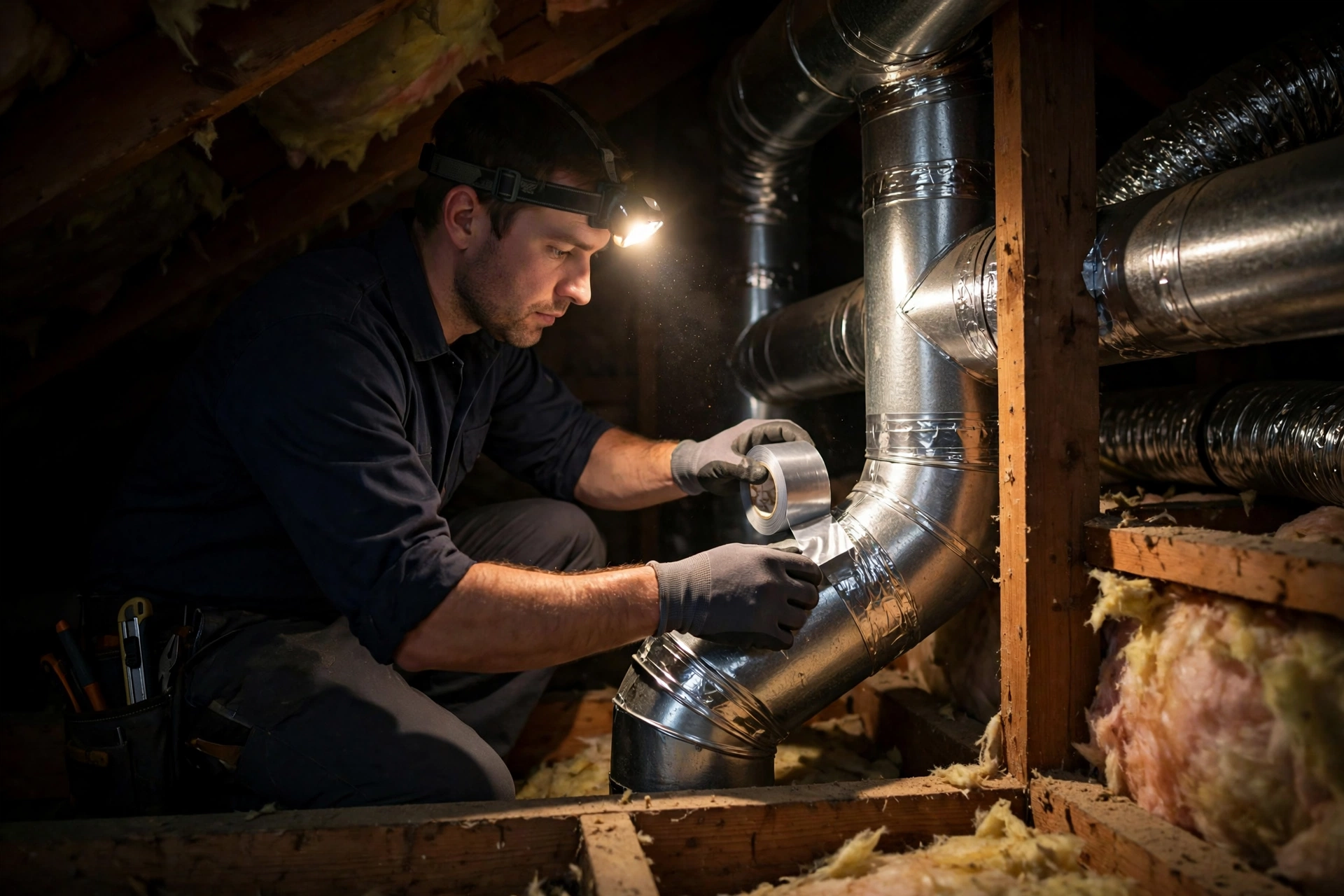
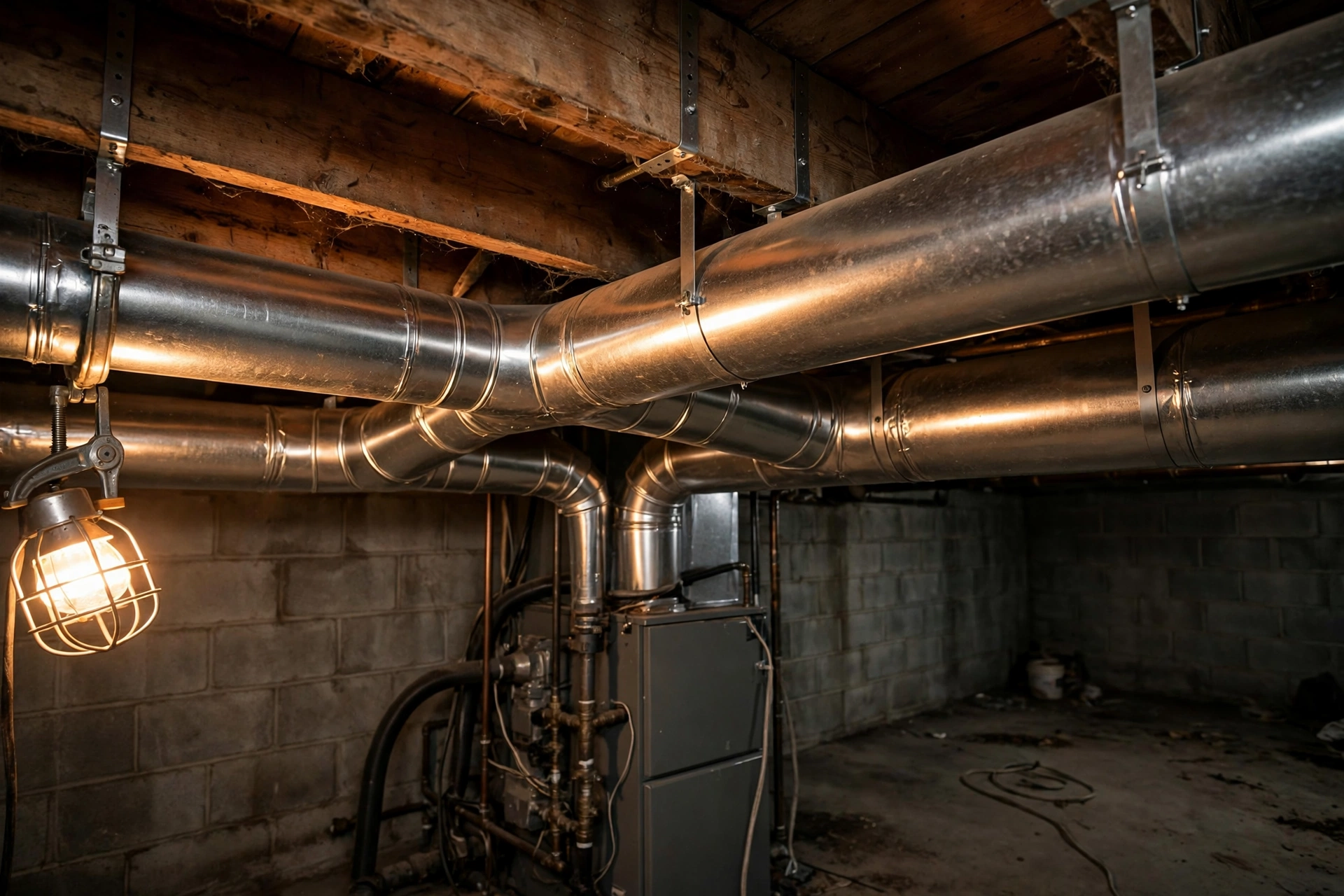
Duct joints leak. Tape dries out, mastic cracks, and a joint knocked loose during other work can pour heated air into a basement or attic for a whole winter. Sealing those joints with mastic and proper mechanical fastening, rather than cloth tape that fails again, keeps heated air in the ducts and out of spaces nobody lives in. We inspect accessible runs — basement trunks, joist spaces, and any exposed branches — for disconnected joints, crushed flexible runs, and insulation that has slipped or gone missing.
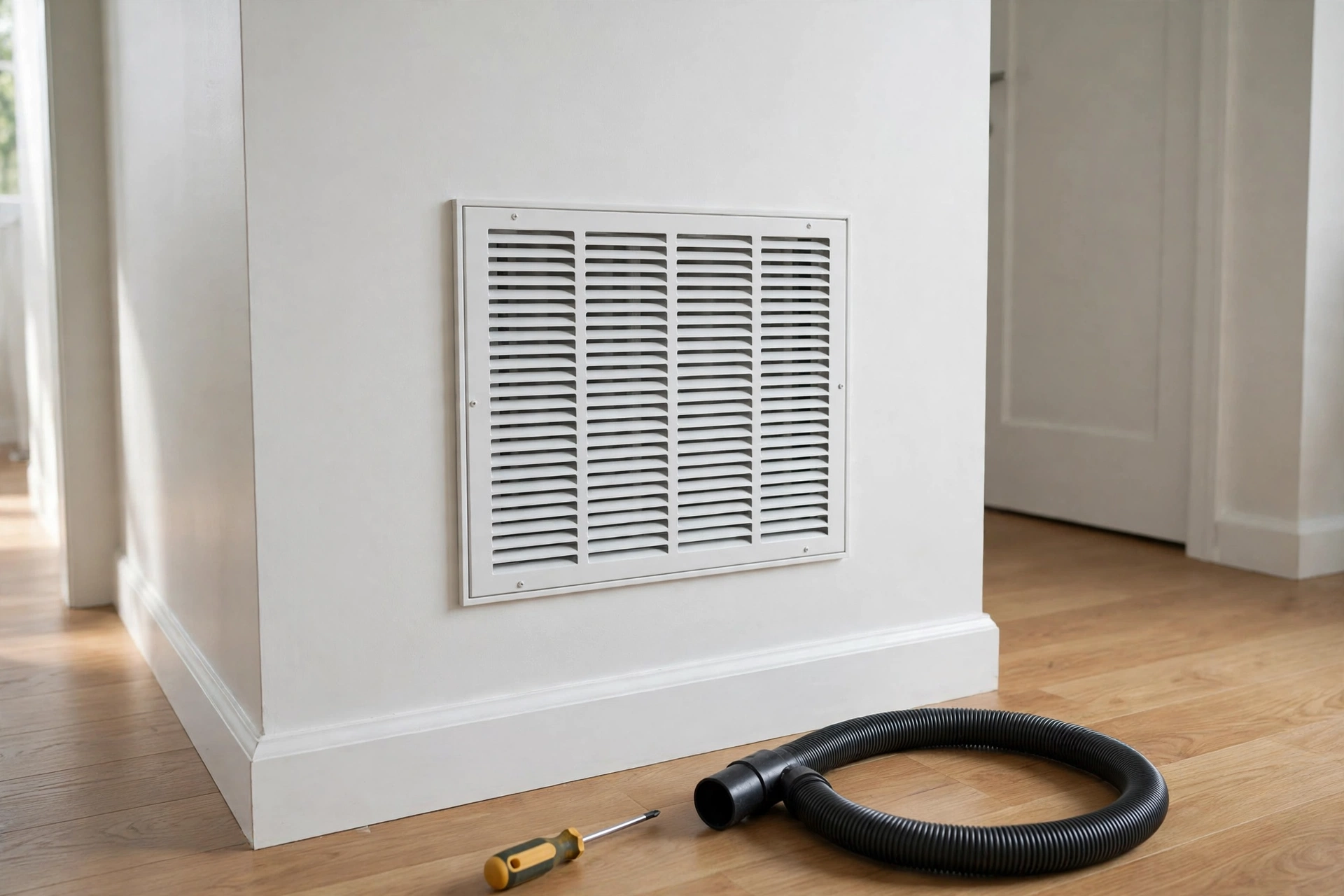
Return air deserves equal attention, because a furnace can only supply what it can draw back. A home with too little return — a single grille for a whole floor, a return blocked by furniture, a bedroom door that seals its room off from the return path — starves the blower, overheats the furnace, and leaves rooms stuffy or cold. Adding or enlarging a return grille, or cutting a transfer path between rooms, often improves comfort more than any furnace adjustment. That return-side work is part of furnace airflow service, and it is checked alongside supply balance on every visit.
One boundary is worth stating plainly: this page covers the ducts that carry furnace heat. It is not a general duct-cleaning service, and it does not cover cooling equipment. The focus is the furnace's air system — supply, return, balance, and sealing — so the heat the furnace makes actually reaches the rooms it is meant for.

Sealing starts with the joints that matter most: trunk connections, branch take-offs, and any joint in an unconditioned space, where leaked air is lost entirely. Mastic — a thick, durable sealant — is applied over mechanically fastened joints, and foil tape rated for duct use backs it up where a joint needs a flexible seal. The work is unglamorous and largely invisible once done, which is exactly why it is often skipped — and why it repays attention in comfort and in furnace run time.
Insulation follows sealing on runs through cold spaces. An uninsulated supply run through a cold basement or garage loses heat along its length, so the register at its end delivers lukewarm air even when the furnace is working hard. Replacing slipped or missing insulation on those runs, and keeping it dry and intact, is part of the same job. After sealing and insulating, we re-measure register airflow, because the proof of duct work is in the rooms, not in the basement.
Measured, not guessed.
Anemometer measurements at each supply register show which rooms are starved.
Trunk and branch dampers are adjusted so air is shared fairly across rooms.
Return grilles and room transfer paths are checked for starved-air symptoms.
Accessible runs are inspected for leaks, crushing, and missing insulation.

Two homeowner habits protect furnace airflow more than any technician visit: changing the filter on schedule, and keeping supply registers open and unblocked. A clogged filter is the commonest cause of starved air, and it punishes the blower and the heat exchanger alike — the furnace overheats, the limits trip, and the blower wears early. Furniture, rugs, and drapes over a register have the same effect room by room, and closing registers in unused rooms rarely saves heat: it raises duct pressure and starves the rest of the system.
If airflow problems persist after filters and registers are right, the next steps are measured: damper balance, return capacity, and duct sealing, in that order. And if the furnace itself is the ageing part of the system, our installation and replacement page covers how a new furnace is matched to the ductwork it will breathe through, and our tune-up and safety inspection includes airflow checks as a routine part of the annual visit.
Ducts leak at joints, runs, and returns. Each leak point shows differently, and each has its own repair.
| Leak point | How it shows | What we do |
|---|---|---|
| Joints | Tape dries out and mastic cracks, spilling air into basements or attics | Joints are sealed with mastic and proper mechanical fastening |
| Disconnected runs | A whole room stops warming while the furnace runs | The run is refitted and sealed at both ends |
| Crushed flexible runs | Airflow thins to the rooms beyond the crush | The run is replaced or re-routed |
| Missing insulation | Heat fades along cold runs before it reaches rooms | Insulation is restored on exposed runs |
| Too little return | Rooms feel stuffy or cold and the furnace overheats | Return grilles are added or enlarged, or a transfer path is cut |
Supply and return are one loop. A fault anywhere in the loop shows up as a cold room.
Uneven rooms usually trace to duct balance: long runs deliver less air, closed dampers or blocked registers starve a room, and poor return paths trap air where it cannot circulate. Measuring airflow at each register shows which rooms are short, and damper adjustment, return improvements, or duct sealing then share the heated air more fairly.
Yes, where joints are leaking. Heated air escaping into a basement, attic, or wall cavity never reaches a room, so sealing those joints with mastic raises delivered airflow and can shorten furnace run time. The gain is greatest on runs in unconditioned spaces, where every leaked unit of heat is lost entirely.
Generally no. Closing registers raises pressure in the duct system, starves the blower, and can overheat the furnace while barely reducing its run time. Balanced dampers and, where appropriate, zone controls manage unused rooms better than closed registers, and a technician can advise on the right approach for your layout.
Call Quarry Furnace Co. about your furnace — repair, replacement, and tune-ups in St. Cloud and the towns around it.
(320) 389-8174Answers about balance, leaks, and return air.
Weak airflow can come from a clogged filter, a slowing blower, closed or blocked registers, crushed or disconnected ducts, or dampers set against a room. Measuring airflow and checking each of those in turn finds the cause, since several of them feel identical from the register.
An anemometer measures airflow at each register, then trunk and branch dampers are adjusted so rooms receive air in proportion to their heating need. The readings are re-checked after adjustment, because balance is proven by measurement, not by damper position alone.
Yes. Older homes often have a mix of duct materials, added branches from past remodels, and runs that were never balanced. We inspect accessible runs, seal leaking joints with mastic, adjust dampers, and explain honestly where a run is hidden and cannot be reached without opening finishes.
No — this service covers the furnace air system: supply and return balance, damper adjustment, joint sealing, and insulation on furnace duct runs. It is not a standalone duct-cleaning service, and it does not cover cooling equipment.
Overheating usually means the furnace cannot move enough air across its heat exchanger or elements — a clogged filter, a failed blower, closed registers, or starved return air. The limit switch shuts the heat down to protect the furnace, and the airflow fault behind it should be found.
Very much. A furnace can only supply the air it can draw back, so a home with too little return leaves rooms stuffy, starves the blower, and heats unevenly. Return grilles, transfer paths, and bedroom door undercuts all shape how well heated air circulates.
Measured register readings, damper balance, and duct sealing for furnace heat.
(320) 389-8174