St. Cloud, Minnesota(320) 389-8174info@furnacerepairsaintcloudmn.com823 1st St S, St Cloud, MN 56301, USA
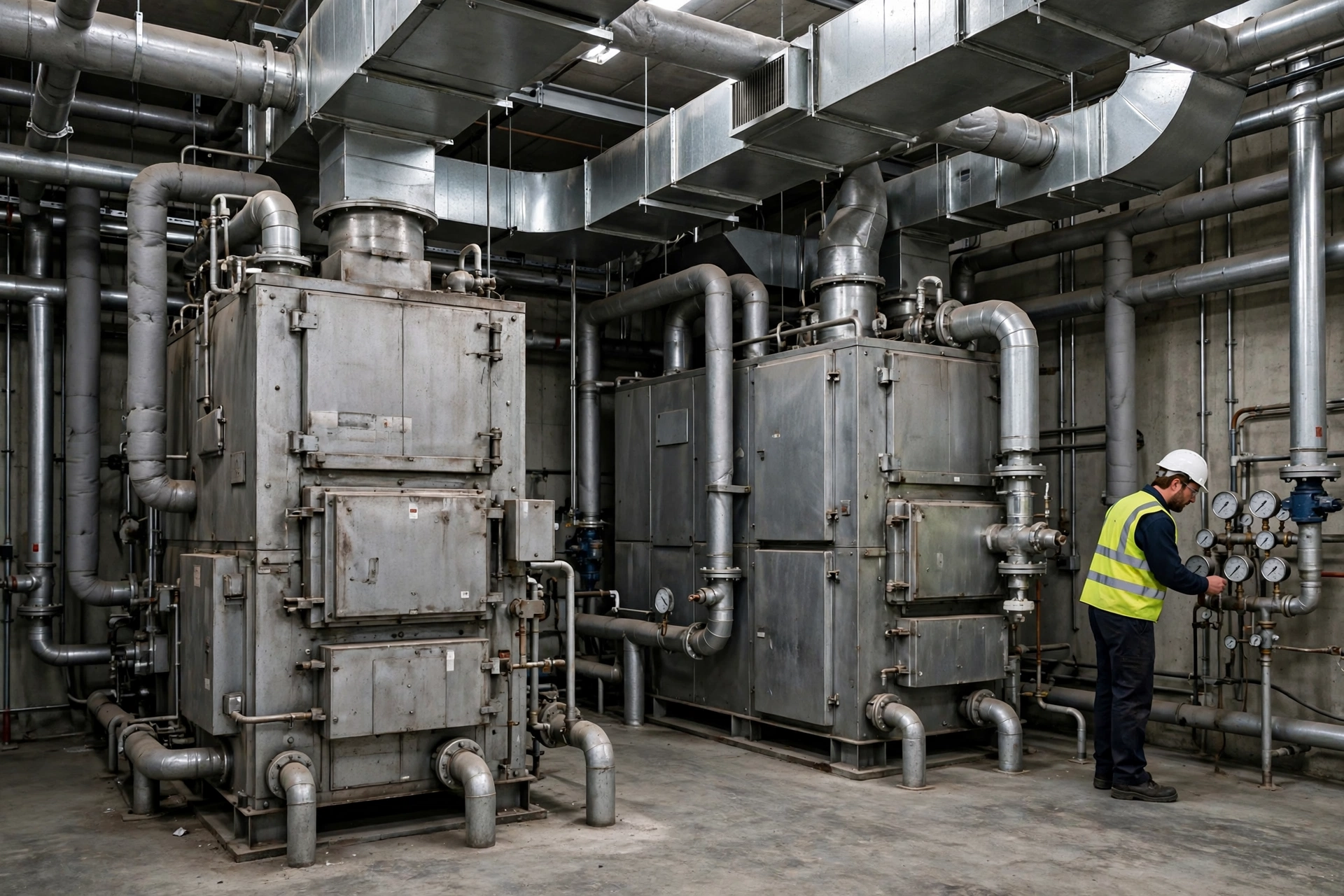
A technician servicing a large commercial furnace in a shop mechanical room
Commercial Furnace Services · St. Cloud, Minnesota

Commercial Furnace Services in St. Cloud

A shop, office, or small commercial building depends on its heat the same way a home does — except the space is larger, the hours are longer, and a cold morning costs a day's business. We service commercial furnaces in St. Cloud with the same testing discipline as residential work, scaled to bigger equipment and planned around the working day.

Call (320) 389-8174Contact Us About Commercial Work

A technician inspecting a commercial furnace burner assembly

Bigger Spaces, Longer Hours

Commercial furnaces differ from residential units in scale and duty. They serve larger floor areas, often with higher ceilings and bigger duct systems, and they run longer hours across the working week. That duty cycle wears ignition parts, blower bearings, and heat exchangers faster than a home furnace's gentler schedule, and it makes a missed annual service more costly — a fault that would inconvenience a household can close a shop floor.

The equipment itself varies: larger gas furnaces, packaged units, and multi-unit installations where several furnaces share a building's load. Each unit gets its own inspection — burners, ignition, heat exchanger, blower, controls — because a fault in one unit can hide behind the output of its neighbours until a cold snap exposes it. Our gas furnace services cover the combustion side in detail, and our heat exchanger checks apply with extra weight here, where run hours are longer.

Planned Maintenance for a Working Building

The most useful thing a business can do for its heating is to put it on a plan rather than leaving it to breakdowns. A planned visit before the heating season checks every unit, tests combustion, inspects heat exchangers, cleans burners, and checks blowers and belts — so faults are found while the weather is mild and parts can be ordered without urgency. That rhythm mirrors our residential tune-up and safety inspection, extended across every furnace in the building.

Planning also means records. A building with several furnaces benefits from a simple log per unit — what was checked, what was replaced, what is ageing — so the next visit starts from knowledge rather than from scratch. We keep that record straightforward: unit by unit, fault by fault, with ageing parts flagged before they fail rather than after. For a building weighing replacement of an ageing unit, our installation and replacement page explains sizing and fitting at commercial scale.

Timing matters for commercial work as much as for homes. Visits are arranged to suit the building's working hours where possible, and work that needs a unit shut down is planned so the rest of the building keeps heating. A furnace that must stay off for a safety reason — a cracked heat exchanger, for example — stays off, and that finding is explained to the building's responsible person plainly, with the options and their consequences.

A technician checking commercial furnace controls and wiring

Controls, Zones, and Thermostats at Work

Commercial buildings often heat in zones — a shop floor, offices, a storage area — each with its own thermostat or control, and sometimes with dampers dividing a shared duct system. A zone that stays cold while others overheat usually points to a damper, a thermostat, or a control fault rather than to the furnace itself, and diagnosing it means tracing the control chain from the wall to the unit. Our thermostat and zone heating work covers that control side, including multi-zone damper systems.

Setback schedules deserve attention too. A building that drops its temperature overnight and recovers before opening saves run time, but a recovery that starts too late leaves a cold first hour — and a schedule that fights the furnace's staging wastes the saving. We check thermostat programming against the building's actual hours, so the schedule serves the working day rather than an assumed one.

Commercial Service Priorities

What gets the closest look in a working building.

Every unit, individually

Multi-unit buildings are checked unit by unit — neighbours can hide a failing furnace.

Heat exchangers and combustion

Longer run hours make exchanger inspection and combustion testing especially important.

Blowers and belts

Larger fans and belt drives wear with duty cycle and need regular bearing and belt checks.

Controls and zones

Thermostats, dampers, and setback schedules are verified against the building's real hours.

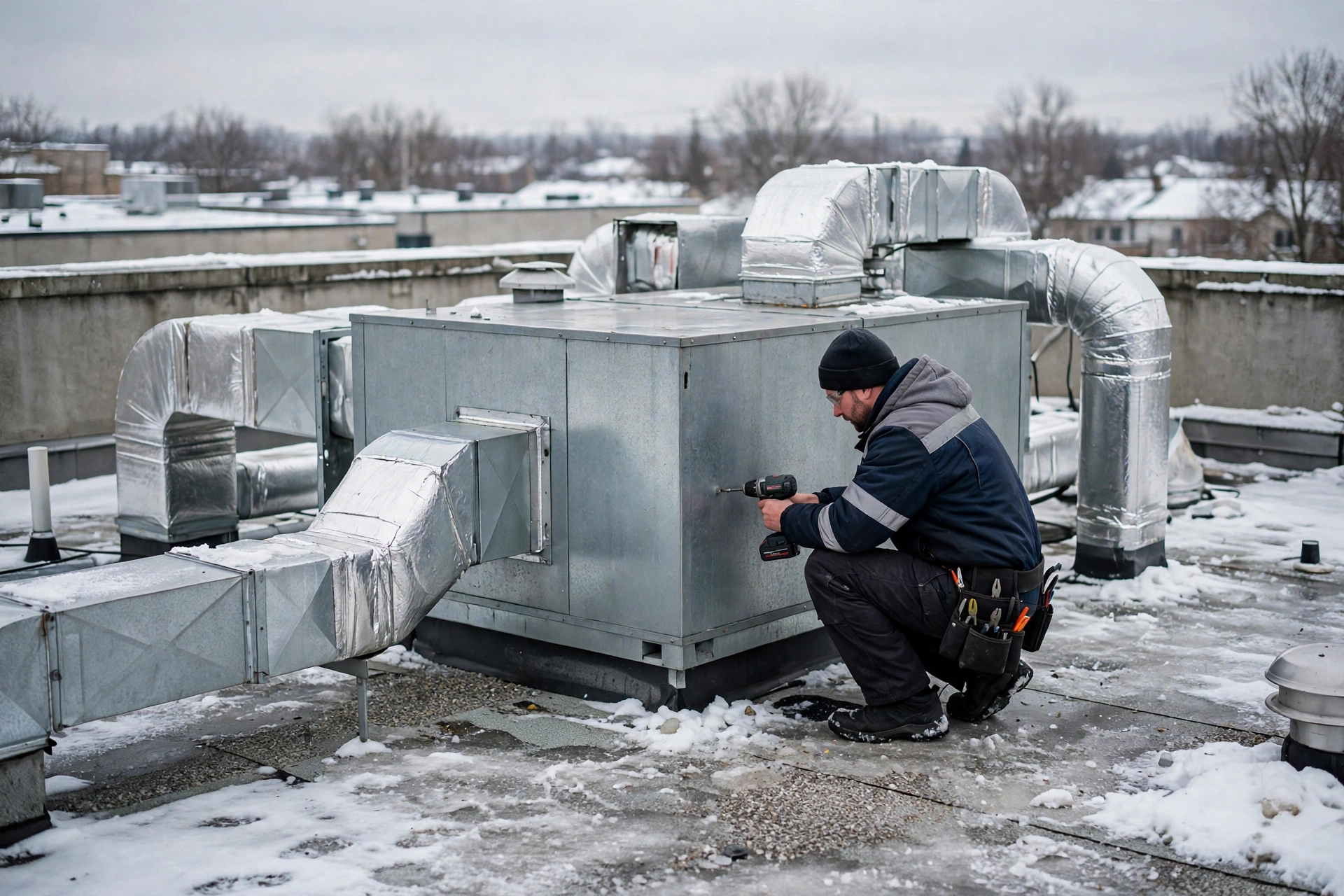
A technician measuring airflow at a commercial supply duct

Ducts, Airflow, and the Shop Floor

Commercial duct systems are larger, longer, and more likely to have been extended as a building changed use — a shop that became offices, a storage area that became a showroom. Those extensions often leave parts of the system starved or over-supplied, and the fix is the same measured approach as in a home: register readings, damper balance, joint sealing, and return capacity, at commercial scale. Our ductwork and airflow page explains that method, and blower motor repair covers the larger fans that drive these systems.

If a commercial furnace stops heating during working hours, the first steps are the same as at home: check the thermostat setting, the filter, and whether the unit is locked out or tripped — and call before resetting repeatedly, since a lockout is reporting a fault. Describe the unit, the zone affected, and what the furnace is doing, and that detail shapes the visit. Our contact page lists the phone and email for arranging commercial work.

How Heat Reaches a Working Building

A working building heats in zones. The flow below follows heat from the wall control to the shop floor.

Controls callThermostats in each zone ask for heat.
Units fireFurnaces answer their own zones.
Ducts distributeShared or separate ducts carry warm air.
Dampers divideDampers balance zones that need different amounts.
Return air comes backAir returns to be heated again.

What to Tell Us About a Building

Three Shapes of Commercial Heat

Commercial buildings heat in different shapes. The shape decides how units are inspected and how a fault hides.

ShapeWhere it fitsWhat we watch
Larger gas furnaceA single large space with long run hoursIgnition parts, bearings, and exchangers wearing faster under long duty
Packaged unitA building served by self-contained unitsEach unit on its own — a fault in one can hide behind its neighbours
Multi-unit installationSeveral furnaces sharing a building's loadEvery unit inspected separately, so no fault hides until a cold snap

People Also Ask

How is commercial furnace service different from residential service?

The testing is the same, but the scale and duty differ: larger equipment, longer run hours, bigger duct systems, and often several units sharing a building's load. Each unit is inspected individually, records are kept per unit, and visits are planned around the building's working hours so a shutdown affects as little of the day as possible.

Should a business have its furnaces serviced every year?

Yes. Longer run hours wear ignition parts, bearings, and heat exchangers faster than a home schedule, so an annual pre-season visit — burners, ignition, exchanger inspection, combustion testing, blower and belt checks — finds faults while the weather is mild and parts can be ordered without urgency.

What should I do if one zone of my building stays cold?

Check the zone thermostat setting and whether its registers are open, then consider a damper, control, or duct fault rather than a furnace failure. Tracing the control chain from the thermostat to the unit, and measuring airflow in the cold zone, usually separates a control problem from a heating problem.

Need a Furnace Technician?

Call Quarry Furnace Co. about your furnace — repair, replacement, and tune-ups in St. Cloud and the towns around it.

(320) 389-8174

Commercial Furnace Questions

Answers about scale, planning, and working hours.

Do you service furnaces in shops and offices?

Yes. Small commercial buildings — shops, offices, workshops, and similar spaces in St. Cloud and the surrounding towns — are covered, including multi-unit installations where several furnaces share a building's heating load.

Can service visits be arranged around working hours?

Visits are arranged to suit the building's working day where possible, and work needing a unit shut down is planned so the rest of the building keeps heating. A unit that must stay off for safety stays off, and that finding is explained plainly.

Do commercial furnaces need different parts?

Often, yes — larger motors, heavier-duty ignition parts, and commercial-rated controls — and parts are matched to the unit's model and data plate. Using a residential part where a commercial one is specified can change performance and safety.

How do you keep records across several furnaces?

Each unit gets its own simple record: what was checked, what was replaced, and what is ageing. That way the next visit starts from knowledge, ageing parts are flagged before they fail, and replacement planning is based on the building's real history.

What if a commercial furnace fails during business hours?

Describe the unit, the zone affected, and what the furnace is doing — whether it is locked out, tripped, or running without heat — and call rather than resetting repeatedly. That detail shapes the visit and avoids turning a fault into damage.

Do you install replacement commercial furnaces?

Yes. Replacement at commercial scale follows the same discipline as residential work: load calculation for the space, duct and vent check, and fitting to the manufacturer's instructions and code requirements, planned around the building's working hours.

Commercial Furnace to Look After?

Planned service for shops, offices, and small commercial buildings.

(320) 389-8174

Related Pages