Manufactured and mobile homes heat differently from site-built houses: smaller cabinets, tighter closets, compact duct runs, and furnaces built to a specific standard for these homes. We service manufactured-home furnaces on their own terms — with the right parts, the right clearances, and an eye for the duct and vent details that only these homes have.
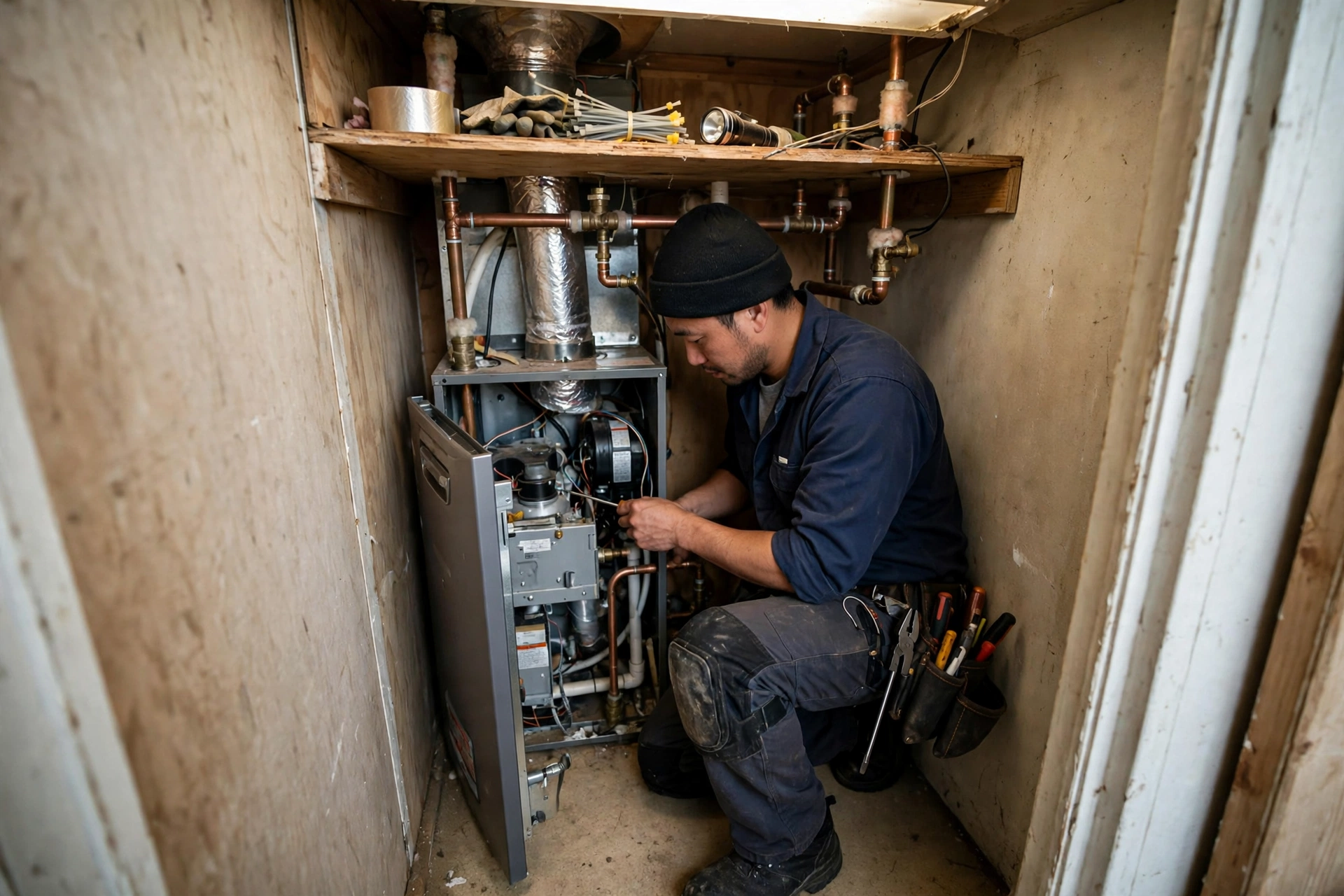
A manufactured home furnace sits in a smaller space, serves a smaller floor area, and connects to a duct system that runs beneath the floor or through a compact chase rather than through a full basement. The furnace itself is built to the federal manufactured-housing standard for these homes, with a data plate that states the home types it is approved for — and a furnace not approved for manufactured-home use should not be fitted in one, however well it might fit the closet.
That smaller scale changes every diagnosis. Airflow margins are tighter, so a clogged filter or a crushed underfloor duct run has a larger effect than the same fault in a site-built home. Closet clearances are tighter too, so combustion air and venting need exact attention: a furnace closet that has been filled with storage, or a vent that has been altered during a remodel, can starve or mis-vent a furnace that was fine when installed. We check the closet, the combustion air openings, and the vent route as part of every manufactured-home visit, not as an afterthought.
Many manufactured homes around St. Cloud use electric furnaces or propane furnaces, and both types appear in these compact cabinets. The fuel changes the checks — elements and sequencers on electric models, supply pressure and regulators on propane — but the manufactured-home particulars stay the same: right-sized parts, correct clearances, and ducts that suit the home's layout.

The furnace closet in a manufactured home is a working space, not a storage cupboard, and keeping it clear is a safety matter. Manufacturers state minimum clearances to combustible surfaces, and those clearances assume the closet is used as designed. Boxes, paint cans, and laundry stacked against the cabinet block combustion air, trap heat, and can melt or scorch. We check clearances against the data plate and the installation instructions, and we say plainly when storage needs to move.
Combustion air openings in the closet door or wall must stay open too. A louvered door replaced with a solid one during a remodel, or a vent grille painted shut, can quietly starve a gas or propane furnace of the air its burner needs — leading to poor combustion, soot, and carbon monoxide risk. We inspect those openings, and where a home has been altered, we explain what needs restoring before the furnace runs again.
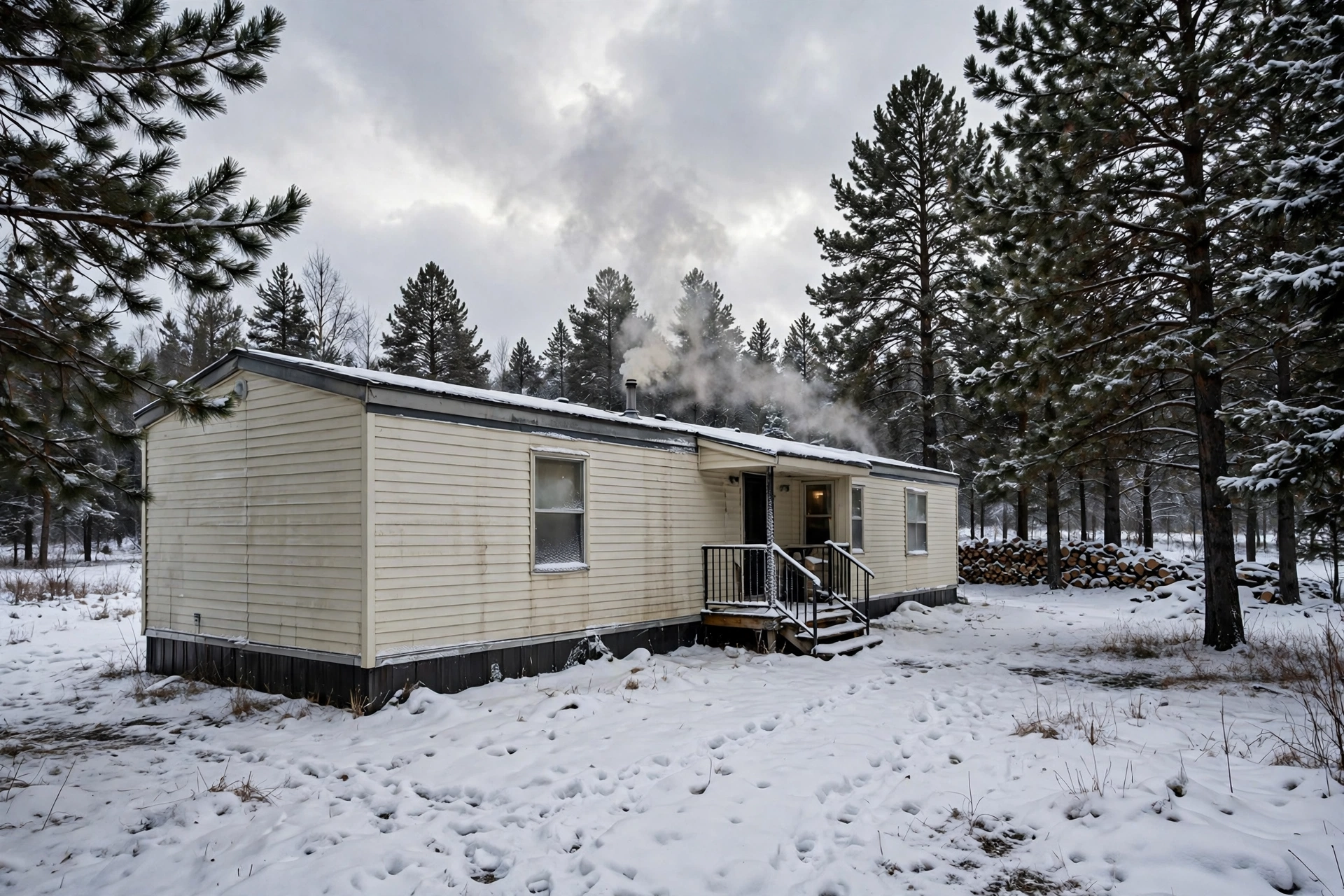
The particulars that differ from site-built homes.
The furnace must be approved for manufactured-home use — the data plate decides, not the fit.
Clearances to combustibles and access for service are checked against the manufacturer's instructions.
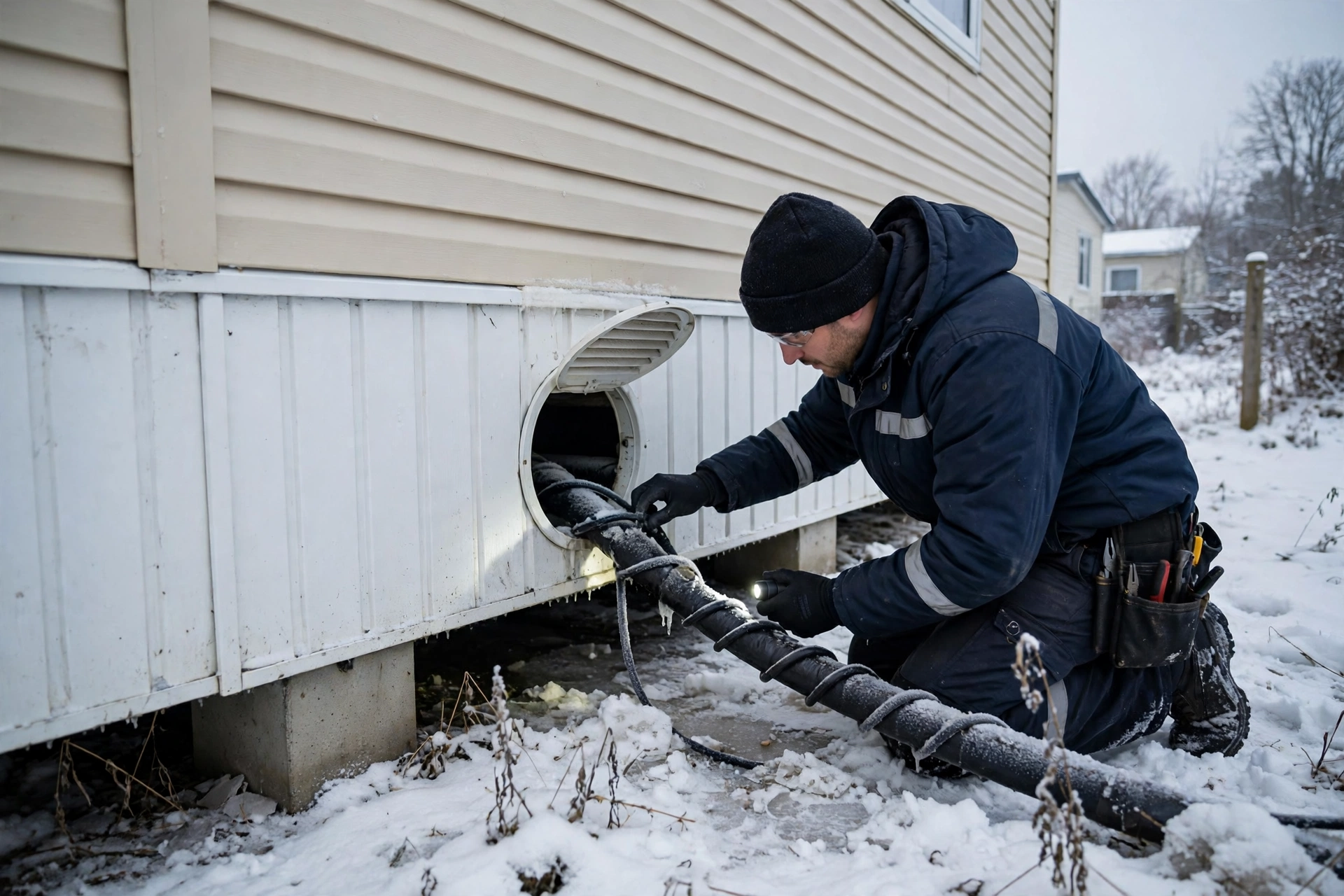
Belly-duct runs are checked for crushing, disconnection, and water damage where accessible.
Vent routes and combustion-air openings are inspected for alteration or blockage.

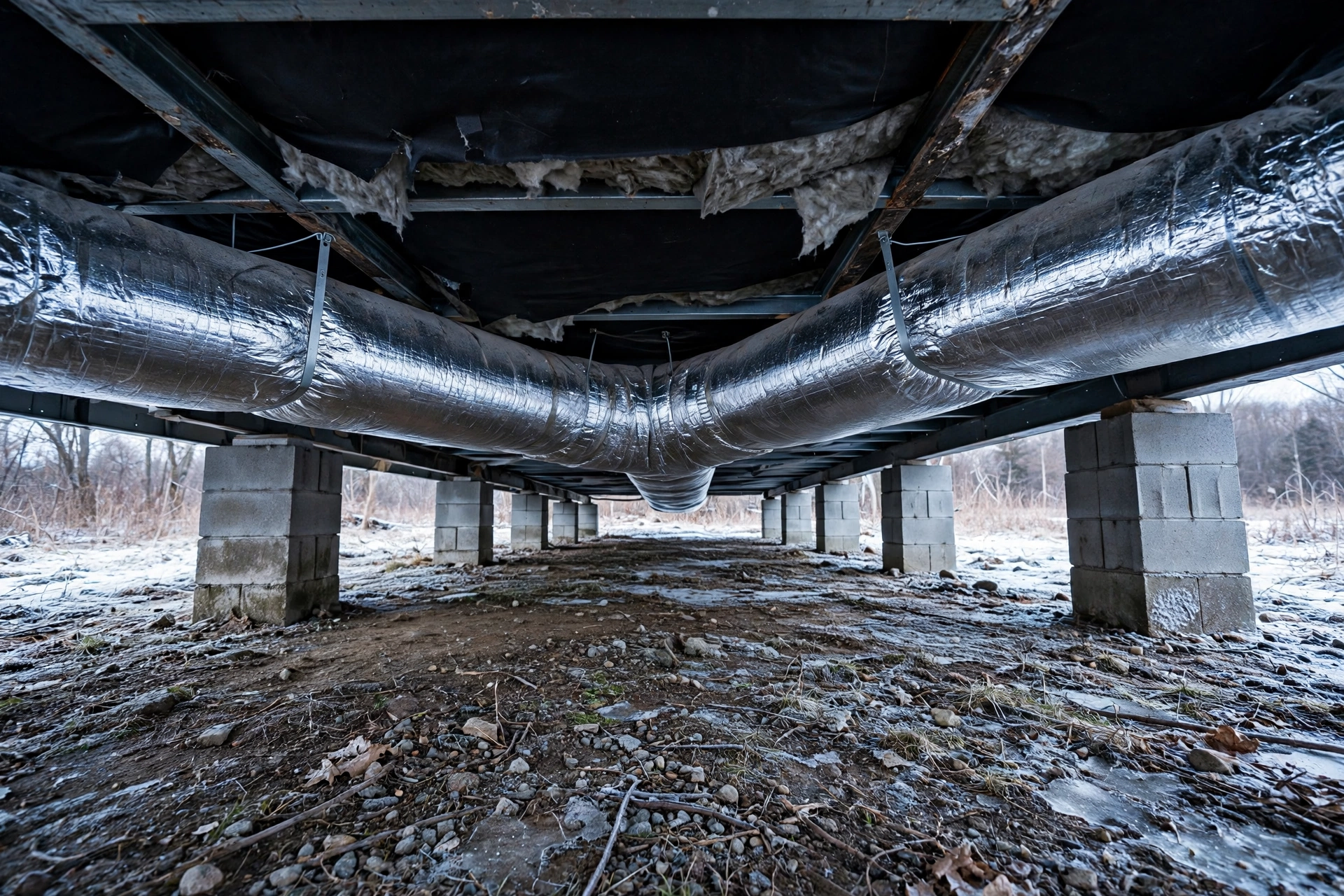
Many manufactured homes carry their ducts beneath the floor, with a crossover duct joining the two halves of a double-wide home. Those runs live in a harsher environment than basement ducts: road vibration during delivery, settling on piers, moisture from the ground, and the occasional animal intrusion all damage them. A crushed or disconnected crossover duct leaves one half of the home cold while the furnace works hard, and the symptom — one side cold, one side warm — is often misread as a furnace fault.
We inspect accessible underfloor runs for crushing, separation, and water damage, and we check the crossover connection itself, since it is the single most failure-prone duct joint in a double-wide home. Where a run is hidden behind skirting or belly board that cannot be opened without damage, we say so and explain the options. That duct work connects with our ductwork and airflow service, which covers the furnace air system in full, and with blower motor repair, since a blower fighting crushed ducts wears early.

Manufactured-home furnaces use parts sized for their cabinets — smaller blower assemblies, specific control boards, and burners or elements matched to the unit. A generic part that fits the space but not the specification can change airflow, staging, or combustion, so we match parts to the furnace model and data plate rather than to the closet dimensions. Thermostats in manufactured homes also deserve a look: older two-wire controls and newer programmable models behave differently, and a mismatch can short-cycle the furnace.
When a manufactured-home furnace reaches the end of its life, replacement must again be a manufactured-home-approved unit, sized to the home and fitted with the correct venting and duct connections. Our installation and replacement page covers how that choice is made, and our annual tune-up and safety inspection is the routine that keeps a manufactured-home furnace — with its tighter margins — running safely between replacements.
The furnace, the ducts, and the closet all differ. The table below sets out the differences a visit has to respect.
| Topic | Manufactured home | Site-built home |
|---|---|---|
| Furnace fit | Built to the federal manufactured-housing standard, with a data plate stating approved home types | Sized to a full basement or utility room |
| Space | A compact utility closet, with tight clearances | A larger furnace room with room to work around the unit |
| Duct route | Underfloor runs and crossover ducts beneath the home | Basement trunks and branches through joist spaces |
| Airflow margins | Tighter — a clogged filter or crushed run has a larger effect | More forgiving, though the same faults still cost comfort |
| Fuel | Electric or propane models are common around St. Cloud | Natural gas where the mains reach |
A manufactured home heats from beneath. The loop below runs under the floor, not through a basement.
No. A furnace fitted in a manufactured home must be approved for manufactured-home use, as stated on its data plate, because these homes have different clearances, duct layouts, and venting requirements. Fitting a site-built furnace that merely fits the closet can create unsafe combustion, airflow, and clearance conditions.
The likeliest cause is the crossover duct that joins the two halves: if it is crushed, disconnected, or leaking, one half receives little heated air while the furnace works normally. Checking that duct, along with dampers and registers on the cold side, usually finds the fault quickly.
Their tighter airflow margins and smaller cabinets mean small faults — a clogged filter, a blocked closet vent, a crushed duct — have larger effects, so annual service is at least as important as in a site-built home. That visit covers the furnace, the closet clearances, and the accessible duct runs together.
Call Quarry Furnace Co. about your furnace — repair, replacement, and tune-ups in St. Cloud and the towns around it.
(320) 389-8174Answers about approved units, closets, and underfloor ducts.
It is built to the federal manufactured-housing standard, sized for a smaller home and cabinet, and designed for the duct and vent layouts those homes use. Its data plate states the home types it is approved for, and that approval governs replacement choices.
Yes. Mobile and manufactured homes are covered, including electric and propane models, compact cabinets, and underfloor duct systems. The checks adapt to the home type, but the diagnostic discipline — testing before replacing — is the same.
Overheating usually traces to restricted airflow: a clogged filter, a crushed underfloor duct, a blocked closet vent, or a blower fault. The limit switch protects the furnace by shutting it down, and the airflow fault behind that shutdown should be found.
No. The closet needs its stated clearances to combustibles and its combustion-air openings kept clear. Storage against the cabinet blocks air, traps heat, and can scorch or melt, so the closet should stay a working space, not a cupboard.
A solid door can starve a combustion furnace of air if the original louvered door supplied it. The combustion-air arrangement should be checked against the manufacturer's instructions, and the opening restored where it has been lost.
Yes, across the same towns as our other furnace work, including Sauk Rapids, Sartell, Waite Park, St. Joseph, Rice, and Foley. Call (320) 389-8174 and describe the furnace and the home type.
Compact-cabinet service with the right parts for your home type.
(320) 389-8174