High-efficiency gas furnaces vent through a side wall, and in bitter cold that exhaust can freeze. Learn why vents ice over, what the signs are, and what is safe to clear.
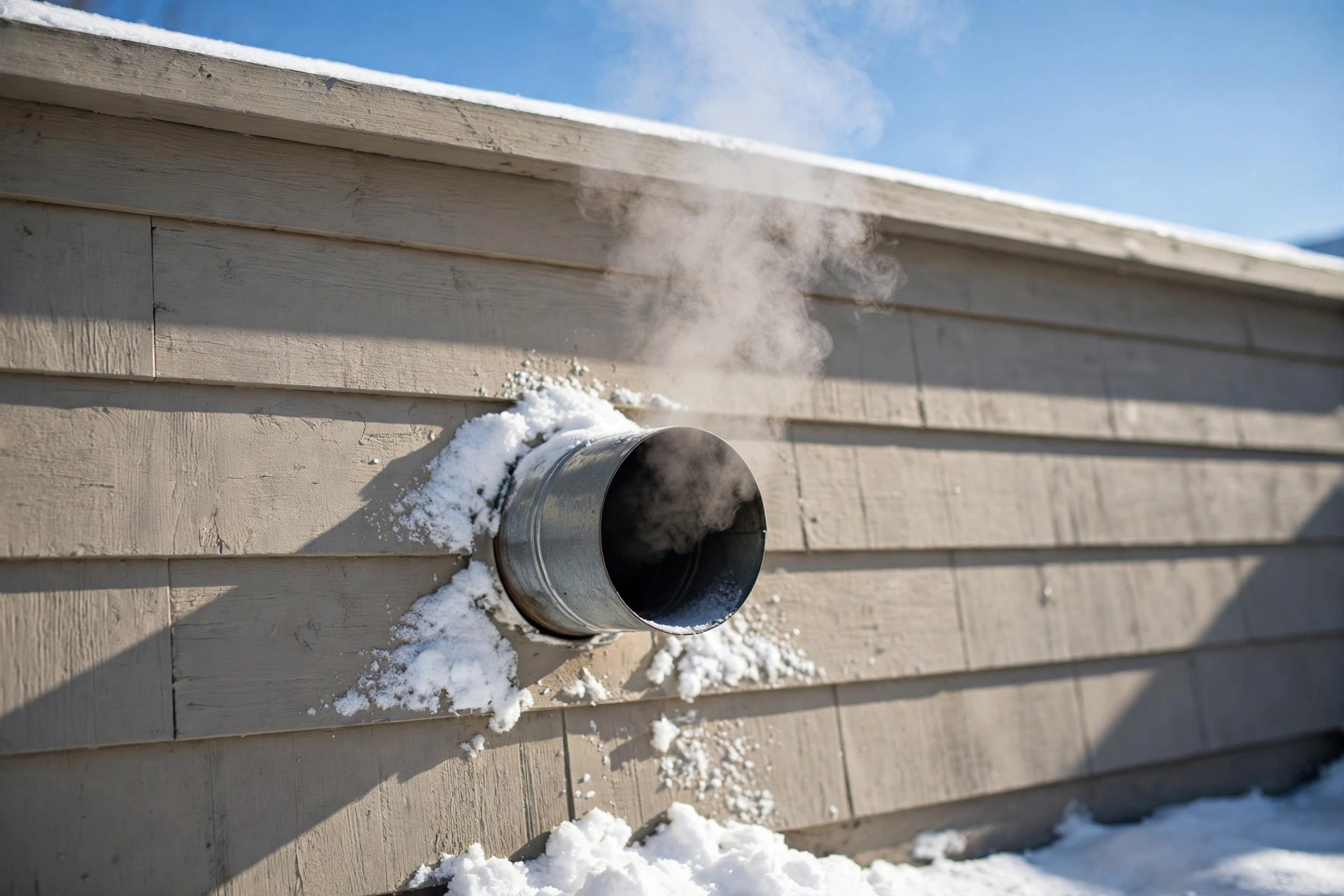
A high-efficiency gas furnace squeezes so much heat out of its fuel that its exhaust leaves the house barely warm. That exhaust travels through plastic PVC pipes, usually out a side wall, carrying water vapour from combustion. On a mild day the vapour drifts away harmlessly. On a bitterly cold day it condenses and freezes where the pipe meets outside air, layer by layer, until the opening narrows or closes completely.
The furnace notices before you do. A pressure switch watches the venting, and when the blocked pipe changes the pressure, the switch tells the furnace to shut down rather than run with nowhere for its exhaust to go. The house cools, the furnace may try again and lock out, and the homeowner sees a furnace that “just stopped” on the coldest night. Understanding that chain — moist exhaust, freezing air, pressure switch, shutdown — makes the fix obvious and the prevention straightforward. Our gas furnace services cover venting diagnosis alongside ignition and burner work.

A vent freeze-up has a recognizable pattern. The furnace runs, stops, and tries again, or it locks out entirely, often on the coldest nights and after a stretch of very cold weather rather than on a mild day. The thermostat calls for heat, the furnace attempts to start, and nothing much happens — or it starts briefly and shuts down. If you look outside at the vent pipes, you may see frost, ice, or a white crust around the openings, or snow drifted hard against that wall.
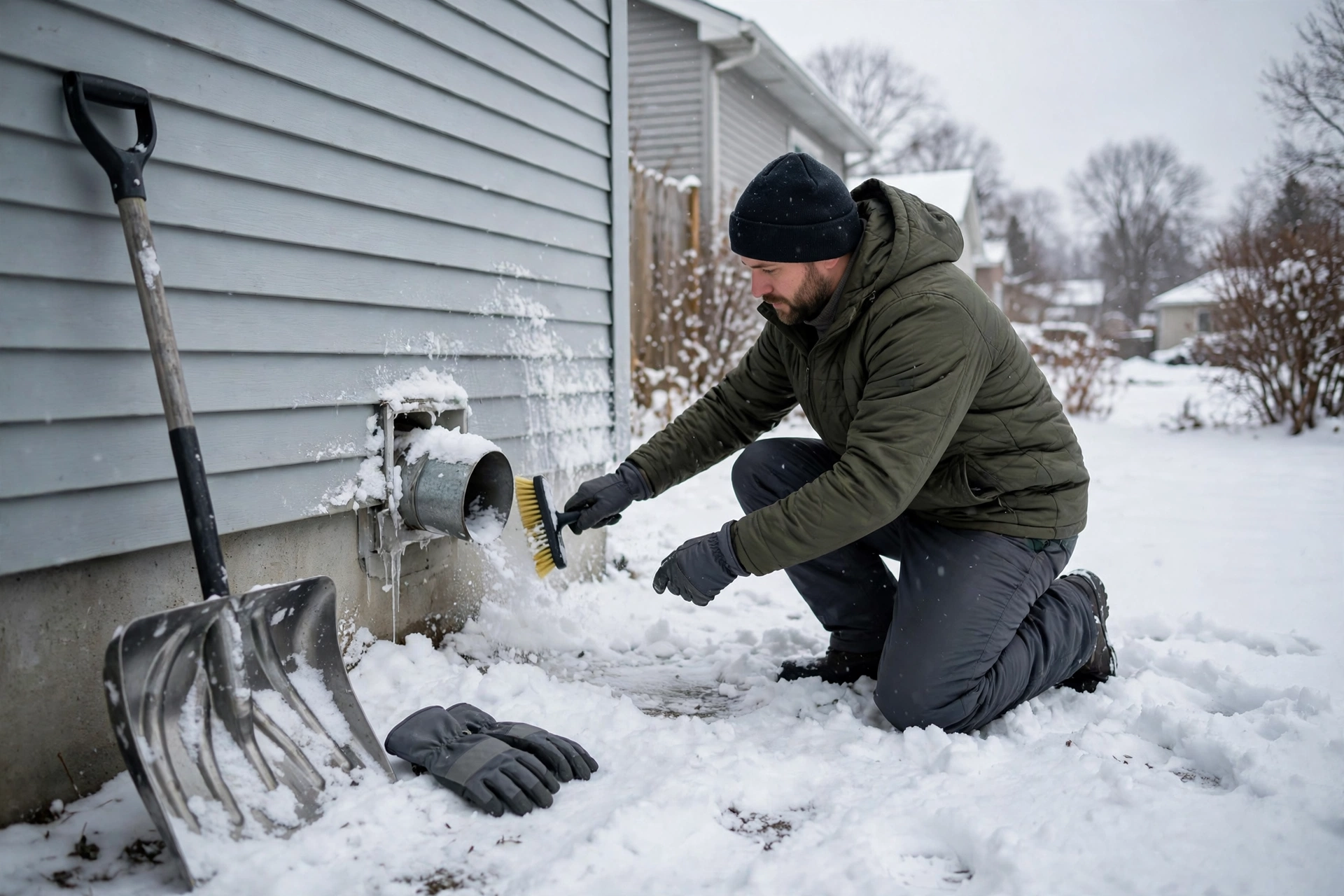
Those signs are worth checking from outside before anything else, because they are visible without opening the furnace. Keep the check itself simple: look at the pipe openings, note whether snow or ice is blocking them, and clear snow away from the wall by hand. Do not poke tools or rods into the pipes, do not pour hot water into them, and never cover them. If ice has formed inside the pipe where you cannot reach it, that is a technician's job, and our January cold-snap post explains the other basic checks to run alongside the vent check.
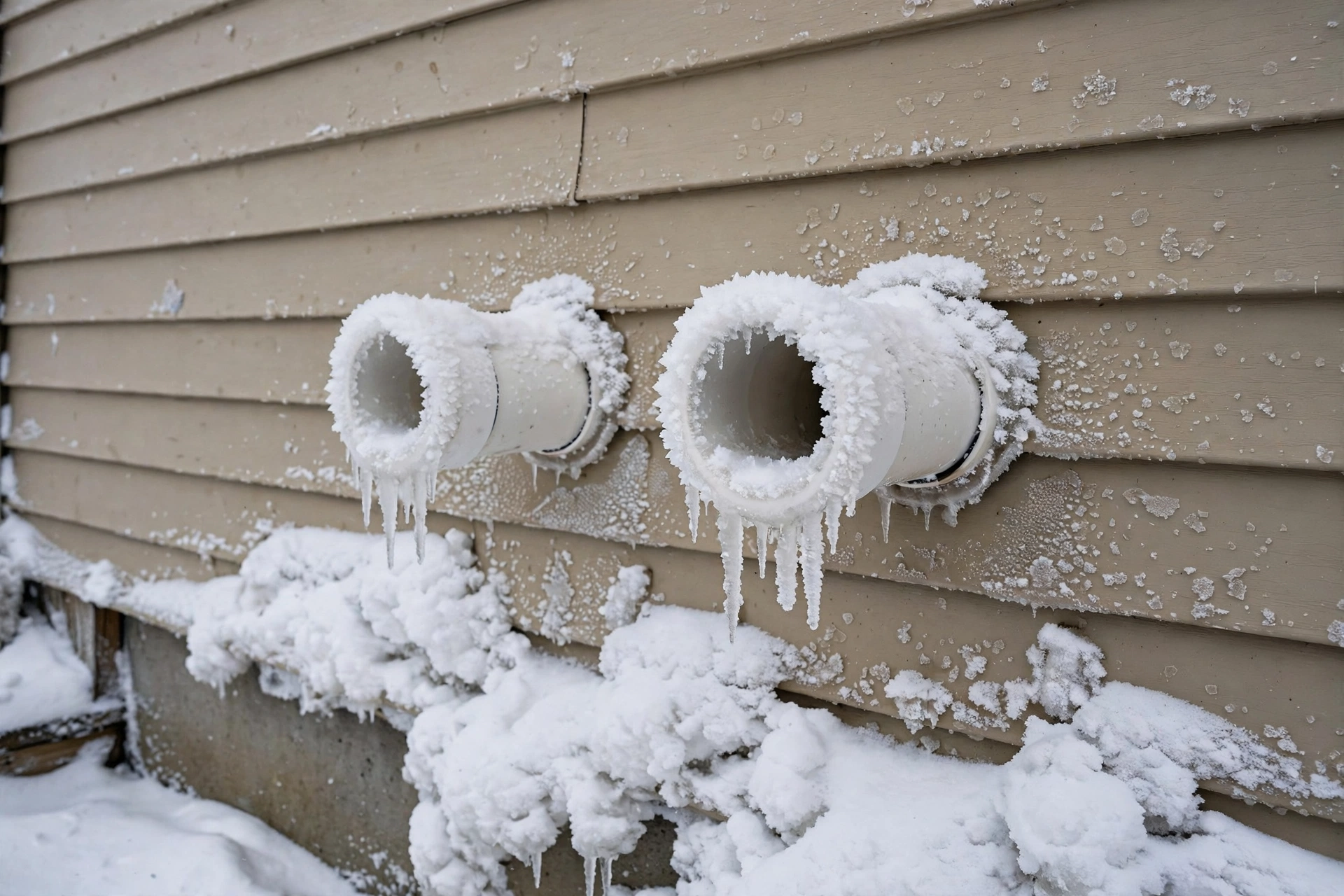
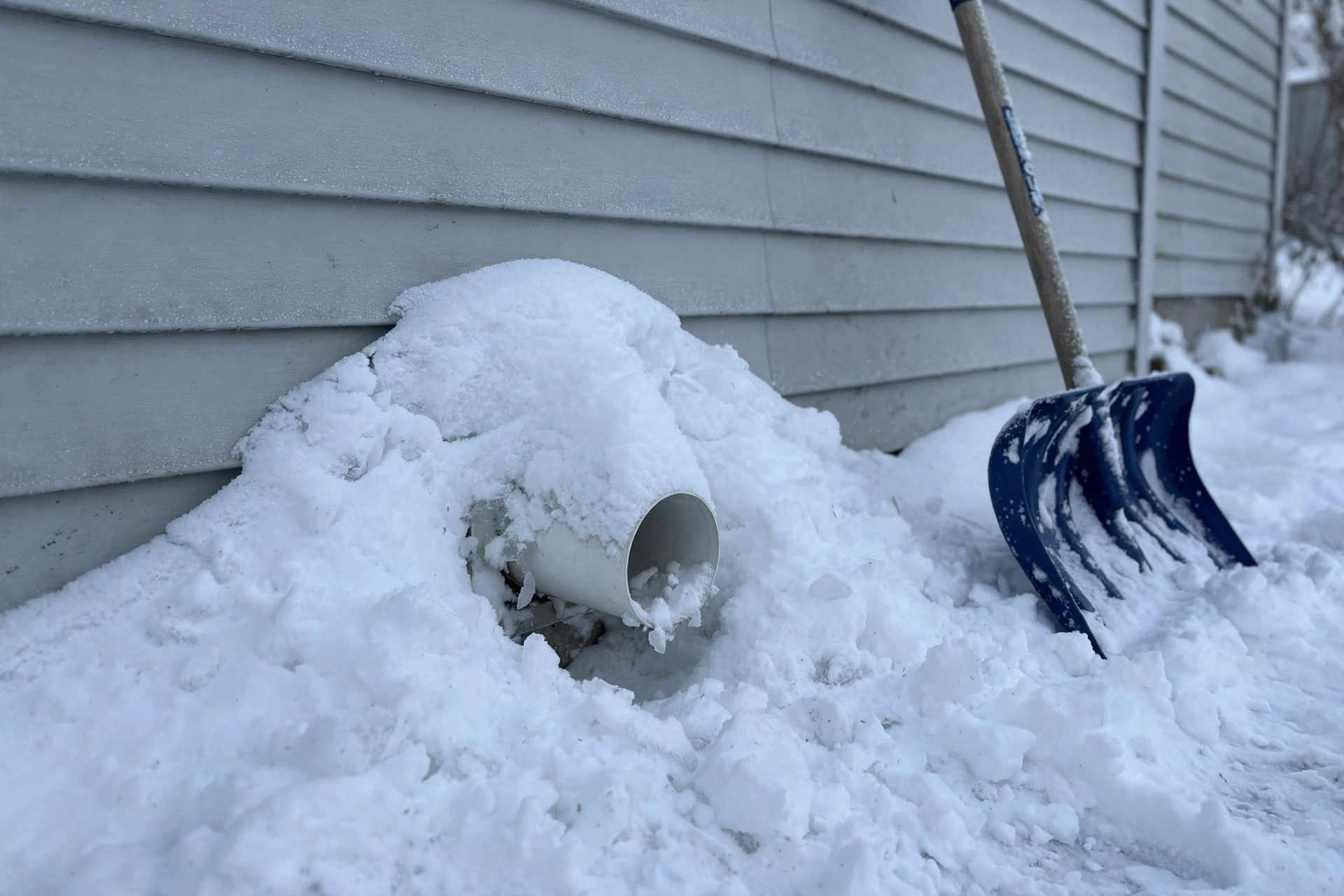
Clear snow and loose ice from around the outside of the pipes, keeping the area open so exhaust can leave and intake air can enter. Note the wall and the drift pattern: if snow always piles against that wall, clearing it becomes a regular winter task, and a windbreak or a change to the vent termination may be worth discussing with a technician. Photograph the icing if you can do so safely — the pattern helps a technician judge whether the pipe run, its slope, or its termination is contributing.
Leave the inside of the system alone. Do not disconnect vent pipes, do not adjust the pressure switch, and do not repeatedly reset a locked-out furnace in the hope that it clears itself. A furnace that keeps locking out is telling you something is still wrong, and running it with a blocked vent risks exhaust spilling into the home. Carbon monoxide alarms should be working in any home with a gas furnace, and our post on carbon monoxide safety in sealed homes explains placement and testing. If an alarm sounds, leave the house and call for help from outside.
Vent design decides how often this happens. A long horizontal pipe run gives exhaust more time to cool and condense before it leaves the house. A termination that sits low on the wall, in a wind shadow, or where snow drifts collect will ice faster than one that sits higher and clear of drifts. A pipe that sags, or that was installed without the slight slope back toward the furnace that lets condensate drain, can hold water that freezes in place.
A technician looks at all of that: pipe length and routing, slope, termination height and position, and whether the intake and exhaust are placed so one cannot pull in the other's exhaust. Sometimes the answer is as simple as re-routing a termination away from a drift-prone corner; sometimes it is correcting a slope or replacing a section of pipe. The fix depends on the house, which is why a photograph of the iced termination and a note about when the problem appears — coldest nights, after snow, after wind from a particular direction — are genuinely useful. For homes in Sartell and Waite Park, the same side-wall venting pattern applies, and you can start a venting conversation from our contact page.

The best vent check happens in autumn, when you can walk around the house comfortably. Find both pipes — intake and exhaust — and note exactly where they are, because finding them in deep snow in January is much harder. Clear leaves and debris from around them, check that nothing has grown over them during summer, and remember which wall they are on so you can keep snow clear of them all winter.
Add the vent check to your autumn routine alongside the filter change and thermostat test in our pre-first-freeze checklist. If last winter brought repeated freeze-ups, raise it at the autumn tune-up and safety inspection rather than waiting for the next cold snap — a venting problem found in October is a far smaller job than a furnace shutdown in January.
Exhaust from a high-efficiency furnace carries water vapour that condenses and freezes where warm exhaust meets bitter outside air. On mild days the vapour drifts away, but in severe cold it builds frost layer by layer inside the pipe opening until airflow is restricted enough to trip the furnace pressure switch.
No. Hot water can crack cold plastic pipe, refreeze quickly, and make the blockage worse, and reaching into the pipe risks damage to the venting. Clear snow and loose ice from around the outside openings by hand, and call a technician if ice has formed inside the pipe itself.
A blocked vent usually shuts the furnace down on its pressure switch before damage occurs, which is the safety system working as designed. The risk comes from repeatedly resetting the furnace or tampering with venting to force it to run, which can allow exhaust to spill indoors instead.
Call Quarry Furnace Co. about your furnace — repair, replacement, and tune-ups in St. Cloud and the towns around it.
(320) 389-8174Answers about this topic, in plain language.
A freeze-up happens when water vapour in the exhaust of a high-efficiency gas furnace condenses and freezes at the outside pipe opening, narrowing or closing it. The furnace pressure switch then shuts the unit down because exhaust cannot leave safely.
Look outside at the intake and exhaust pipes on the side wall. Frost, ice, or a white crust around the openings, snow drifted hard against that wall, and a furnace that starts and stops or locks out on very cold nights all point toward a vent blockage.
Never cover intake or exhaust pipes, even partly. The furnace needs that airflow to burn fuel and to vent exhaust safely. Instead, keep snow and ice clear of the openings from outside, and call a technician if ice keeps forming inside the pipes.
Lockout is a safety response. After a few failed start attempts with a blocked vent, the furnace stops trying rather than risk unburned gas or spilled exhaust building up. One reset after clearing snow from the outside openings is reasonable; repeated resets without finding the cause are not.
Older furnaces usually vent through a chimney with much hotter exhaust, so their vapour rarely freezes in the same way. Vent freeze-ups are mainly a high-efficiency furnace problem, because their cooler exhaust and side-wall plastic piping give vapour the chance to condense and freeze.
Often, yes. A technician can check pipe length, slope, and termination height and position, and can re-route or correct a termination that sits in a drift-prone spot or holds condensate. The right fix depends on the house, so a note about when the icing appears helps a lot.