Blog · St. Cloud, Minnesota
January Cold Snaps and Furnace Failures: What to Check First
A January cold snap finds every weak point in a furnace. Learn the first checks, the warning signs, and when to call a technician in St. Cloud.
A January cold snap finds every weak point in a furnace. Learn the first checks, the warning signs, and when to call a technician in St. Cloud.
When the air outside drops well below zero, a furnace that has been getting by all autumn suddenly has to work far harder, for far longer, with almost no rest between heating cycles. Parts that were already worn, a filter that was already dirty, or a vent that was already half-blocked can all turn into a shutdown on the coldest night of the year. That is why cold-snap failures feel sudden even when the cause has been building for weeks.
St. Cloud winters are long, and January is the sharp end of them: the 1991–2020 normals from St. Cloud State University put the January mean at 11.8°F. A system sized for ordinary winter days still has to keep up when the house loses heat much faster than usual, so the first thing to understand is the difference between a furnace that is struggling and a furnace that has actually failed. A struggling furnace runs long cycles and the house feels cool near windows and outside walls. A failed furnace blows cold air, blows nothing at all, or keeps switching itself off. The checks below help you tell the two apart before you call. If you are unsure about anything involving gas or electricity, stop and call us at (320) 389-8174 instead of opening panels.
Most cold-snap callouts start with the simplest parts of the system. Look at the thermostat first: is it set to heat, is the temperature setting above the room temperature, and are the batteries fresh if it uses them? A thermostat knocked to the wrong mode during holiday decorating, or one with tired batteries, can look exactly like a broken furnace. Next, pull the filter out and hold it up to the light. A filter clogged with dust forces the blower motor to work harder, starves the heat exchanger of air, and can trip the high-limit safety switch that shuts the furnace down to protect it.
Then check the furnace power switch, usually a regular-looking wall switch near the unit, and the breaker panel. A tripped breaker or a switch bumped off during storage trips in the basement is easy to miss in the dark. These are the only checks most homeowners need to make themselves. Anything past the filter and the thermostat — burners, igniters, flame sensors, wiring, gas valves — belongs to a technician, and our gas furnace services and electric furnace services pages explain what that visit covers.
Short cycling — the furnace firing up, running for a few minutes, then shutting off before the house reaches temperature — is one of the clearest cold-snap warning signs. It often points to restricted airflow, an overheating heat exchanger, or a flame sensor that can no longer prove the burner is lit. Left alone, short cycling wears parts faster and leaves the house cold in patches, because the blower never runs long enough to push warm air to the far rooms.
Uneven heat tells its own story. If the rooms nearest the furnace are warm and the far bedrooms stay cold, the problem may sit in the ductwork rather than the furnace itself: a disconnected duct, a crushed flex run, or a closed damper can starve one part of the house while the rest heats normally. Our ductwork and airflow services cover that side of the system, and a furnace tune-up and safety inspection in autumn is the best way to catch airflow and sensor problems before January finds them.
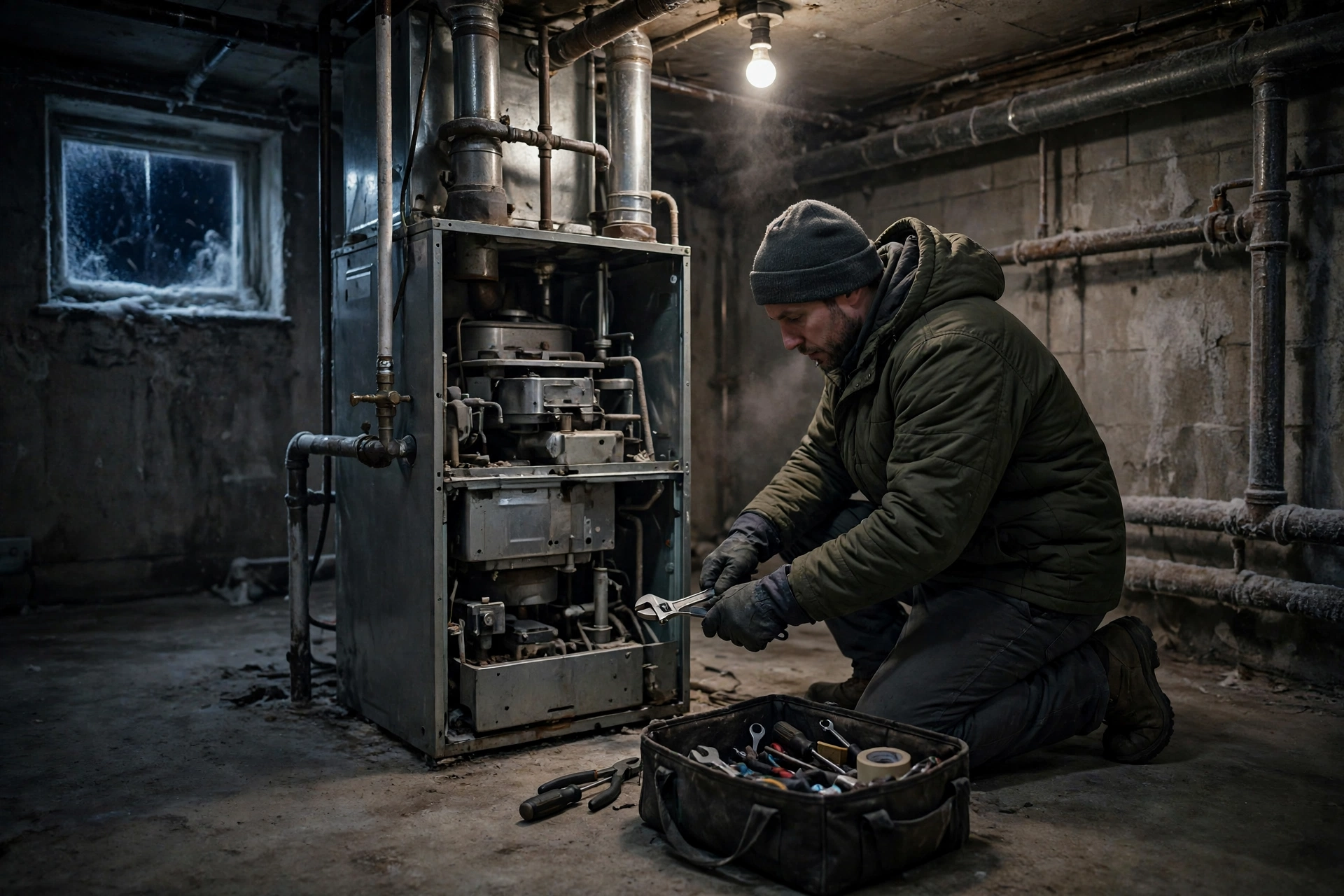
Inside the cabinet, a technician works through the ignition sequence step by step: the inducer motor clearing the vent, the igniter or pilot lighting the burner, the flame sensor confirming the flame, and the blower moving air across the heat exchanger. Each step has its own safety switch, and any one of them can lock the furnace out after a few failed attempts. That lockout is deliberate — it stops unburned gas from building up — and repeatedly resetting it without finding the cause only repeats the failure.
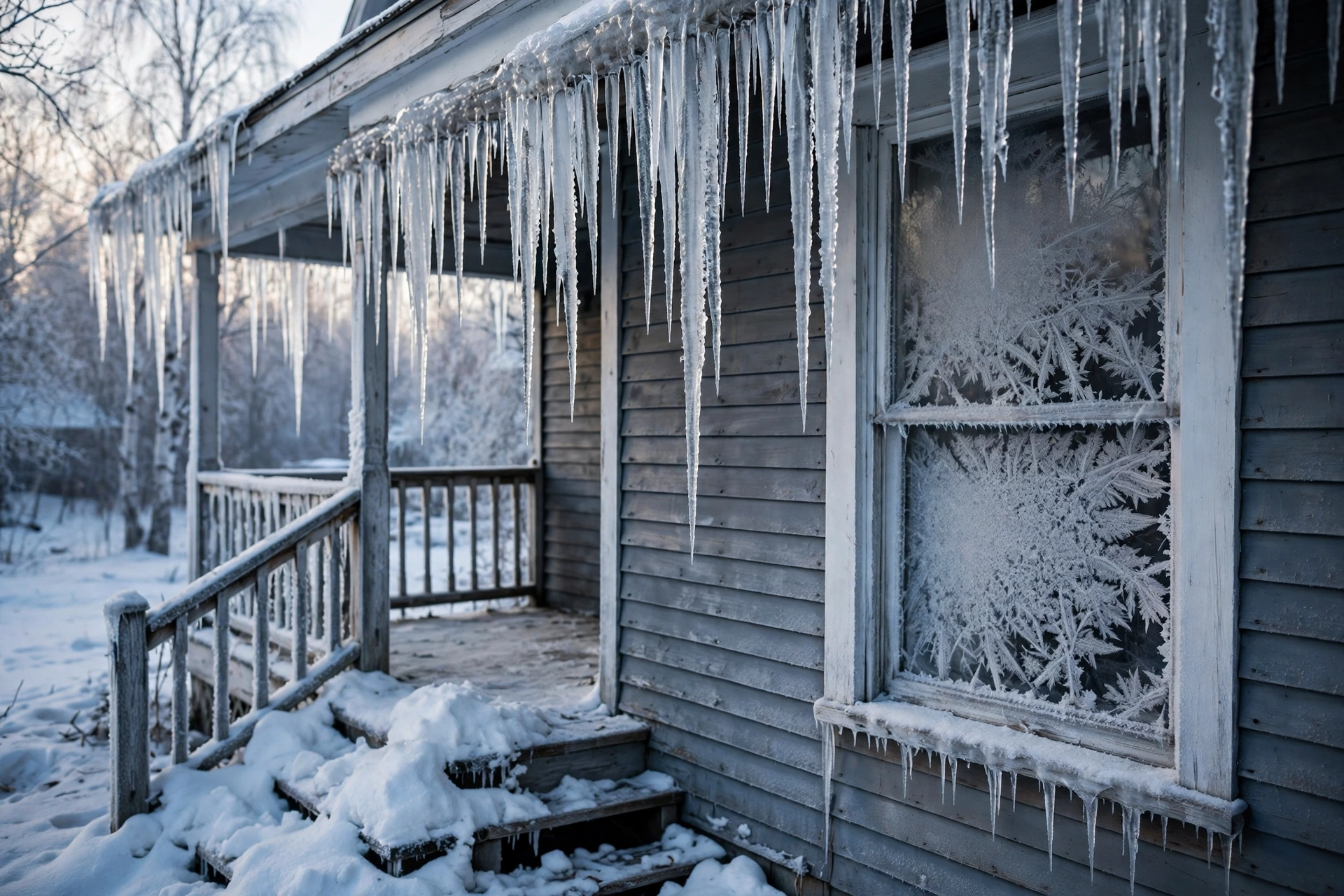
The venting matters just as much in a cold snap. High-efficiency furnaces vent through plastic PVC pipes out a side wall, and those pipes can collect frost or ice where warm, moist exhaust meets bitter outside air. A blocked intake or exhaust pipe shuts the furnace down on a pressure switch, which is exactly the kind of fault that appears only when it is coldest. If your furnace vents through a side wall, keep snow and ice clear of the pipe openings from outside, without reaching into the pipes, and read our post on gas furnace vent freeze-ups for the full picture. For homes in Sauk Rapids and Sartell as well as St. Cloud, the same cold-snap pattern applies: long runs, cold air, and small faults becoming big ones.

If the furnace stops and the house is cooling, close off rooms you do not need, shut the doors to them, and keep one tap dripping slightly if the cold is severe — moving water is far less likely to freeze in a pipe than still water, and our post on a middle-of-night breakdown and frozen pipes walks through that night in detail. Do not use the oven or a gas range as a heater, and do not bring a grill or a generator indoors. Portable heaters need clear space around them and should never run unattended or while you sleep.
Gather the details a technician will ask for before you call: what the furnace is doing, any blinking error code on the control board if you can see one through the small window without opening the cabinet, when the problem started, and what the thermostat shows. That short description helps the visit start with diagnosis instead of guesswork, and you can reach us through our contact page by phone or email.
A cold snap forces the furnace to run longer and more often than on an ordinary winter day, so worn parts, a dirty filter, restricted airflow, or a blocked vent that caused no trouble in mild weather can trip a safety switch. The failure looks sudden, but the underlying weakness built up over weeks of heating season use.
Most furnaces allow a reset by switching the power off and on once, but a lockout is a safety response, not a fix. If the furnace locks out again after one reset, stop resetting it and call a technician. Repeated resets can mask a venting, ignition, or airflow problem that needs diagnosis before the furnace runs again.
Not always. In severe cold, a correctly sized furnace may run almost continuously simply to match the heat the house is losing through walls, windows, and roofs. The warning signs are different: short on-off cycles, cold air from the vents, rooms that never warm up, or a furnace that stops entirely.
Call Quarry Furnace Co. about your furnace — repair, replacement, and tune-ups in St. Cloud and the towns around it.
(320) 389-8174Answers about this topic, in plain language.
Check the thermostat setting and mode, then the filter, then the furnace power switch and breaker. Those three checks solve a surprising number of cold-snap callouts and take only a few minutes. If all three look right and the furnace still will not run, call a technician rather than opening the furnace cabinet.
Short cycling in January often comes from restricted airflow, a dirty filter, an overheating heat exchanger, or a flame sensor that cannot confirm the burner is lit. Each of those trips a safety control that shuts the burner down. A technician can test the airflow, the sensor, and the ignition sequence to find which one is responsible.
No. Never cover an intake or exhaust pipe, even partly, because the furnace needs that airflow to run and to vent safely. Keep snow, ice, and drifting snow clear of the pipe openings from outside, and if frost keeps building inside the pipe, ask a technician to look at the vent routing and termination.
Uneven heat usually points to ductwork or airflow rather than the furnace itself: a disconnected or crushed duct, a closed damper, or a blower that cannot push air far enough. It can also come from the furnace short cycling before warm air reaches the far rooms. Both causes are worth a proper airflow check.
Yes. A clogged filter restricts the air moving across the heat exchanger, the exchanger overheats, and the high-limit switch shuts the burner off to prevent damage. In a cold snap, when the furnace runs long cycles, that overheating happens faster, which is why a filter that seemed fine in November can cause a shutdown in January.
Call when the furnace will not restart after the basic checks, when it locks out more than once, when you smell gas, or when a carbon monoxide alarm sounds. Gas, ignition, and electrical parts inside the cabinet are not homeowner checks. Describe the symptoms and any error code you can see, and a technician can take it from there.