Blog · St. Cloud, Minnesota
Rural Propane Furnace Planning Before a Winter Storm
A rural propane furnace depends on a tank, a driveway, and a delivery route. Storm planning means thinking about all three before the snow arrives, not during it.
A rural propane furnace depends on a tank, a driveway, and a delivery route. Storm planning means thinking about all three before the snow arrives, not during it.
A natural gas furnace draws from a buried network that keeps flowing in most storms. A propane furnace draws from a tank beside the house, and that tank is filled by a truck driving a rural route in winter weather. When a storm closes roads, delays deliveries, or makes a long rural driveway impassable, the tank level on the day the storm arrives is the only supply the house has until conditions clear. That single difference shapes every part of rural propane planning.
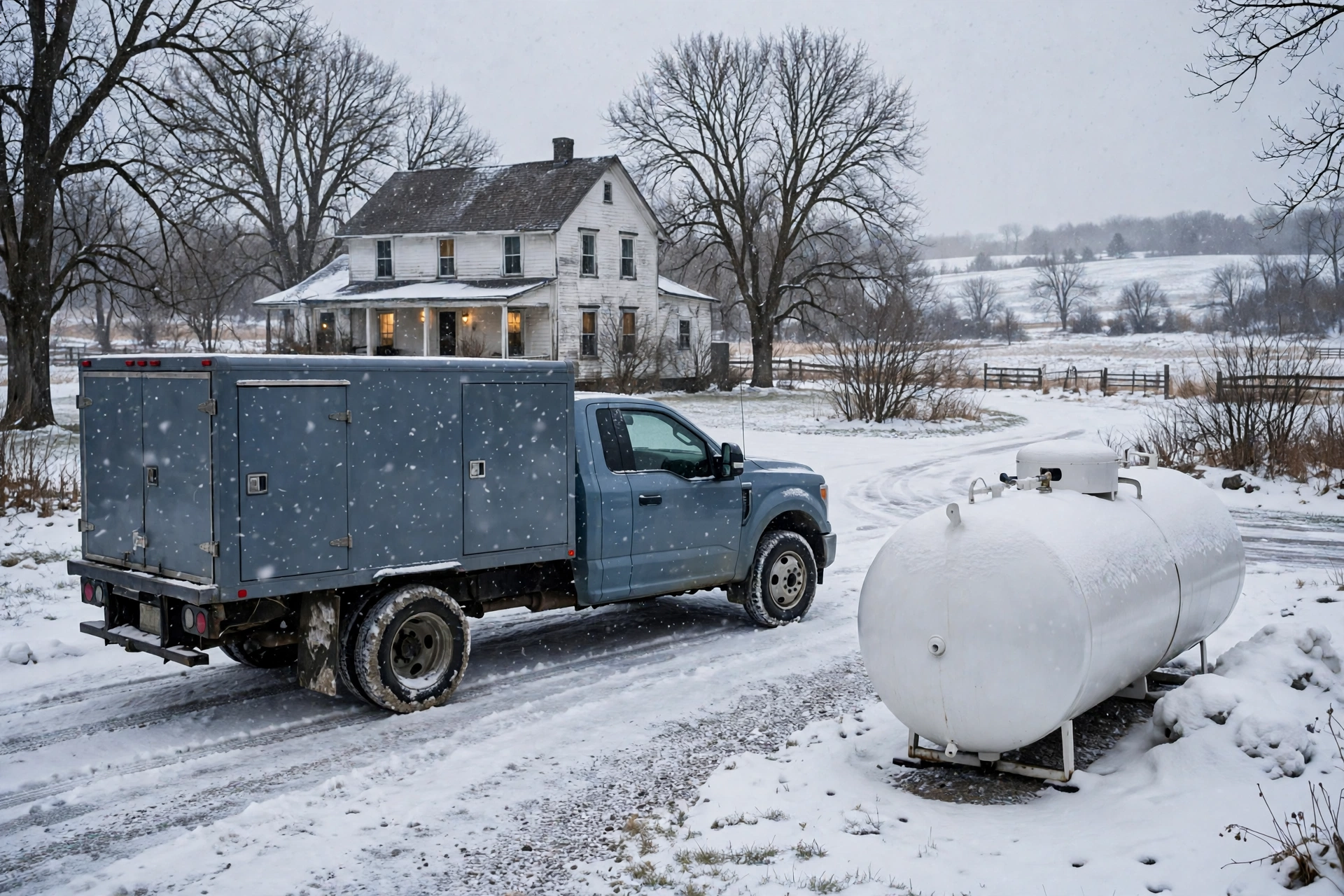
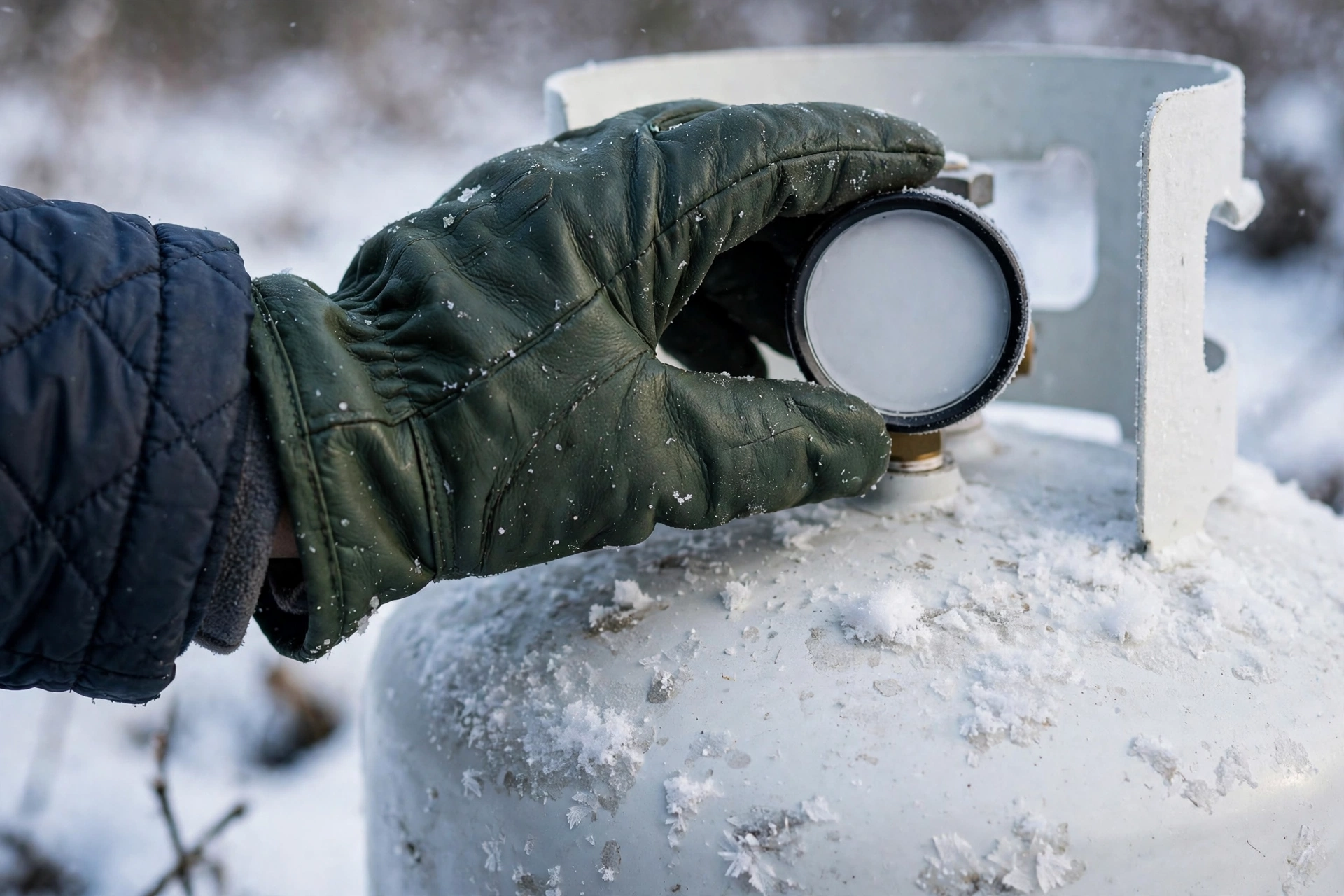
The planning therefore starts with the tank, not the furnace. Know where the gauge is, how to read it, and what level triggers a delivery order with your propane supplier — and order well before that level, because a storm forecast can turn a routine delivery into a wait. Keep the tank access clear: the path the delivery driver uses, the area around the tank, and the driveway itself. A tank the truck cannot reach is a tank that cannot be filled, whatever its gauge reads. Our propane furnace services page covers the furnace side of a propane system.
Walk the whole route a delivery truck would take, from the road to the tank, and clear anything that would stop it: low branches, a gate that freezes shut, a drift-prone stretch of driveway. Mark the tank's location visibly if snow can bury it, and keep a clear path to it through the winter, not just when a storm is forecast. If the driveway is long or steep, talk to your supplier before winter about what conditions they can and cannot deliver in — that conversation is far easier in October than during a blizzard.
Then turn to the furnace. A tune-up and safety inspection before the storm season checks ignition, flame sensing, and venting, because a furnace fault during a storm is doubly hard to fix: the technician faces the same roads as the delivery truck. Check the filter, check the thermostat batteries if it uses them, and know where the furnace power switch and breaker are, so a simple trip does not become a cold house while you search in the dark. Our pre-first-freeze checklist covers that household routine in one pass.
During a storm, the goal is to stretch the propane and protect the house at the same time. Keep the thermostat at a steady, moderate setting rather than swinging it up and down — recovery from a deep setback burns more fuel and strains the furnace. Close off rooms you do not need, shut their doors, and keep the rooms you do use at a liveable temperature. Do not shut the furnace off to “save propane” for later: a house allowed to cool deeply costs more fuel to reheat and risks frozen pipes, which our post on middle-of-night breakdowns and frozen pipes explains in detail.
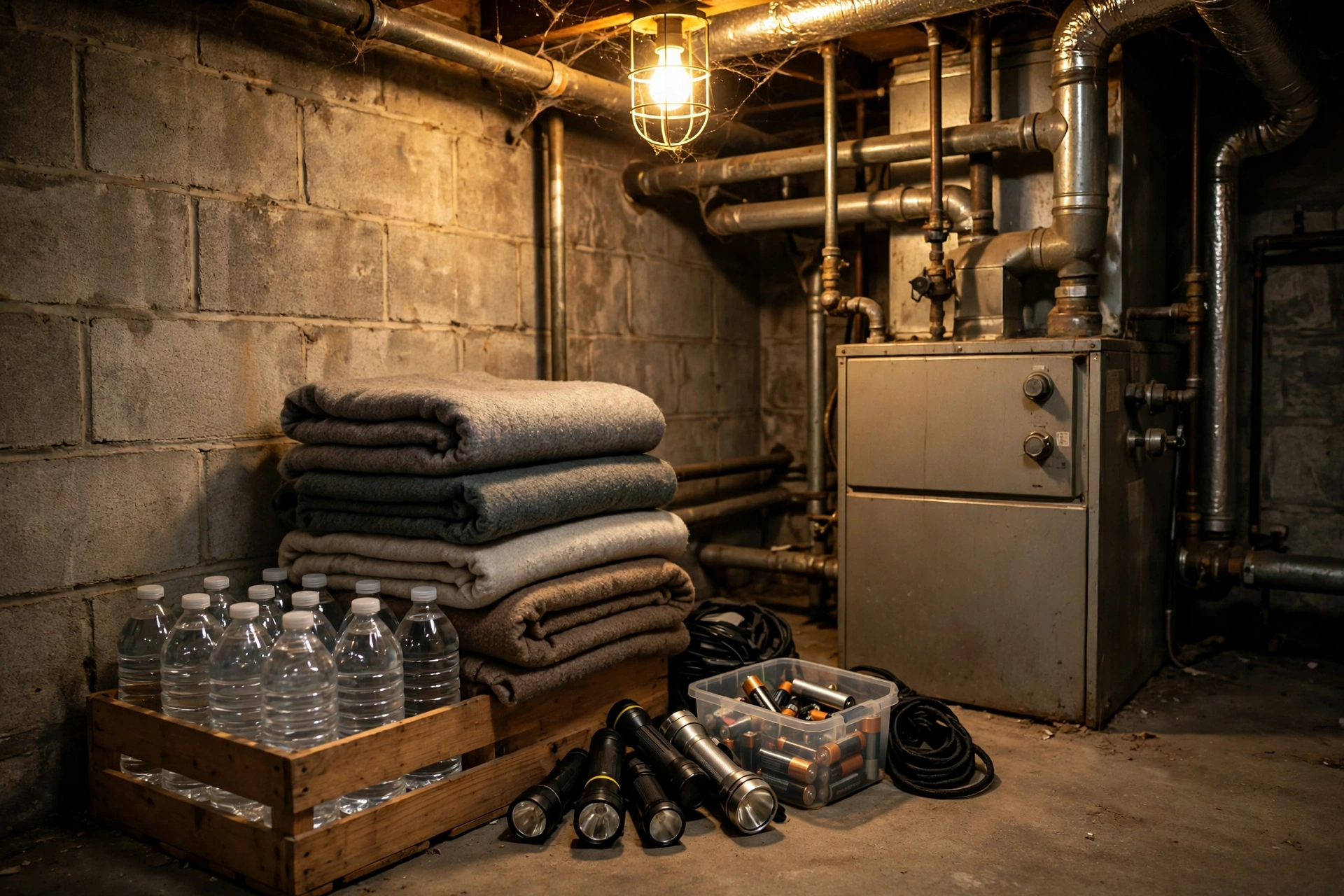
Keep the furnace vents clear of drifting snow through the storm, checking from outside when it is safe to do so, and never covering the pipes. If the furnace vents through a side wall, drifting snow against that wall is a particular rural problem, because open land drifts more than a sheltered town lot. Our post on vent freeze-ups explains the icing side of the same storm. And keep a battery-powered light and the supplier's number where you can find them without power.
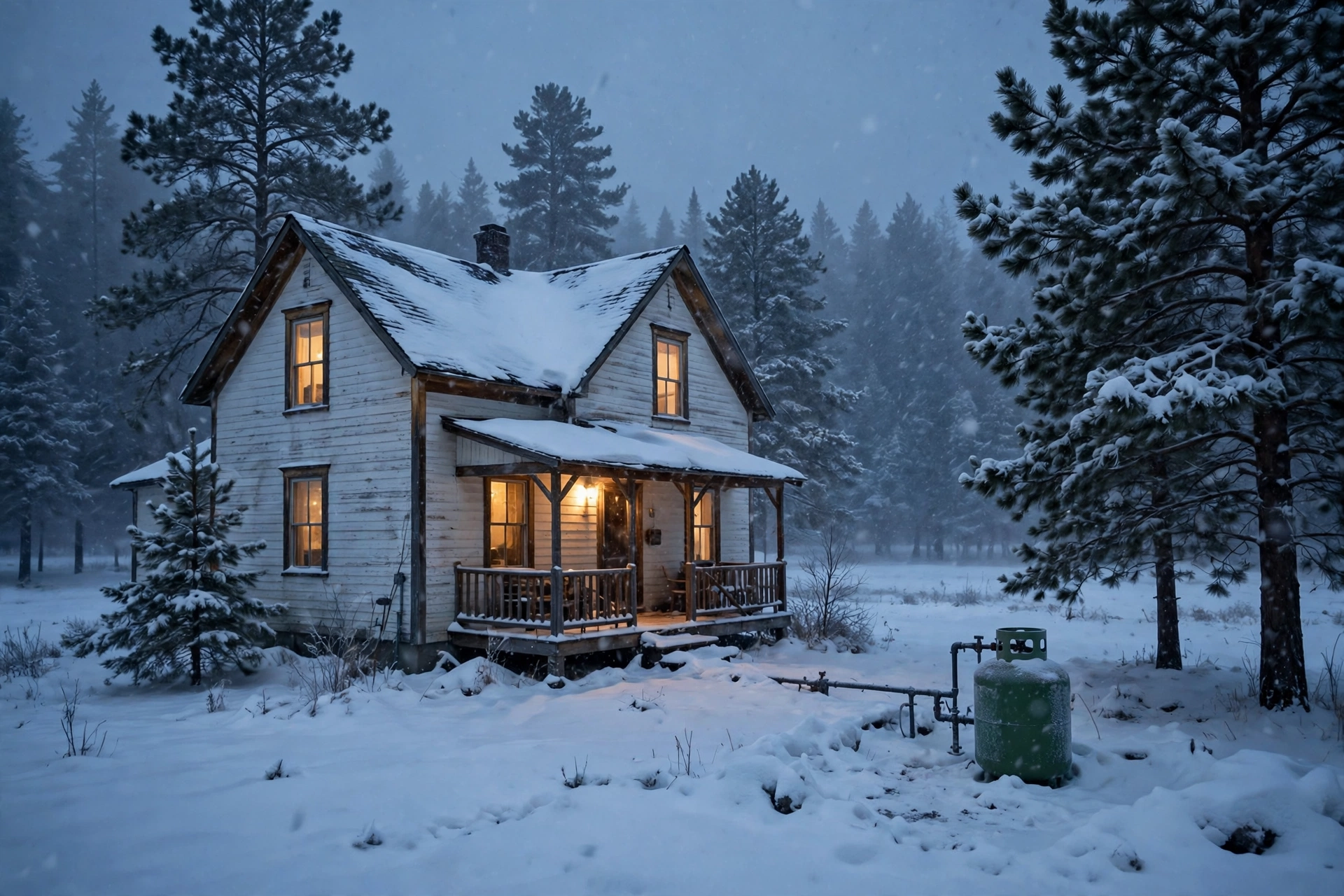
If the gauge drops toward empty during a storm, call your supplier early, before it reaches empty, and describe the tank level, the driveway condition, and the access route honestly — a driver who knows what to expect can plan the attempt. Never try to move propane yourself, never open tank valves beyond their normal operation, and never use a grill, a generator, or a fuel-burning heater indoors to replace furnace heat. If the furnace stops, run the basic checks — thermostat, filter, power switch, breaker, and vent openings — and note any error code visible without opening the cabinet.
If the house is cooling and help cannot reach you, protect the pipes first: keep one tap dripping slightly, open cabinet doors under sinks on exterior walls so warm air reaches the pipes, and close off unused rooms to hold heat where people are. Those steps buy time, not a solution, and the furnace still needs diagnosis once conditions allow a visit. You can reach us from our contact page, and the same storm pattern applies to rural homes around Cold Spring, Rockville, and the other towns around St. Cloud.
Write the plan down and put it where the household can find it in the dark: the supplier's number, the gauge-reading routine, the delivery trigger level you agreed with the supplier, the driveway-clearing routine, and the furnace basics — thermostat setting, filter size, power switch location. A plan on paper survives a dead phone battery and a stressed household in a way a plan in one person's head does not.
Go over it once each autumn, before the storm season, alongside the furnace tune-up and the filter change. Tanks, driveways, and suppliers change slowly, but they do change, and a plan checked yearly stays accurate. Rural propane heating rewards that kind of unglamorous preparation: a full tank, a clear driveway, a checked furnace, and a household that knows what to do when the snow starts.
A propane furnace still needs electricity for its blower, controls, and ignition, so a power outage stops it even with a full tank. If your home loses power often in storms, talk to a qualified electrician about safe backup options before winter, and never connect a generator to the house wiring without proper transfer equipment. Portable generators belong outside, well away from the house, with exhaust pointing away from windows and doors.
During an outage, the pipe-protection steps matter most: dripping taps, open sink cabinets on exterior walls, and closed-off unused rooms. Keep the house's heat in the rooms people occupy, and do not use the oven, a grill, or a generator indoors as a heater. When power returns, the furnace should restart on its own; if it locks out or shows an error, note the code and call a technician rather than resetting it repeatedly. Our propane furnace services page describes what that visit checks.
There is no single number, because it depends on the tank size, the house's heating load, and how long the storm may block deliveries. The practical rule is to order well before the gauge reaches the low level your supplier recommends, and to treat a storm forecast as a reason to order earlier, not to wait and see.
Call your supplier immediately, describe the tank level and driveway access honestly, and protect the house meanwhile: keep one tap dripping, open sink cabinets on exterior walls, and close off unused rooms. Never move propane yourself or use indoor fuel-burning heaters, and arrange a furnace check once the system can be refilled and restarted.
No. A propane furnace needs electricity for its blower, ignition, and controls, so it stops in a power outage even with a full tank. Safe backup power needs proper transfer equipment fitted by a qualified electrician, and generators must run outside, well away from the house.
Call Quarry Furnace Co. about your furnace — repair, replacement, and tune-ups in St. Cloud and the towns around it.
(320) 389-8174Answers about this topic, in plain language.
The gauge sits on top of the tank and shows the level as a percentage of the tank's capacity. Learn to read it before winter, check it regularly through the heating season, and agree a delivery trigger level with your supplier so orders go in before the tank runs low.
Delivery trucks drive rural routes in the same storm that affects your house, and a long, drifted, or steep driveway can make a tank unreachable even when the main roads are open. Clear access and early ordering are the two things a homeowner controls, and both matter most during a storm.
Keep it steady and moderate rather than swinging it. A deep setback saves little, because reheating a cooled house burns more fuel and strains the furnace, and a house allowed to cool deeply risks frozen pipes. Steady heat protects both the fuel supply and the plumbing.
Yes, if the furnace vents through a side wall where snow drifts collect. Keep the pipe openings clear of snow and ice from outside, never cover them, and call a technician if frost keeps forming inside the pipes or the furnace keeps locking out.
There is no safe improvised backup: never use a grill, an oven, or a fuel-burning heater indoors, and never run a generator inside or in a garage. The safe steps are pipe protection, closing off unused rooms, and getting the furnace and supply restored as soon as conditions allow.
Before the storm season, in autumn, when a tune-up can check ignition, flame sensing, and venting without winter pressure. Raise any pattern from last winter — short cycling, cold rooms, or a furnace that struggled — so the visit can aim at the real problem.