Blog · St. Cloud, Minnesota
An October Furnace Tune-Up, Step by Step
What does a technician actually do on a furnace tune-up? Follow an October visit from the first look to the final test run, so you know what you are paying attention to.
What does a technician actually do on a furnace tune-up? Follow an October visit from the first look to the final test run, so you know what you are paying attention to.
October is the sweet spot for a tune-up in central Minnesota. The heating season is about to begin, so any problem found can be fixed before the furnace carries the house through winter, but the weather is still mild enough that a few hours without heat during the visit is no hardship. A tune-up is not a sales visit and it is not a repair visit in disguise: it is a structured check of the ignition sequence, the safety controls, the airflow, and the parts that wear, carried out while the furnace runs under test.
Knowing the steps in advance helps you get value from the visit. You can describe last winter's symptoms in the technician's language, watch the tests that matter for your symptoms, and understand the findings without needing to take anything on trust. The walkthrough below follows a typical gas furnace visit; an electric furnace follows the same shape, with heating elements and sequencers in place of burners and gas controls. Our tune-up and safety inspection page describes the visit in service terms, and this post shows it from the homeowner's side of the basement steps.
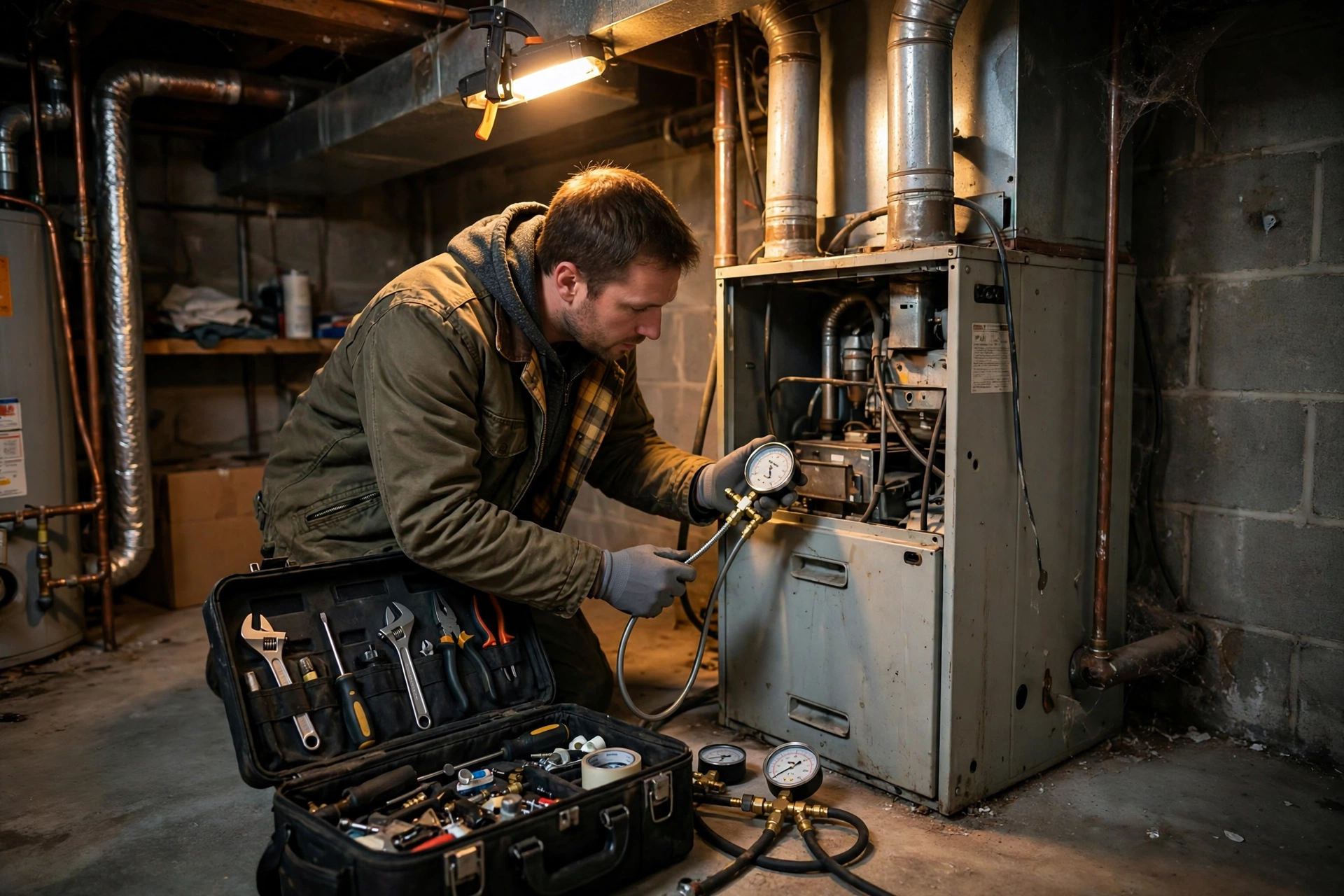
The visit starts with questions, not tools. What did the furnace do last winter? Did it short cycle, fail to light, leave rooms cold, or make new noises? When was the filter last changed? Those answers point the technician at the likely causes before a panel comes off, and they are worth preparing: a symptom described well saves diagnostic time. Then comes a visual look around the furnace itself — the area clear, the vent pipes connected, the filter in place, any signs of soot, rust, or water where they should not be.
That first look also covers the thermostat: its setting, its placement, and whether it calls for heat cleanly. A thermostat in a drafty hallway or beside a heat source can mislead the whole system, and our thermostat and controls page explains placement and zoning for homes where one control cannot satisfy every room. If anything in that first look looks wrong, it shapes everything that follows.
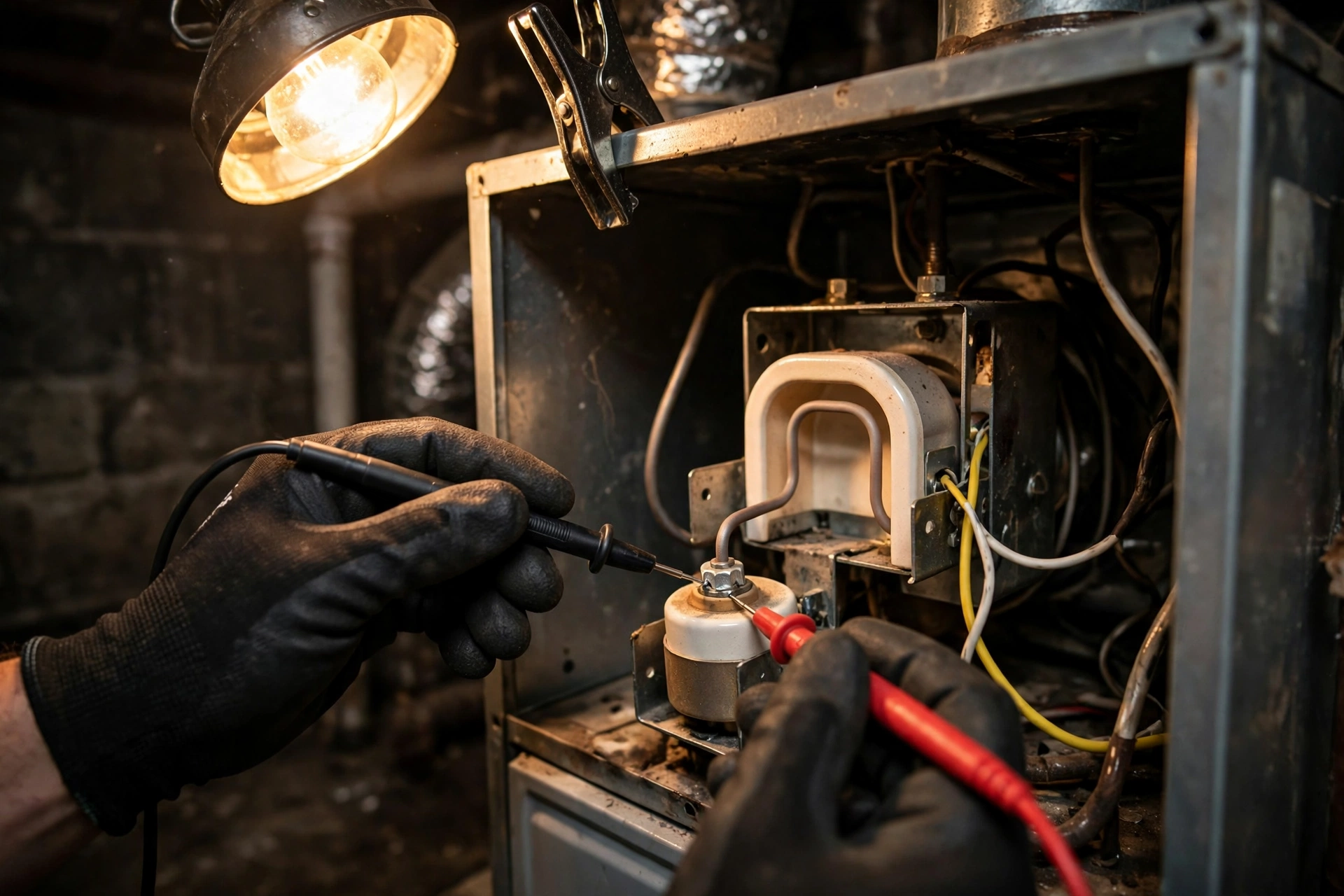
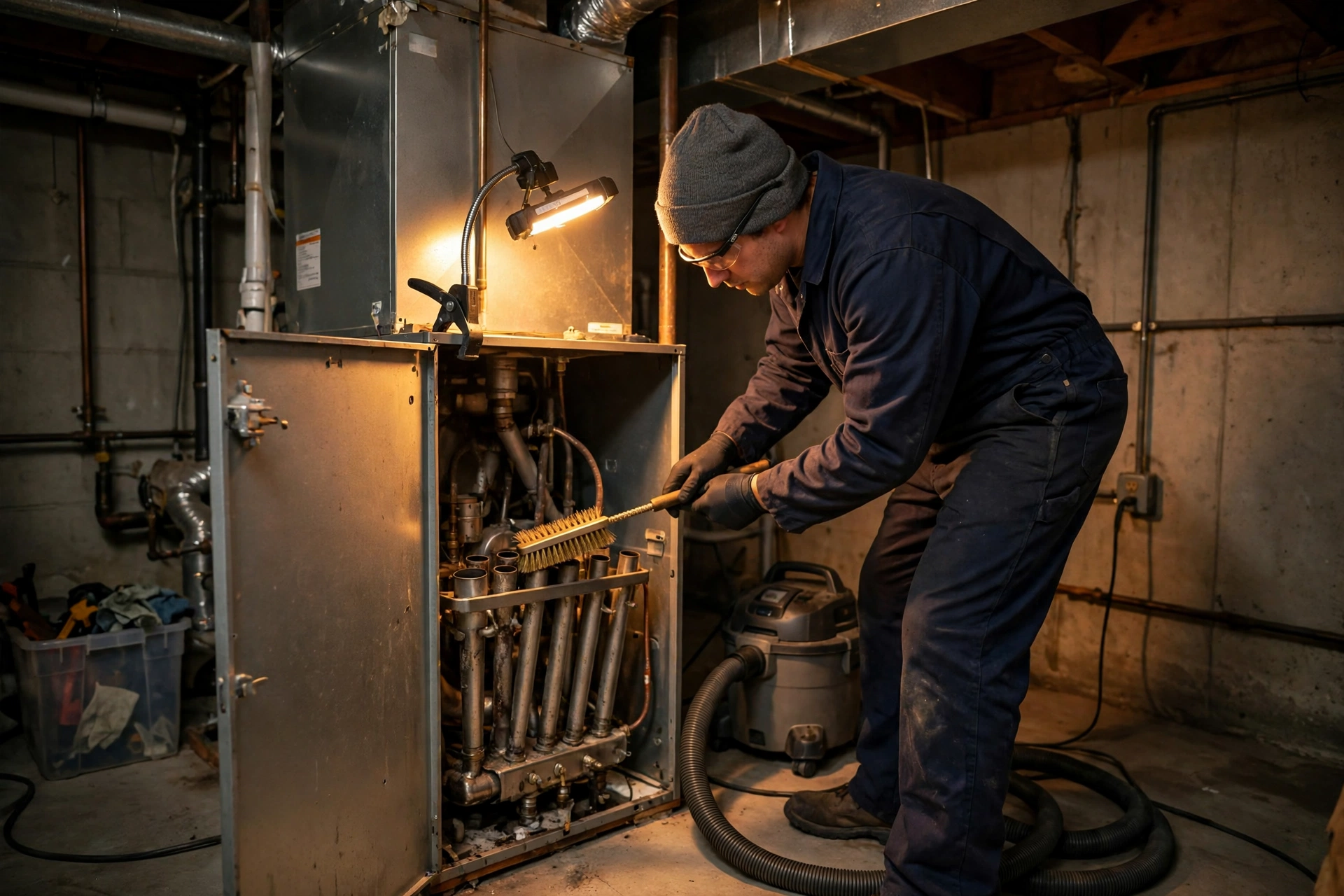
With the cabinet open and the furnace running under test, the technician watches the ignition sequence in order: the inducer motor clearing the vent, the igniter glowing or the pilot lighting, the burner firing evenly, and the flame sensor confirming the flame. A lazy igniter, an uneven burner flame, or a flame sensor coated in residue each show up clearly at this stage, and each is a small fix when caught in October rather than a no-heat call in January.
The heat exchanger gets its own attention, because a crack there can let combustion gases into the circulating air. The technician inspects it visually and, where appropriate, with test instruments, looking for cracks, rust patterns, and signs of overheating. On a gas furnace, gas connections and the gas valve are checked for leaks and correct operation. This is the safety heart of the visit, and it is also why the cabinet work belongs to a technician: the tests need the furnace running, the panels off, and an eye trained to read the flame. Our heat exchanger services page goes deeper on that one part.
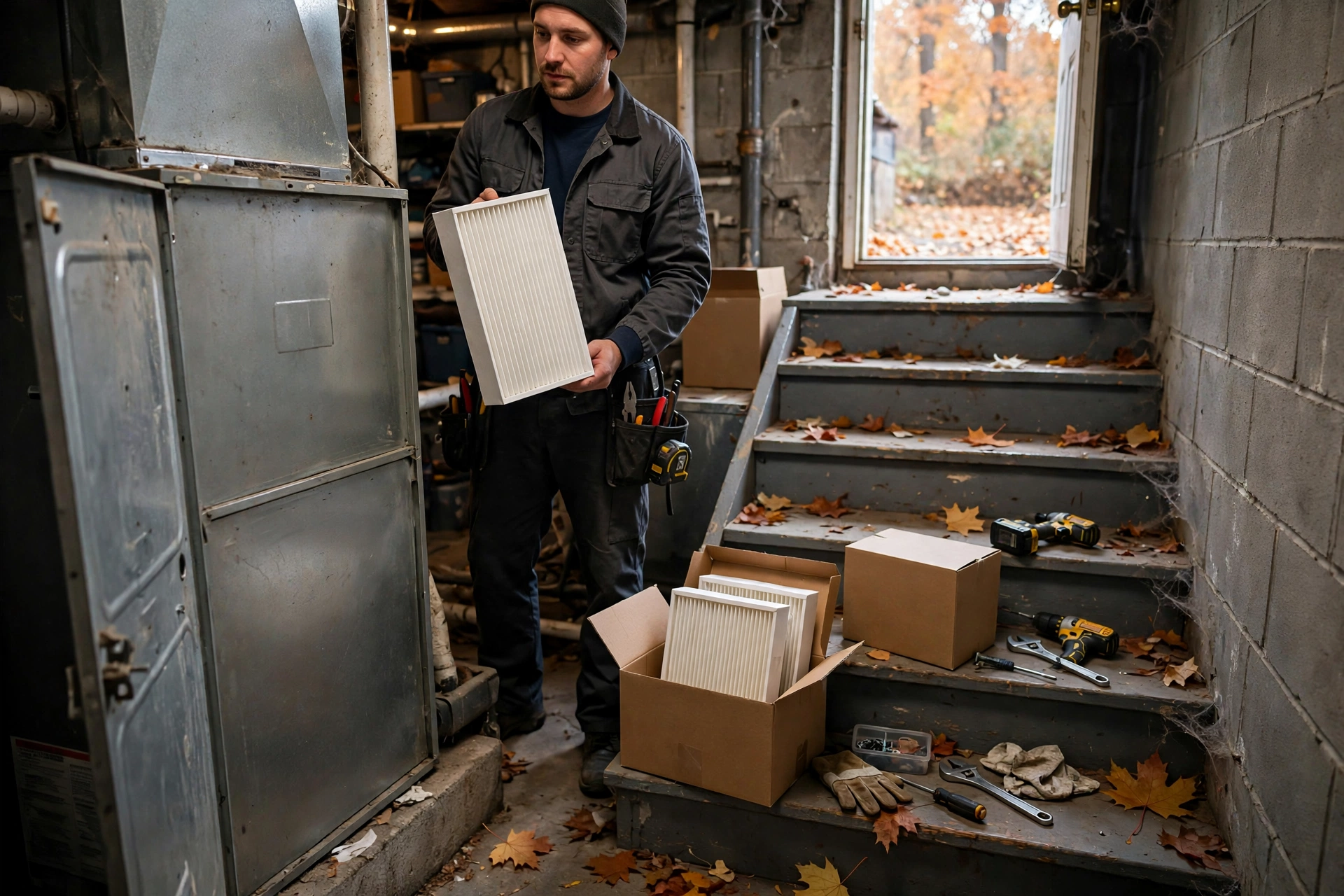
Next comes the air side: the blower motor and wheel, the filter, and the duct connections at the furnace. The blower is checked for worn bearings, a dirty wheel, and correct speed, because a weak blower starves rooms of warm air and overheats the heat exchanger. The filter is checked or changed. Supply and return connections at the unit are checked for leaks that waste heated air into the basement instead of sending it upstairs.
Finally, the safety switches are tested: the high-limit switch that shuts the burner down if the heat exchanger overheats, the pressure switch that watches venting, and the rollout switch that watches for flame where it should not be. Each is tested rather than assumed, because a safety switch that has never tripped may still have failed silently. If your home has rooms that never warm up, mention it here — airflow findings and duct findings often arrive together, and our ductwork and airflow services page explains the duct half of that picture.
The visit ends the way it should: with the furnace put back together, the thermostat calling for heat, and a full test run watched from start to finish. Warm air at the registers, a steady burner flame, a blower running smoothly, and no error codes on the control board — that is the tune-up's proof, not a promise. The technician should then explain, in plain language, what was found, what was adjusted, what was replaced, and what to watch for during the season.
Ask questions at this stage. What should the filter schedule be for this house? Were any parts near the end of their life? Is there anything to watch on the coldest nights, like the side-wall vents in our post on gas furnace vent freeze-ups? A good summary turns a yearly visit into a plan for the winter, and it gives you a baseline: if the furnace behaves differently in January, you can describe the change against a known-good October state. You can book from our contact page, and homeowners in Sartell and Sauk Rapids follow the same October rhythm.
A straightforward tune-up usually takes about an hour to ninety minutes, depending on the furnace type, its condition, and how easy it is to reach. A furnace with faults found during the checks, or one that has not been serviced for several seasons, can take longer because the findings need explaining and, with your agreement, fixing.
It helps to be home at the start, so you can describe last winter's symptoms and point out cold rooms, and at the end, so you can hear the summary and ask questions. During the middle of the visit, the technician works around the furnace and the thermostat, and your presence is not needed for every test.
Clear the area around the furnace, note the filter size and when it was last changed, and write down last winter's symptoms: short cycling, cold rooms, noises, or any shutdowns. That short note helps the technician aim the checks at the real problems instead of starting from scratch.
Call Quarry Furnace Co. about your furnace — repair, replacement, and tune-ups in St. Cloud and the towns around it.
(320) 389-8174Answers about this topic, in plain language.
A tune-up covers the ignition sequence, flame sensor, heat exchanger, blower motor, filter, gas connections on gas furnaces, and every safety switch, followed by a full test run. The technician explains what was found and adjusted, so you leave the visit knowing the furnace's condition.
Yes, because wear builds gradually and rarely announces itself. An igniter can weaken, a flame sensor can coat over, and a heat exchanger can develop a crack without any obvious symptom until the heating season leans on the furnace hardest. October is the time to catch those changes.
Yes. A tune-up is a planned check and adjustment of a working furnace. A repair fixes a specific fault that has already stopped or impaired the furnace. A tune-up can find a fault that then needs a repair, but the visit itself starts from inspection, not from a breakdown.
Once a year, before the heating season, is the usual rhythm for a Minnesota home, because the furnace works for roughly October through April and accumulates a full season of wear. A furnace that short cycled or struggled last winter is a particularly strong candidate for an autumn visit.
It lowers the risk a great deal, because it catches the worn ignition parts, dirty sensors, and airflow restrictions that cause most winter shutdowns. No inspection can promise a breakdown will never happen, but a furnace checked in October enters winter in known condition rather than unknown condition.
The technician explains the finding, what it means for safety and comfort, and the options for fixing it, before any repair work starts. You decide how to proceed, with the furnace's condition described plainly rather than in technical shorthand.