Blog · St. Cloud, Minnesota
Your Pre-First-Freeze Furnace Checklist for St. Cloud
Before the first hard freeze, work through this furnace checklist: filter, thermostat, vents, ducts, and the tune-up that catches problems early.
Before the first hard freeze, work through this furnace checklist: filter, thermostat, vents, ducts, and the tune-up that catches problems early.
Work through these in order, because each step builds on the last: a clean filter first, then controls, then airflow, then the parts only a technician should handle.
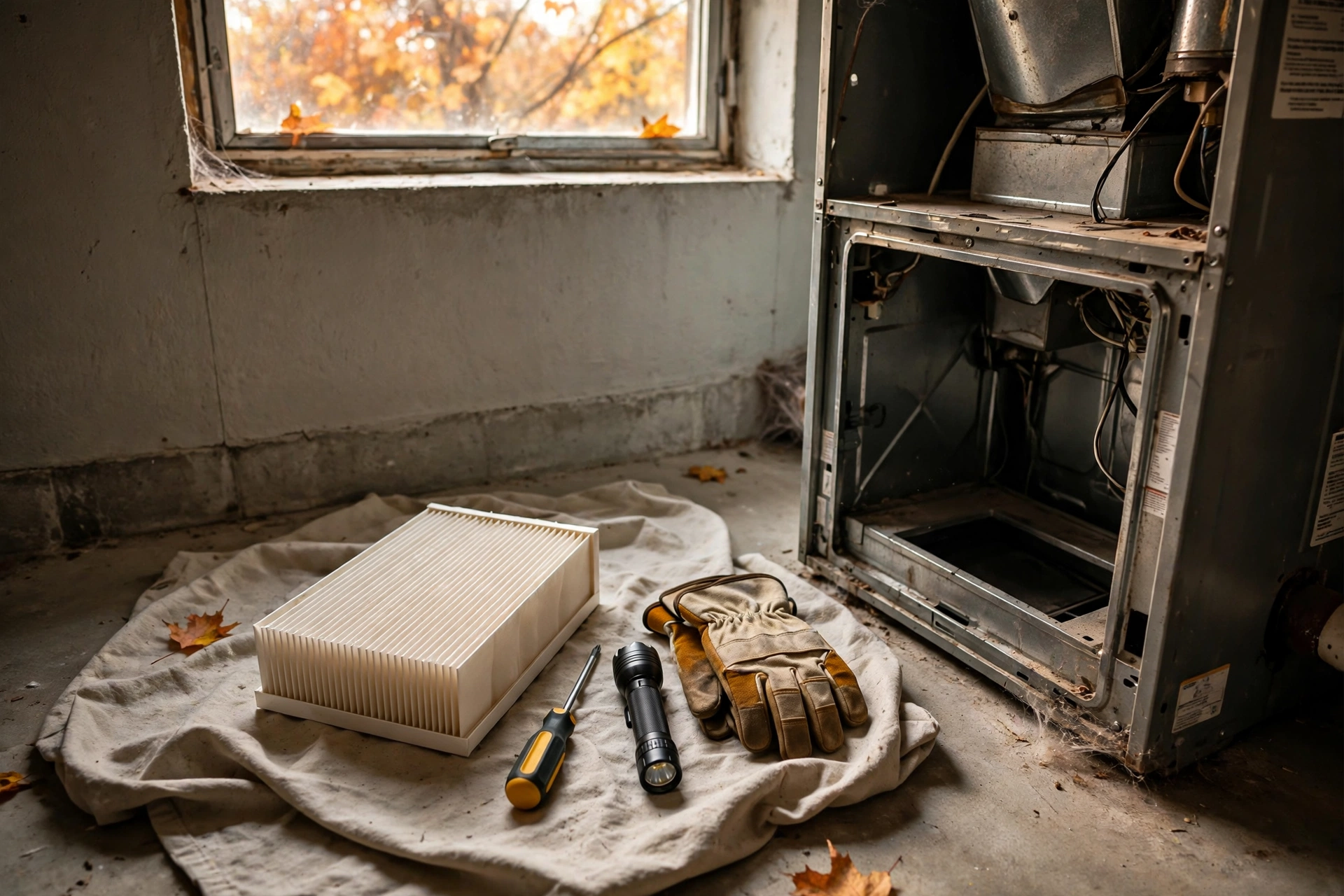
A furnace filter does two jobs at once: it keeps dust out of the blower and the heat exchanger, and it keeps the air moving. When it clogs, airflow drops, the heat exchanger runs hotter than it should, and the blower motor works harder for less heat. Over a Minnesota heating season that runs roughly October through April, a filter can go from clean to clogged without anyone noticing, because the change is gradual.
Check the size printed on the old filter frame and match it exactly — a filter that leaves gaps around its edges lets dust straight past it. If you have pets, recent remodeling dust, or a home near a busy road, check monthly rather than waiting for a calendar date. Our ductwork and airflow services page explains how filter and duct problems show up as uneven rooms and long heating cycles, and a tune-up and safety inspection includes a filter check alongside the ignition and safety controls.
The worst time to learn that a thermostat is failing is the first cold night. Test it on a mild autumn day instead: set it to heat, set the temperature a few degrees above the current room temperature, and listen for the furnace to start. Give it a few minutes, then check that warm air is coming from the registers. If the furnace starts and stops quickly, or if some rooms get warm air and others get none, note exactly which rooms — that pattern helps a technician narrow the cause fast.
If the thermostat runs on batteries, replace them before heating season rather than waiting for a low-battery warning in January. For a programmable or smart thermostat, check that the schedule still matches how the household actually lives now; a schedule written for last year's routine can leave the house cold in the morning or heat empty rooms all day. Our thermostat, controls, and zone heating page covers controls and zoning for homes where one thermostat cannot keep every room comfortable.
Walk every room with the furnace running and feel each supply register. A register with weak airflow may have a closed damper, a disconnected duct in the basement or attic, or furniture sitting over it. Rugs and bookcases over registers are a common autumn problem: the room was rearranged for summer, and the register ended up behind a sofa. Moving one piece of furniture can fix a room that has felt cold for a whole winter.
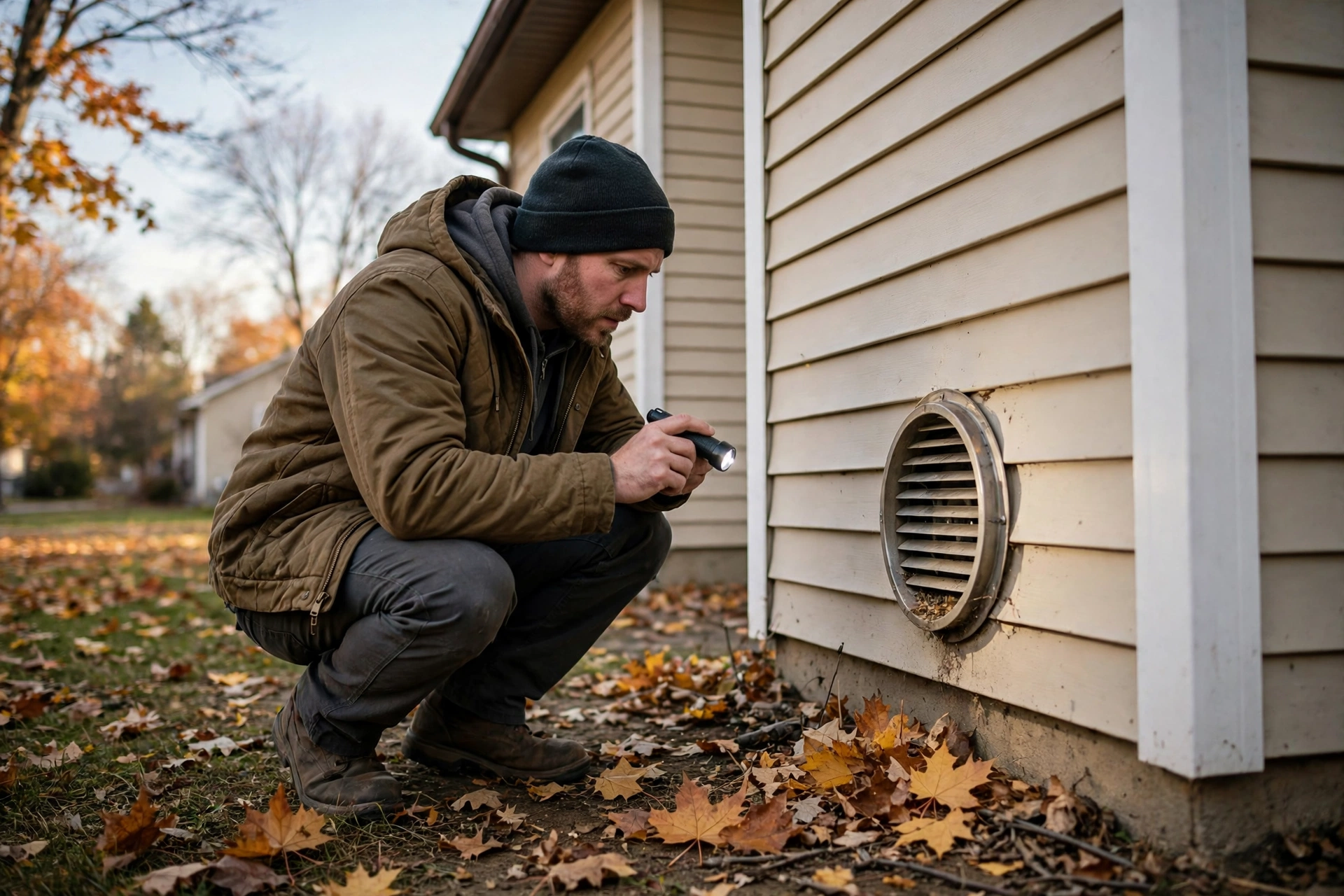
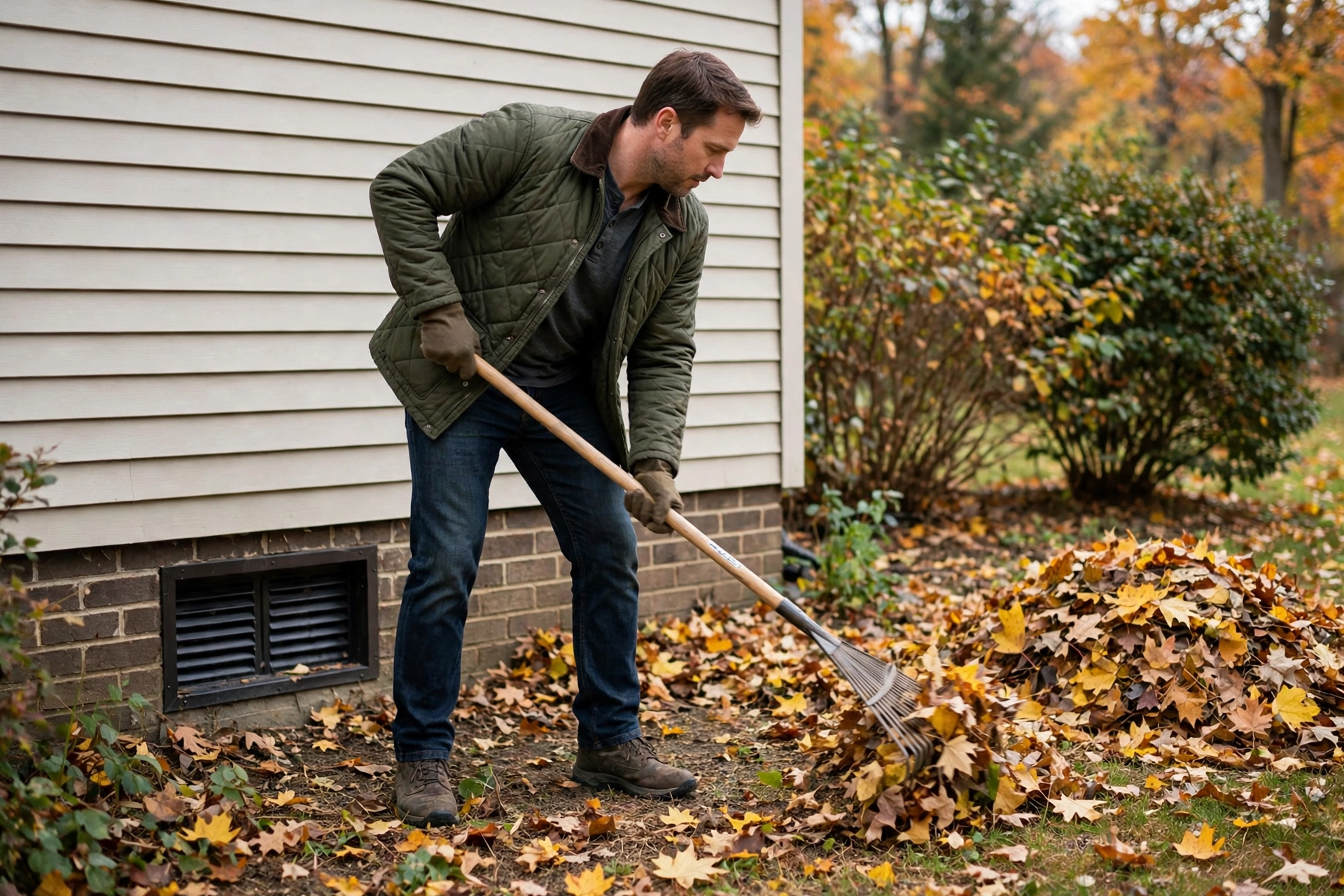
Outside, find the furnace vent pipes before snow arrives. High-efficiency gas furnaces vent through the side wall, and that wall is exactly where snow drifts pile up. Mark the spot in your mind now, because clearing those openings in January is much harder in deep snow. Read our post on gas furnace vent freeze-ups for what ice in those pipes does to a furnace, and if you live in Waite Park or Sartell, the same autumn walk applies — drifting snow finds the same low vents everywhere in central Minnesota.
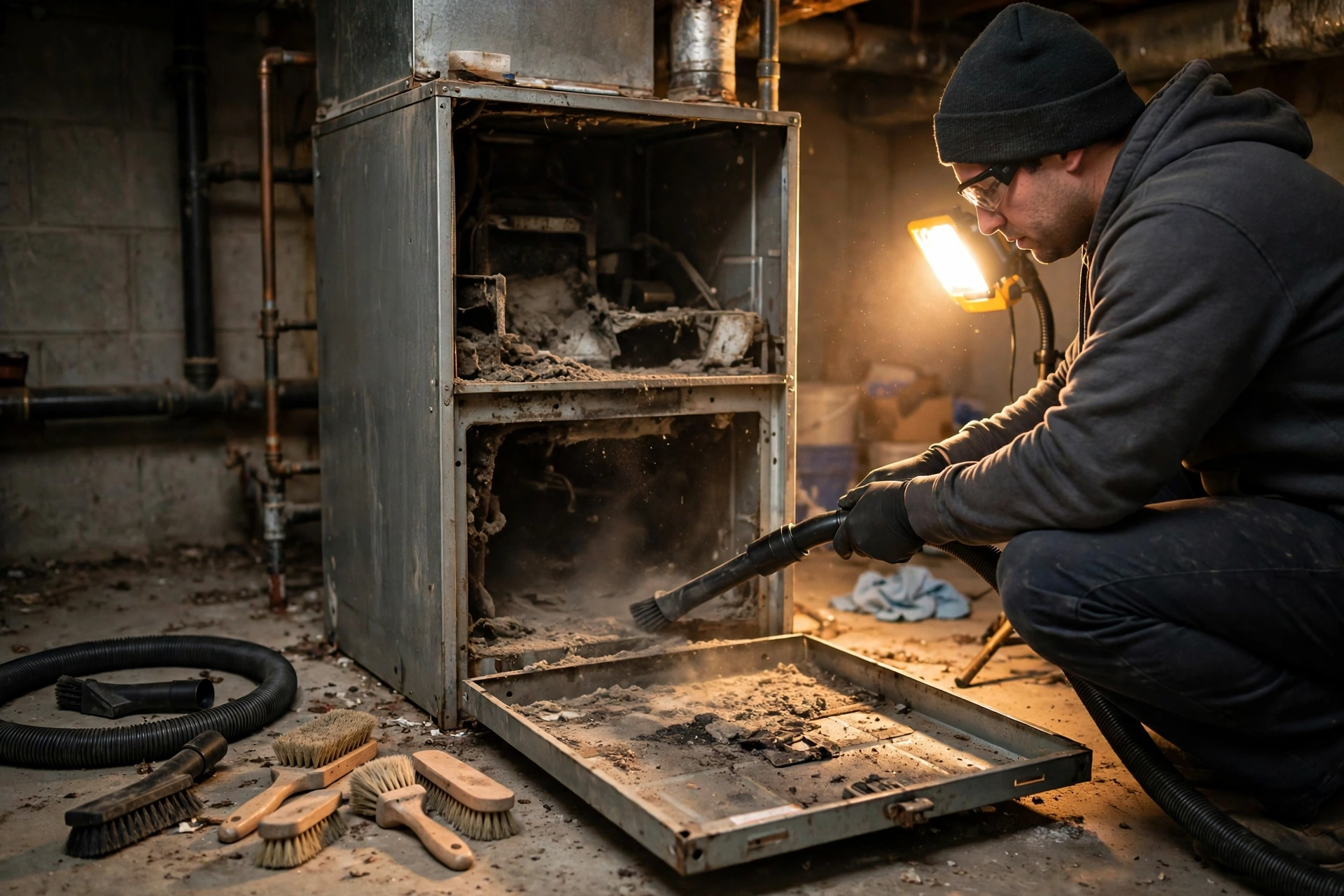
Some checks are not homeowner work, and pretending otherwise is how small problems become dangerous ones. A technician checks the ignition sequence, the flame sensor, the heat exchanger for cracks, the blower motor and its bearings, the gas valve and connections on a gas furnace, and the safety switches that shut the furnace down when something goes wrong. Those checks need the cabinet open and the furnace running under test conditions.
An October visit, which we walk through in our October tune-up walkthrough, is the right time for that work: parts are available, the schedule is calmer than in January, and anything found can be fixed before the heating season leans on the furnace hardest. If the furnace is older, or if last winter brought short cycling, odd smells, or rooms that never warmed up, say so when you call — that history points the technician straight at the likely cause. You can reach us from our contact page.
Run through it in early autumn, before the first hard freeze, while the weather still allows comfortable testing and while a tune-up can be booked without winter pressure. In central Minnesota, that usually means September or early October, well before the heating season settles in for the long stretch.
Check the filter monthly during heating season and change it when it looks dirty rather than on a fixed date. Homes with pets, remodeling dust, or heavy use clog filters faster. A clean filter protects airflow, the heat exchanger, and the blower motor through the whole winter.
A tune-up covers the ignition sequence, flame sensor, heat exchanger, blower motor, gas connections on gas furnaces, and every safety switch that shuts the furnace down when something fails. Those checks need the cabinet open and the furnace running under test, which is why they belong to a technician.
Call Quarry Furnace Co. about your furnace — repair, replacement, and tune-ups in St. Cloud and the towns around it.
(320) 389-8174Answers about this topic, in plain language.
A yearly tune-up before heating season is the simplest way to catch worn ignition parts, a dirty flame sensor, or a cracked heat exchanger before they cause a January shutdown. Even a furnace that ran well last winter benefits, because wear builds gradually and rarely announces itself.
The size is printed on the old filter frame, usually as three numbers for length, width, and depth. Match all three exactly. A filter that is too small leaves gaps that let dust past it, and one that is too large will not sit flat in the filter slot.
Open registers help only if air can reach them. A disconnected duct, a crushed flex run, a closed damper in the basement, or a blower struggling against a clogged filter can all leave one room cold while the rest of the house heats. An airflow check traces which of those is happening in your home.
Closing too many registers raises pressure inside the ductwork and can overheat the heat exchanger, which trips safety controls. It is usually better to leave registers open and let the thermostat and duct design do their jobs, and to ask about zoning if one part of the house genuinely needs less heat.
Keep stored boxes, paint, cleaning products, and laundry away from the furnace so air can move around it and a technician can reach every panel. The furnace needs breathing room for combustion air on gas models and for cooling airflow on every model.
Find the intake and exhaust pipes on the outside wall before snow arrives, clear leaves and debris from around them, and remember where they are so you can keep snow and ice clear of the openings all winter. Never cover the pipes, and call a technician if frost keeps forming inside them.